
Tesla raises spending plan to $25B — allocation of funds revealed.
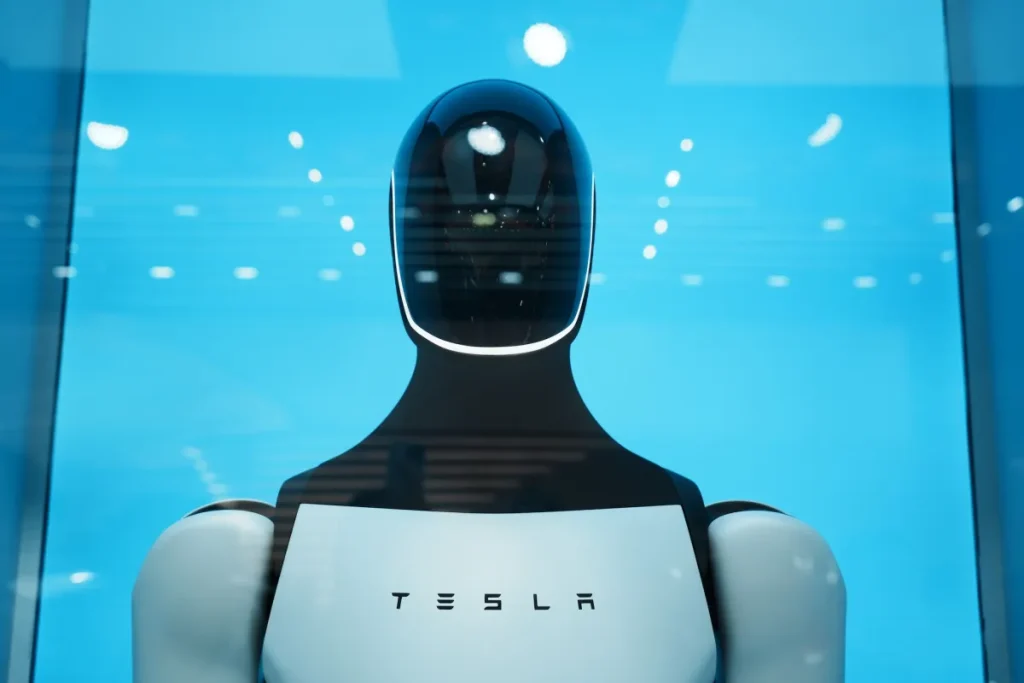
Image Credits:CFOTO/Future Publishing via Getty Images / Getty Images
Tesla’s Ambitious Future: Capital Expenditures Surge to $25 Billion by 2026
During Tesla’s recent first-quarter earnings call, CEO Elon Musk delivered a significant announcement about the company’s financial strategy. According to the earnings report, Tesla’s capital expenditures (capex) are set to soar to $25 billion in 2026. This ambitious figure represents a substantial increase that reflects the company’s shift towards a future dominated by artificial intelligence (AI) and robotics.
A Shift in Financial Strategy
The projected capex of $25 billion in 2026 is a remarkable threefold increase compared to Tesla’s capital expenditure in previous years. For context, the company’s annual spending was $8.5 billion in 2025, $11.3 billion in 2024, and $8.9 billion in 2023. This scaling up is not just a numerical adjustment; it signifies Tesla’s strategic pivot to maintain a competitive edge in the rapidly evolving tech landscape.
Musk had initially indicated in January that Tesla would exceed $20 billion in capital expenditures for 2026, primarily to fund its AI initiatives, including enhancements in compute infrastructure and data centers. The recent increase of $5 billion underscores the growing financial demand tied to these plans, indicating that the visionary undertakings may require even more investment than previously estimated.
Aligning with Future Trends
Musk maintains a positive outlook regarding this escalated investment, suggesting that it lays a solid foundation for future revenue streams. He stated during the call, “With 2026 we’re going to be substantially increasing our investments in the future. So you should expect to see significant, a very significant increase in capital expenditures, but I think well justified for a substantially increased future revenue stream.”
This optimism aligns with broader trends in the tech industry, where other major players are also ramping up their capital expenditures. Notably, Amazon has projected $200 billion for 2026, while Google plans to spend between $175 billion and $185 billion within the same timeframe.
Expanding Beyond Automobiles
Tesla’s planned increase in capital expenditures reflects Musk’s vision to broaden the company’s scope beyond just electric vehicles (EVs), solar energy, and battery storage. The funds will be allocated to core technologies that are essential for future advancements, particularly its AI software and battery technologies.
The company’s strategy includes investments in AI training, chip design, and significant enhancements to manufacturing capabilities. As part of this transformative initiative, Tesla is also focusing on its robotaxi operations, as well as establishing a semiconductor research facility in Austin.
Additionally, the Fremont factory will likely absorb a portion of the increased capital as the company shifts production focus away from the Model S and Model X vehicles to scale up the development of its Optimus humanoid robot.
Innovating in Production
Tesla aims to boost its internal production capacity for Optimus to facilitate testing and anticipates that the humanoid robot will “probably” be useful outside of Tesla’s infrastructure by next year. Musk emphasizes that this investment is critical for solidifying Tesla’s position in upcoming markets.
Moreover, the company is dedicated to fortifying its supply chain, which encompasses various sectors like batteries, energy, and AI silicon. Musk’s remarks indicate a holistic approach to investing across multiple facets of the business to enhance overall efficiency and productivity.
Navigating Financial Waters
While the aspirations for growth are substantial, this level of expenditure comes with its challenges. Tesla CFO Vaibhav Taneja cautioned that while the company recently celebrated a 4% bump in share prices—partly due to an unexpected $1.4 billion in free cash flow—the company may slide into negative cash flow territory later this year.
This cautionary note had an immediate impact, as Tesla’s shares experienced a decline in after-hours trading following the earnings call. However, the company still maintains a robust cash position, reporting $44.7 billion in cash, cash equivalents, and short-term investments at the end of the first quarter.
Taneja remarked, “While this may seem like a lot, and we will have the impact of negative free cash flow for the rest of the year, we believe this is the right strategy to position the company for the next era.”
Conclusion
As Tesla embarks on its ambitious journey towards becoming a leader in AI and robotics, the unprecedented increase in capital expenditures signals a transformative phase for the company. By investing heavily in technology and manufacturing capabilities, Tesla is not merely keeping pace with industry changes; it aims to define them. Nonetheless, navigating the financial implications of such rapid expansion will require diligent oversight and strategic planning. With a robust cash reserve and a clear vision, Tesla appears poised to take on new challenges while continuing to shape the future of transportation and technology.
Thanks for reading. Please let us know your thoughts and ideas in the comment section down below.
Source link
#Tesla #increased #spending #plan #25B #heres #money
About The Author