web analytics

Learn AI With Kesse | Best Place For AI News

We make artificial intelligence easy and fun to read. Get Updated AI News.

Greg Brockman on Elon Musk’s Departure from OpenAI: A Perspective
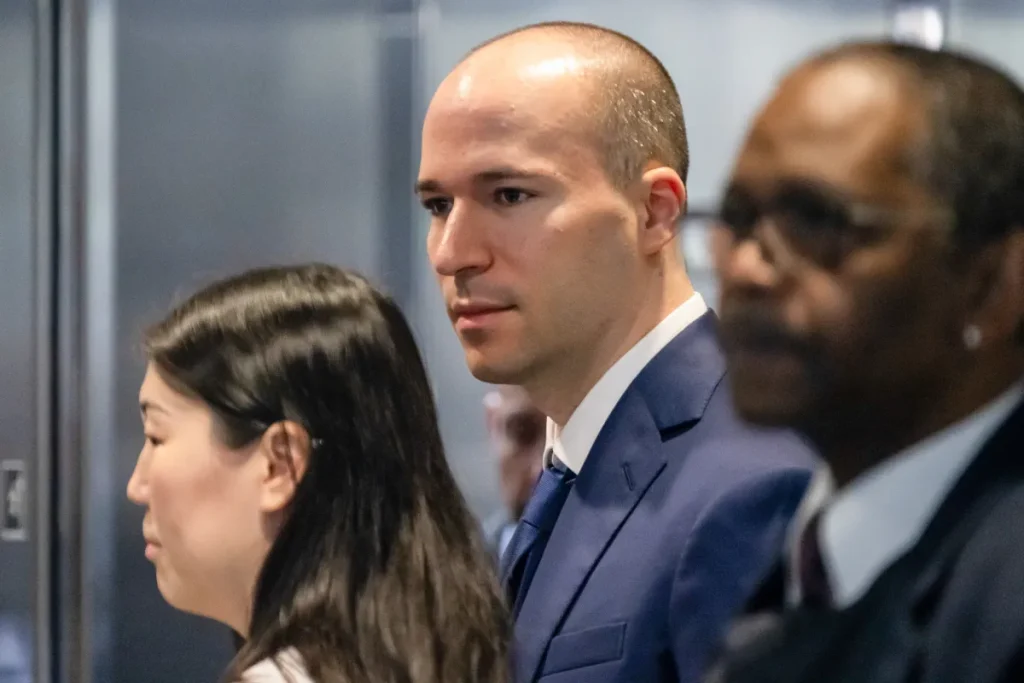
Greg Brockman, president and co-founder of OpenAI, arrives at the federal court in Oakland, California, US, on Thursday, April 30, 2026.

Image Credits:David Paul Morris/Bloomberg / Getty Images

The Genesis of OpenAI’s For-Profit Ventures: A Tense 2017 Meeting

In late August 2017, pivotal figures at OpenAI, a fledgling nonprofit research lab, convened to strategize the formation of a for-profit entity. The aim was to commercialize their groundbreaking technology and secure the funding necessary to achieve Artificial General Intelligence (AGI). At the center of this gathering was Elon Musk, who was adamant about gaining full control of the company. This came just after he gifted each of his co-founders a Tesla Model 3, a gesture Greg Brockman, OpenAI’s CTO, interpreted as an attempt to win favor during a defining moment where Musk and Sam Altman were vying for the company’s vision.

OpenAI’s head of research, Ilya Sutskever, even commissioned a painting of a Tesla to present to Musk as a goodwill gesture. However, the atmosphere quickly shifted when Musk was informed that his demand for control would not be met. According to Brockman, Musk reacted with visible anger, pacing around the room and dramatically declaring, “I decline.” He then seized the painting and stormed out, turning back to demand, “When will you be departing OpenAI?”

Brockman and Sutskever chose not to align with Musk’s vision. Consequently, Musk halted his regular financial contributions to the company and within six months, he resigned from the board but continued to support shared office costs with Neuralink until 2020.

Legal Scrutiny Over Control Disputes

The ongoing legal proceedings surrounding OpenAI have drawn attention to this crucial time in 2017 when the co-founders clashed over who would steer the organization’s future. While Sam Altman has yet to publicly comment, Brockman has testified extensively, often referencing a personal journal that sheds light on the challenges of being a young tech executive entangled in a power struggle with Musk.

“It’s very painful,” Brockman remarked regarding the media attention on his journal, which he characterized as “deeply personal writings that were never meant for public consumption.” He added, “There’s nothing in there I’m ashamed of.”

This level of personal disclosure is rarely seen in the high-stakes negotiations of startup founders, particularly for an organization as impactful as OpenAI.

Text Message Threats and Legal Maneuvering

Tensions escalated leading up to the trial when OpenAI’s legal representatives presented a text message Musk sent to Brockman shortly before proceedings began. In this message, Musk asserted, “By the end of this week, you and Sam will be the most hated men in America. If you insist, so it will be.” Although the jury won’t see this communication, Musk’s legal team is attempting to portray Altman and Brockman as having misappropriated the nonprofit’s resources, while OpenAI’s lawyers maintain that Musk intended similar plans.

The friction intensified following an achievement by OpenAI, where one of its models triumphed over the top human player in the popular video game DOTA II. This event solidified the belief among the team that computational power was vital for developing advanced AI tools, leading them to consider a for-profit subsidiary. Musk sought “unequivocal” control of this new entity, but the other co-founders proposed an evenly distributed equity model.

The Breakdown of Partnerships

When Musk’s demand for control was rebuffed, it shattered their partnership. Brockman testified, “It should not be the case that there exists one person with full and absolute control over OpenAI.” Discussions arose about possibly removing Musk from the board, and entries from Brockman’s November 2017 journal became focal points for Musk’s legal team. Brockman noted, “I can’t see us turning this into a for-profit without a very nasty fight,” and expressed concerns about the ethics of transitioning to a for-profit without Musk’s approval.

Eventually, Musk chose to leave the board in February 2018, declaring that “OpenAI is on a path of certain failure.” His departure was attributed to a need to concentrate on AI initiatives at Tesla.

Reflections on Governance and Values

Amid these tensions, Brockman contemplated his own job satisfaction and the overall direction of the company. “This is the only chance we have to get out from Elon,” he wrote, questioning if Musk was the “glorious leader” he would have chosen. His thoughts turned to the financial implications, pondering how to reach a $1 billion valuation.

Musk’s lawyers seized upon this reflection, suggesting Brockman was prioritizing personal financial gain over the nonprofit’s mission. As Brockman’s stake in OpenAI grew to nearly $30 billion, Musk’s legal team confronted him about why he didn’t choose to donate his potential wealth to charity.

Brockman defended the accomplishments made since Musk’s departure, highlighting that the OpenAI nonprofit had accumulated over $150 billion in equity value due to collective effort.

The Future of OpenAI

Following Musk’s exit, OpenAI transitioned to a for-profit model and successfully secured $1 billion from Microsoft in 2019. Over the next four years, the collaboration with Microsoft resulted in an additional $13 billion investment, propelling OpenAI to become a leading force in AI research. This financial success also elevated the net worth of OpenAI executives and the resources available to the nonprofit.

Nevertheless, Musk’s lingering suspicions regarding Altman and Brockman’s intentions culminated in him filing a lawsuit in 2024, believing he had been sidelined. The trial has drawn extensive attention and is anticipated to continue in the weeks following, as each side grapples with the conflicting narratives surrounding control and the future of OpenAI.

In the heart of this ongoing saga lies the question: what price are innovators willing to pay for control in a rapidly evolving technological landscape? As the courtroom drama unfolds, the foundational issues decided back in 2017 could have far-reaching implications for not just OpenAI, but the tech industry at large.

Thanks for reading. Please let us know your thoughts and ideas in the comment section down below.

Source link
#Elon #Musk #left #OpenAI #Greg #Brockman

About The Author

Leave a Reply

Your email address will not be published. Required fields are marked *

We use cookies to personalize content and ads and to primarily analyze our geo traffic sources. We also may share information about your use of our site with our social media, advertising, and analytics partners to improve your user experience. We respect your privacy and will never abuse your information. [ Privacy Policy ] View more
Cookies settings
Accept
Decline
Privacy & Cookie Policy
Privacy & Cookies policy
Cookie name Active

The content on this page governs our Privacy Policy. It describes how your personal information is collected, used, and shared when you visit or make a purchase from learnaiwithkesse.com (the "Site").

Kesseswebsites and Advertising owns Learn AI With Kesse and the website learnaiwithkesse.wiki. For the purpose of this Terms and Agreements [ we, us, I, our ] represents the owner of Learning AI With Kesse which is Kesseswebsites and Advertising. [ You, your, student and buyer ] represents you as the user and visitor of this site. Terms of Conditions, Terms of Service, Terms and Agreement and Terms of use shall be considered the same here. This website or site refers to https://learnaiwithkesse.com. You agree that the content of this Terms and Agreement may include Privacy Policy and Refund Policy. Products refer to physical or digital products. This includes eBooks, PDFs, and text or video courses. If there is anything on this page you do not understand you agree to reach out to us via email [ emmanuel@learnaiwithkesse.com ] for explanation before using any part of this site.

1. Personal Information We Collect

When you visit this Site, we automatically collect certain information about your device, including information about your web browser, IP address, time zone, and some of the cookies that are installed on your device. The primary purpose of this activity is to provide you a better user experience the next time you visit our again and also the data collection is for analytics study. Additionally, as you browse the Site, we collect information about the individual web pages or products that you view, what websites or search terms referred you to the Site, and information about how you interact with the Site. We refer to this automatically-collected information as "Device Information."

We collect Device Information using the following technologies:

"Cookies" are data files that are placed on your device or computer and often include an anonymous unique identifier. For more information about cookies, and how to disable cookies, visit http://www.allaboutcookies.org. To comply with European Union's GDPR (General Data Protection Regulation), we do display a disclaimer a consent text at the bottom of this website. This disclaimer alerts you the visitor or user of this website about why we use cookies, and we also give you the option to accept or decline. If you accept for us to use cookies on your site, the agreement between you and us will expire after 180 has passed.

"Log files" track actions occurring on the Site, and collect data including your IP address, browser type, Internet service provider, referring/exit pages, and date/time stamps.

"Web beacons," "tags," and "pixels" are electronic files used to record information about how you browse the Site.

Additionally, when you make a purchase or attempt to make a purchase through the Site, we collect certain information from you, including your name, billing address, shipping address, payment information (including credit card numbers), email address, and phone number. We refer to this information as "Order Information."

When we talk about "Personal Information" in this Privacy Policy, we are talking both about Device Information and Order Information.

Payment Information

Please note that we use 3rd party payment processing companies like https://stripe.com and https://paypal.com to process your payment information. PayPal and Stripe protects your data according to their terms and agreement and may store your data to help make your subsequent transactions on this website easier. We never and [ DO NOT ] store your card information or payment login information on our website or server. By making payment on our site, you agree to abide by the Terms and Agreement of the 3rd Party payment processing companies we use. You can visit their websites to read their Terms of Use and learn more about them.

2. How Do We Use Your Personal Information?

We use the Order Information that we collect generally to fulfill any orders placed through the Site (including processing your payment information, arranging for shipping, and providing you with invoices and/or order confirmations). Additionally, we use this [a] Order Information to:

[b] Communicate with you;

[c] Screen our orders for potential risk or fraud; and

When in line with the preferences you have shared with us, provide you with information or advertising relating to our products or services. We use the Device Information that we collect to help us screen for potential risk and fraud (in particular, your IP address), and more generally to improve and optimize our Site (for example, by generating analytics about how our customers browse and interact with the Site, and to assess the success of our marketing and advertising campaigns).

3. Sharing Your Personal Information

We share your Personal Information with third parties to help us use your Personal Information, as described above. For example, we use System.io to power our online store--you can read more about how Systeme.io uses your Personal Information here: https://systeme.io/privacy-policy/ . We may also use Google Analytics to help us understand how our customers use the Site--you can read more about how Google uses your Personal Information here: https://www.google.com/intl/en/policies/privacy/. You can also opt-out of Google Analytics here: https://tools.google.com/dlpage/gaoptout.

Finally, we may also share your Personal Information to comply with applicable laws and regulations, to respond to a subpoena, search warrant or other lawful request for information we receive, or to otherwise protect our rights.

4. Behavioral Advertising

As described above, we use your Personal Information to provide you with targeted advertisements or marketing communications we believe may be of interest to you. For more information about how targeted advertising works, you can visit the Network Advertising Initiative’s (“NAI”) educational page at http://www.networkadvertising.org/understanding-online-advertising/how-does-it-work.

You can opt-out of targeted advertising by:

COMMON LINKS INCLUDE:

FACEBOOK - https://www.facebook.com/settings/?tab=ads

GOOGLE - https://www.google.com/settings/ads/anonymous

BING - https://advertise.bingads.microsoft.com/en-us/resources/policies/personalized-ads]

Additionally, you can opt-out of some of these services by visiting the Digital Advertising Alliance’s opt-out portal at: http://optout.aboutads.info/.

5. Data Retention

Besides your card payment and payment login information, when you place an order through the Site, we will maintain your Order Information for our records unless and until you ask us to delete this information. Example of such information include your first name, last name, email and phone number.

6. Changes

We may update this privacy policy from time to time in order to reflect, for example, changes to our practices or for other operational, legal or regulatory reasons.

7. Contact Us

For more information about our privacy practices, if you have questions, or if you would like to make a complaint, please contact us by e-mail at emmanuel@learnaiwithkesse.com or by mail using the details provided below:

8. Your acceptance of these terms

By using this Site, you signify your acceptance of this policy. If you do not agree to this policy, please do not use our Site. Your continued use of the Site following the posting of changes to this policy will be deemed your acceptance of those changes.

Last Update | 18th August 2024

Save settings
Cookies settings