
Navigating the Future: Embracing Change Beyond Technology in 2026 Commencement
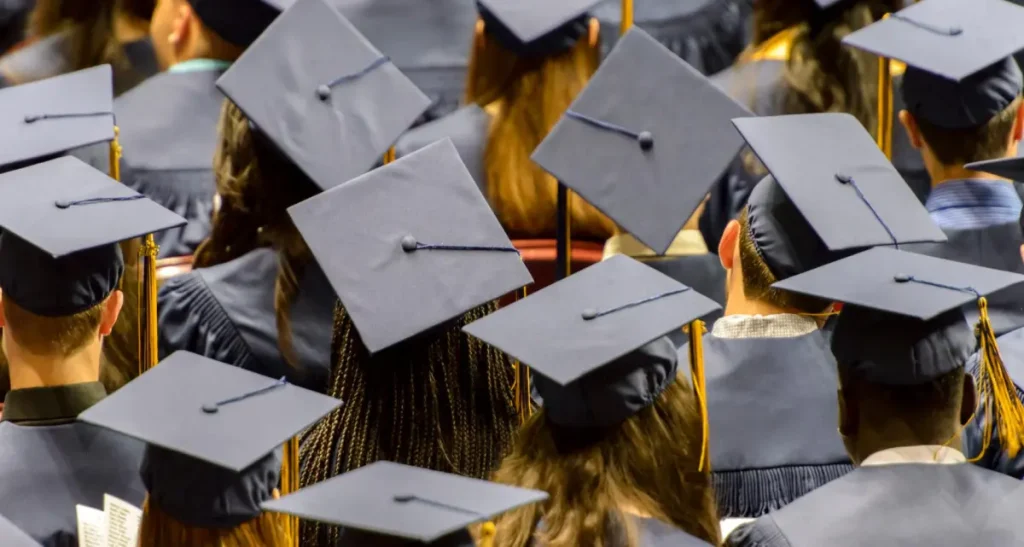
Image Credits:Helen Cortez / EyeEm / Getty Images
The AI Dilemma at U.S. Commencement Ceremonies
As American universities celebrate commencement season, a recurring theme has emerged: the challenge of inspiring graduating students about a future influenced by artificial intelligence (AI). This year, reactions to AI-centric messages from graduation speakers reveal a significant disconnect between the speakers’ optimism and students’ apprehension.
Gloria Caulfield’s Address at UCF
Gloria Caulfield, an executive at Tavistock Development Company, recently spoke at the University of Central Florida, emphasizing the era of “profound change” we’re experiencing—recognizing that it could be both “exciting” and “daunting.” However, her statement that “the rise of artificial intelligence is the next industrial revolution” elicited overwhelming booing from the audience. As the crowd grew increasingly loud, Caulfield could only chuckle, acknowledging that she had perhaps struck a chord.
Attempting to regain their attention, she observed that AI was barely a factor in our lives just a few years ago. This remark sparked a positive reaction, with cheers and applause replacing the earlier hostility.
Responses from Other Speakers
Former Google CEO Eric Schmidt encountered a different but equally charged atmosphere when he addressed students at the University of Arizona. Anticipation transformed into backlash even before Schmidt stepped on stage, with certain student groups advocating for his removal, given a lawsuit involving allegations against him from a former girlfriend and business partner, which he has denied.
Once he began his address, Schmidt declared, “You will help shape artificial intelligence,” which incited a cascade of boos. Despite the crowd’s dissent, he attempted to speak over the chorus of negativity, encouraging students to see themselves as pioneers in a new technological landscape. “When someone offers you a seat on the rocket ship, you do not ask which seat, you just get on,” he insisted, trying to rally optimism amid the discontent.
Contrasting Experiences and the Broader Mood
Not every commencement speech reflects such discord. Jensen Huang, CEO of Nvidia, spoke at Carnegie Mellon’s commencement and experienced a warm reception, affirming that AI has “reinvented computing” without facing noticeable opposition. This disparity highlights a broader sentiment among students toward the implications of AI in their futures.
The recent Gallup poll reveals a troubling trend: only 43% of individuals aged 15 to 34 perceive the current job market positively, a stark decline from 75% just a year prior. This pessimism isn’t solely attributed to AI; as technology journalist Brian Merchant argues, AI epitomizes “the cruel new face of hyper-scaling capitalism.” He mused that if he were in his early twenties and facing an uncertain job market, he too would resist the notion of another industrial revolution driven by AI.
Themes of Resilience Amid Pessimism
While AI mentions stirred discontent, the themes of resilience and overcoming challenges were persistent throughout various speeches. Schmidt pointed out a prevalent fear among the current generation: the feeling that their futures are predetermined, with concerns about job scarcity, climate change, and political instability looming large.
He acknowledged, “You are inheriting a mess that you did not create,” which resonated with students grappling with the weight of these issues. Many speakers echoed sentiments of strength and perseverance, even when discussion of AI felt contentious.
Gloria Caulfield may have misjudged her audience of arts and humanities graduates. Feedback indicated that her earlier generic praise of corporate leaders, including figures like Jeff Bezos, had already begun to lose the students’ interest before she introduced the AI topic.
Another graduate, Alexander Rose Tyson, shared with The New York Times that the booing was less about individual remarks and more a collective expression of frustration. He articulated a sentiment that unites many in the audience: “This sucks.”
The Struggle for Engagement
The disconnect between graduation speakers and their audiences highlights a significant challenge: how to engage a generation facing economic uncertainty, technological upheaval, and a rapidly evolving job market. As students grapple with the realities of AI’s impact, speakers must navigate their messages carefully to resonate positively.
Despite mixed receptions, calls for resilience remain pertinent. Those in positions of influence must acknowledge the frustrations of today’s graduates while inspiring hope. Striking this balance will be essential in helping new graduates envision a future where they feel empowered to shape technology instead of merely being shaped by it.
Conclusion
In this commencement season, reactions to speeches about artificial intelligence serve as microcosms of a broader societal discourse. Graduating students yearn for messages that are grounded in optimism yet acknowledge their real concerns about the future. As speakers continue to engage with new graduates, the challenge lies not only in discussing technological advancements like AI but also in understanding and addressing the anxieties these advancements create. The dialogue will ultimately shape how the next generation feels about stepping into the future, equipped not just with technical skills but also with the resilience to face complex realities.
Thanks for reading. Please let us know your thoughts and ideas in the comment section down below.
Source link
#youre #giving #commencement #speech #dont #mention
About The Author