

As AI firms pursue IPOs, who else is joining the journey?
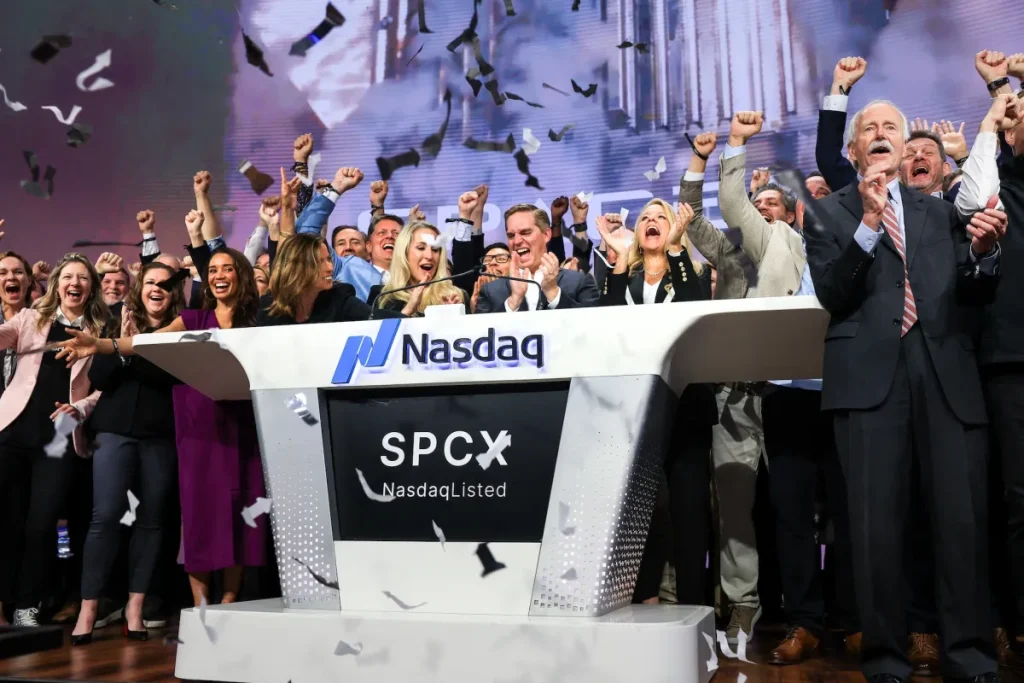
Image Credits:TIMOTHY A. CLARY/AFP / Getty Images
SpaceX Goes Public: The Rise of a Trillionaire and the AI Landscape
This week, SpaceX made headlines by launching the largest Initial Public Offering (IPO) ever, catapulting CEO Elon Musk into the realm of trillionaires. Although SpaceX is primarily known for its space endeavors, the company has been increasingly focusing on the potential of its AI sector. As the landscape heats up, competing firms like OpenAI and Anthropic are also gearing up for their own IPOs, creating what looks like a promising summer for tech believers.
Market Implications of SpaceX’s IPO
As Sean O’Kane noted during TechCrunch’s Equity podcast, SpaceX’s presence in public markets has profound implications. “SpaceX is not only claiming a significant share of available capital but is also pushing the boundaries regarding the control one individual can exert over a public company,” he explained.
Moreover, the ripple effects of SpaceX’s IPO are evident, as other startups are seeking to capitalize on its momentum. For instance, companies are now exploring funding opportunities for orbital data centers, a concept popularized by SpaceX. Kirsten Korosec highlighted this trend, stating, “There’s a ripple effect happening throughout the market that’s likely more interesting than just the headline, ‘SpaceX makes Elon a trillionaire.’”
Shifting Dynamics in Public Markets
Anthony Ha brought attention to the broader implications of SpaceX’s IPO beyond Musk’s new status. “This is just the beginning of a series of IPOs for various AI companies. Anthropic has already filed confidentially, and OpenAI is expected to follow suit,” he noted. The traditional tech giants categorized as FAANG (Facebook, Amazon, Apple, Netflix, Google) are experiencing a pivot. As Korosec cleverly noted, in the new era, “It’s not FAANG anymore, it’s MANGOS,” incorporating major players like Meta, Anthropic, NVIDIA, Google, OpenAI, and SpaceX.
This shift marks a significant transition in investment focus away from consumer tech and social networks toward AI labs and innovative deep-tech ventures like SpaceX. The change reflects an evolving understanding of where the next wave of capital will be directed, emphasizing AI’s growing prominence.
Anticipation Around AI IPOs
The conversation turned to the impending competition between OpenAI and Anthropic, both eager to seize the moment in the evolving IPO landscape. With initial public offerings becoming increasingly competitive, analysts suggest that timing could significantly impact their success. “It seems we have a race between Anthropic and OpenAI. They will compete not only on the IPO calendar but also in terms of pricing strategies,” Korosec explained.
However, while quick returns may be tempting, O’Kane cautioned against short-term thinking. “Both companies should consider the long-term implications of their strategies.”
The Ripple Effect on Emerging Startups
As leading firms make strides, other startups are recognizing the potential for investment. During the discussion, Korosec highlighted emerging companies leveraging the success of firms like SpaceX for their fundraising efforts. For example, Quantum Space recently announced a SPAC aimed at capitalizing on SpaceX’s success, signaling a trend of other startups raising funds based on SpaceX’s achievements in areas like space-based data centers.
“It’s fascinating to see how these smaller enterprises are building their lanes based on potential success,” she remarked. “They may not be going public yet, but they are clearly looking to ride the wave created by giants like SpaceX.”
Transforming the Economy through AI
The overarching narrative is that AI is not merely changing the economy through innovation but reshaping how businesses operate. O’Kane pointed out that companies like Ford and General Motors are pivoting towards energy solutions for data centers, citing Ford’s recent stock surge upon revealing a modest energy storage initiative.
“There’s already a significant economic transformation underway,” he noted, suggesting that this trend of adaptation is likely to continue.
Lessons for Legacy Companies
A recurring theme in the conversation was the erroneous attempts by traditional automakers to chase the success of Elon Musk’s ventures. “Years ago, we were inundated with headlines about the next Tesla killer,” Korosec stated. “Even today, these automakers are still trying to recreate various Musk strategies, often to their detriment.”
O’Kane wryly concurred, asking if Ford should venture into the realm of space data centers. Korosec warned that such moves are not just misguided—they are often unrealistic, suggesting a need for legacy companies to forge their unique paths rather than mimic the successes of others.
Conclusion: The Road Ahead
In summary, SpaceX’s record IPO opens the floodgates for potential public offerings from various AI-centric companies, marking a transformative moment in technology and investing. With emerging startups capitalizing on the changes in public sentiment and investment focus, the landscape is set for a fascinating summer of IPOs.
The exhibit of these evolving dynamics signals a bright future for AI and its various applications across sectors, while also serving as a cautionary tale for companies struggling to find their foothold amidst rapid changes. The self-contained ripple effects will likely shape the investment landscape in ways we have yet to fully understand.
As we progress, it will be intriguing to observe how the competition between major players influences smaller firms and reshapes entire industries. The future is just beginning to unfold.
Thanks for reading. Please let us know your thoughts and ideas in the comment section down below.
Source link
#companies #race #public #ride
About The Author