
The healthiest entrepreneur battled cancer using AI as his weapon.
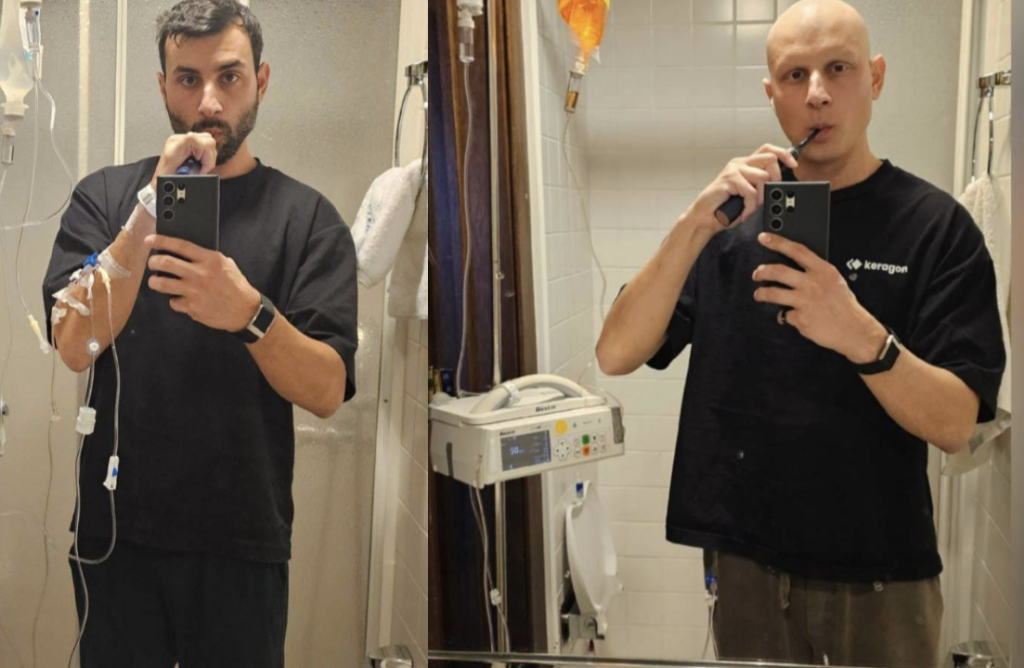
Image Credits:Conno Christou /
Conno Christou’s Journey: A Battle Against Lymphoma and the Power of AI
Conno Christou lives by a philosophy of control and precision. At 35, while establishing his second company, he meticulously monitored his health using tools like a Whoop band and an Oura ring, tracking nearly 100 biomarkers annually. Following the protocols of longevity researchers such as Peter Attia and Rhonda Patrick, he optimized his supplements, circadian rhythm, and protein intake. After years of dedication, his health check in 2025 yielded a stellar report: “It was the best I’d had in years,” he recalls.
The Unexpected Diagnosis
However, this careful regimen took an unexpected turn when he noticed swelling in his arm after a workout. Dismissing it initially, Conno finally sought medical help a week later. What followed shocked him: two blood clots were discovered, necessitating surgery. But the pre-operative examinations revealed more alarming news. “We see an 11-by-11-by-8 centimeter mass behind your sternum,” a doctor informed him.
A biopsy confirmed the reality he had never considered—he had an aggressive form of non-Hodgkin’s lymphoma, an infrequent ailment impacting roughly one in 420,000 people, driven by a random genetic mutation unrelated to lifestyle or stress factors. The tumor had been growing for about three months, and if left undetected, it would escalate to stage four in just three additional weeks.
Reflecting on his fortune amid misfortune, Christou remarked, “It was only found because I went in for something else entirely,” during a recent conversation from his part-time home in Athens.
The Limitations of Medical Care
Christou’s cancer journey highlighted the limitations often found within the healthcare system, revealing what a proactive patient could achieve with modern tools. His first oncologist—a prominent expert—recommended a more lenient chemotherapy option. Without hesitation, Christou scheduled his first treatment for three days later. Yet, feeling uncertain, he sought a second opinion that evening.
This second specialist provided a starkly different recommendation: a more aggressive chemotherapy regimen, involving continuous hospitalization over six months. The lighter option boasted a success rate of around 60%, while the more intensive treatment improved those odds to approximately 85%. Faced with contradictory advice from two leading doctors, Christou chose to dig deeper.
The Power of Data and Opinion Gathering
Drawing on his entrepreneurial background, he gathered a total of 12 opinions from a network of hematologists and oncologists in both the U.S. and abroad. Eleven of the twelve specialists endorsed the more rigorous approach. “The decision didn’t feel brave; it felt logical,” he affirmed, emphasizing the existential stakes involved.
Over the six-month chemotherapy period, Christou treated his treatment like a business project—that required strategic sprinting, weekly data collection, and careful monitoring. His past experience serving in Cyprus’s military inspired him to adopt a disciplined mindset. He set a goal: to get through six cycles.
Wearing his Whoop device throughout his treatment, Christou found it particularly adept at predicting the days his immune system would weaken, often alerting him before symptoms appeared. Utilizing a voice transcription feature, he maintained a symptom journal, logging everything from side effects to medication changes. He focused primarily on three variables: sleep, nutrition, and a positive mindset. “Psychology moves the needle more than anything,” he stated. “I never asked ‘why me?’—that question has no useful answer.”
Harnessing AI for Medical Guidance
Embracing technological advancements, Christou turned to AI tools for guidance, feeding blood tests, scan data, and journal entries into Claude, an AI model. Christou is not alone in this trend; a recent survey indicated that one-third of American adults utilize AI chatbots for health information. Some patients have found AI to offer solutions where traditional systems fall short.
Despite acknowledging the limitations of AI, Christou believed it served a purpose. “It didn’t replace the doctors,” he clarified. “It helped me ask the right questions.”
Given the rarity of his cancer, having access to AI trained on extensive medical literature provided him insights far beyond a basic search engine query.
Critical Moments During Treatment
Toward the end of his treatment, a final PET scan raised concerns with ambiguous results. His oncologist began discussing a second-line therapy that potentially involved radiation close to his heart and lungs—truly alarming news.
Using his research skills, Christou learned that for his type of lymphoma, end-of-treatment PET scans have a staggering 60% false-positive rate. “It’s 2026,” he emphasized. “Sixty percent.”
He analyzed all three of his PET scans alongside an MRI, feeding the data into Claude. Incredibly, the AI identified a known phenomenon: in patients under 40 recovering from this lymphoma, the thymus gland can reactivate post-chemotherapy, which might appear as active disease on imaging. Given his age and scan characteristics, the AI estimated a 90% likelihood for this explanation.
Christou consulted three additional medical professionals, with the fourth confirming his findings—thymus rebound—but no active disease present. Consequently, he avoided unnecessary radiotherapy and was deemed cancer-free.
Reflections on Health and Time
As he continues to reflect on the lessons learned over the past year, Christou also considers how it has reshaped his professional life. He had begun building his company, Keragon, an AI-driven platform aimed at automating administrative tasks for medical practices, before his diagnosis.
Navigating the medical system made him acutely aware of inefficiencies and the burdens often placed on medical professionals. He received the same treatment protocol as an elderly patient, witnessing side effects cascaded through a series of medications, each introducing new complications. Conno believes future generations will look back and question the standards of current cancer treatment.
Taking Sundays off has become a new practice for him. He strives to live in the moment, valuing time spent with friends, his dog, and engaging in conversations that previously might have felt distracting. A VC friend once advised him to “be happy now,” a concept that resonates more profoundly with him following his experiences.
Sharing Knowledge and Insights
Eager to connect with others facing similar battles, Christou expresses his willingness to share insights and experiences. He is passionate about conveying the potential of AI in healthcare, stating, “It’s not happening in 10 years. It’s happening today.”
Through his journey, Conno Christou exemplifies resilience, determination, and the transformative potential of leveraging data and technology in the face of dire circumstances.
Thanks for reading. Please let us know your thoughts and ideas in the comment section down below.
Source link
#fittest #founder #room #cancer #Heres #fight
About The Author