
Caterpillar Applies Mining Automation Insights to Enhance AI Deployment Strategies
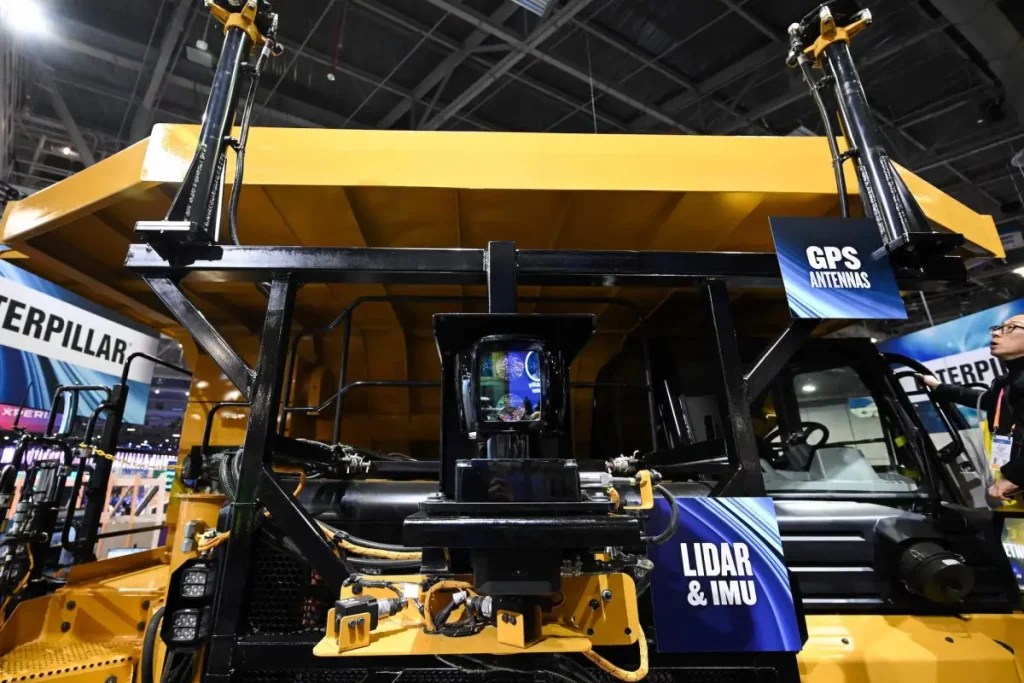
Image Credits:Patrick T. Fallon / AFP / Getty Images
Integrating AI into Operations: Caterpillar’s Journey
Deploying artificial intelligence (AI) is no easy feat for companies, many of which grapple with the challenge of integrating this technology into their daily operations. Caterpillar, an industrial giant, has faced a similar predicament but leveraged decades of experience in the physical world to navigate the complexities of AI integration.
The Venture into Autonomous Solutions
Caterpillar’s journey into autonomy began in the mining sector, where labor shortages and risky environments made automation an attractive solution. Today, the company offers a range of automated solutions, including haul trucks, drilling equipment, underground loaders, dozers, and remote-controlled machinery. Its autonomous toolkit also comprises a software command center and fleet management systems, as well as innovative terrain intelligence.
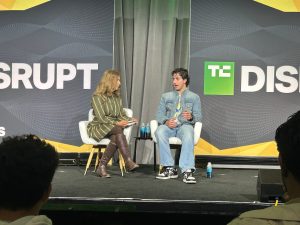
Jaime Mineart, Caterpillar’s Chief Technology Officer, expressed during a recent fireside chat at the Ai4 conference in Las Vegas that the company is at a pivotal time. “We can take all of that learning from mining and apply it to more dynamic environments such as job sites, quarries, and construction sites,” she noted.
Expanding AI Applications
Beyond its mining roots, Caterpillar is rolling out AI across its operations to enhance workflows for technicians and employees. A standout innovation is the Cat AI Assistant, which allows field technicians to utilize voice commands to access repair procedures, troubleshoot issues, and identify necessary parts in real-time. Mineart stated that this tool has already garnered use from customers, operators, and technicians alike.
The Cat AI Assistant taps into Caterpillar’s proprietary data generated from approximately 1.6 million connected machines worldwide, amounting to over 16 petabytes of structured data. Mineart further revealed that the company is employing AI for site scanning and creating digital twins in manufacturing, which aides in performance analysis.
Much like many organizations today, Caterpillar deploys AI across its enterprise operations and software development. Mineart elaborated, saying, “We use AI agents to modernize legacy code, generate and test new software, and identify defects earlier.”
The Challenges of Implementation
While developing AI technology is crucial, Mineart emphasizes that deployment poses its own set of challenges. The successful introduction of autonomous machines requires a comprehensive transformation of workflows and processes at job sites. “The hard part about autonomy and physical AI is incorporating that technology into the customer job site,” she remarked.
Caterpillar relies on experienced operators to train AI systems, utilizing the institutional knowledge cultivated over decades. As machines become more autonomous, operators may transition from managing a single machine to overseeing several from a remote management center.
However, this shift introduces another challenge: training Caterpillar’s 118,000 employees. To address this, Mineart announced plans for a $100 million investment over the next five years focused on enhancing the workforce’s skills in AI, robotics, and autonomy.
Embracing the AI Boom
This significant investment is aimed at positioning the company to capitalize on the growing demand for AI infrastructure, which is already benefiting its financial performance. In the second quarter, Caterpillar achieved record quarterly revenue of $20.5 billion, driven by soaring demand for power-generation equipment used in data centers. In particular, the power-generation division saw sales jump by 72%, reaching $3.1 billion. CEO Joe Creed pointedly noted that “no one is slowing down” in the quest for cloud computing and generative AI infrastructure.
Conclusion
In summary, Caterpillar’s journey into the world of AI and autonomy reflects the challenges and potential of this transformative technology. By leveraging its extensive experience in the industrial sector, the company is well-positioned to navigate the complexities of AI integration into everyday operations. As Caterpillar prepares its workforce for the shift towards a more automated future, it continues to underscore the importance of merging advanced technology with human expertise. With strategic investments and a focus on continuous improvement, Caterpillar is not just adapting to change but defining it within the industry.
Thanks for reading. Please let us know your thoughts and ideas in the comment section down below.
Source link
#Caterpillar #bringing #deployment #learned #automating #mining
About The Author