
No God Belief Required for AI Work Exemption.
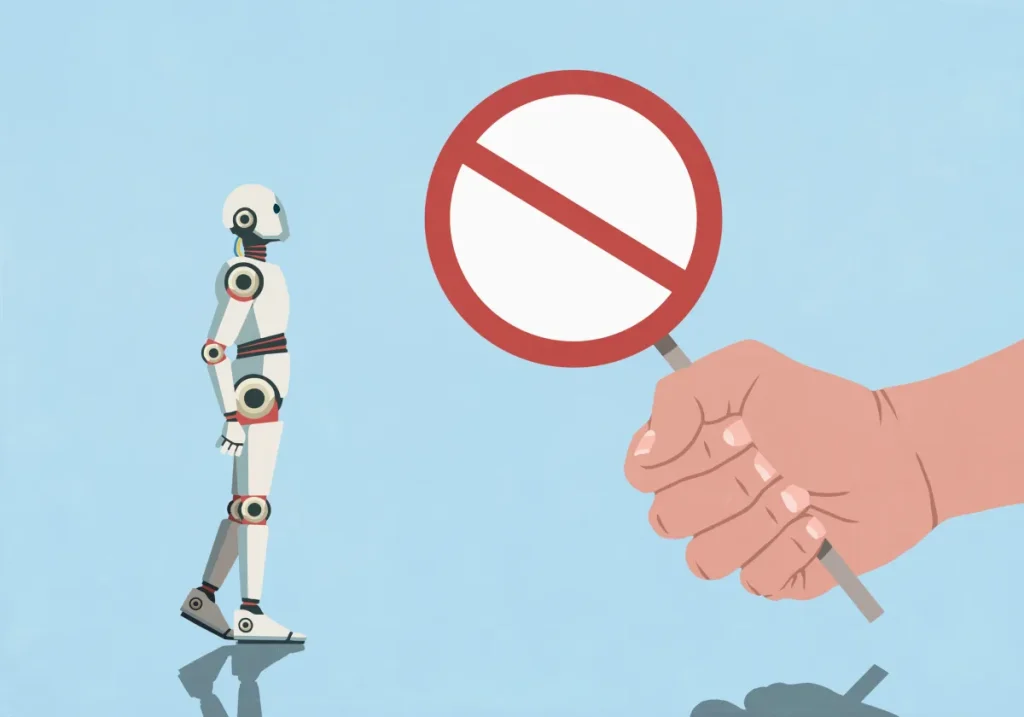
Image Credits:Malte Mueller / Getty Images
Pope Leo XIV’s Stance on AI and Human Dignity
Pope Leo XIV recently condemned artificial intelligence (AI) as a significant threat to human dignity, highlighting concerns that resonate beyond religious circles. Among those voicing their worries is David Durman, a nontheistic Humanist. Durman has taken a unique step by obtaining a religious exemption from using AI at work, setting a noteworthy precedent.
Understanding Humanism in the Context of AI
David Durman, an administrator at the University of Kentucky, describes Humanism as a framework focused on human experiences and interactions with the world. It emphasizes individual and collective well-being, advocating for people to enhance their own flourishing and that of those around them. As AI becomes increasingly integrated into daily life, Durman consulted the American Humanist Association (AHA), a nonprofit organization that promotes secular humanism. He sought guidance on how he could legally protect himself from the obligation to use AI at work, which he believes conflicts with his belief system.
Durman articulates his concerns about the impact of AI on moral responsibility. He argues that moral agency arises from the active use of our minds, and he fears that increasing reliance on AI will diminish critical thinking skills. His reflections pose important questions about the implications of automation for human cognition and morality.
In a recent AHA statement, Durman expressed his apprehensions regarding AI, stating, “AI is interfering with people’s ability to earn a living; the environmental costs spell disaster for humanity and our planet; its theft of human creativity threatens essential cultural elements like art and literature that sustain societal flourishing.”
Humanism’s Relation to AI Concerns
Humanism is often misunderstood as being anti-religious; however, it primarily attracts individuals who are skeptical about supernatural powers while still seeking a rational and ethical foundation for their beliefs. Alexandria Huiskens, a staff attorney at the AHA, notes that concerns regarding AI and human dignity are universal and can be found across various faiths and belief systems. This indicates that not only the deeply religious but also those identifying as Humanists and nontheists should understand that they too have legal protections in the workplace.
David Durman’s Unique Exemption
David Durman has become the first Humanist to secure workplace accommodations allowing him to abstain from using AI. His actions have sparked interest as one of the earliest instances of someone publicly advocating for such protections. His motivation stemmed from the experience of Erin Maus, a Unitarian Universalist software engineer, who successfully obtained similar accommodations.
“This is about me and my convictions,” Durman said. “I’m not trying to dictate anyone else’s beliefs, but I hope this encourages those with similar concerns to actively pursue resolutions—whether they seek religious exemptions or other means.”
Institutional Response to AI Exemption Requests
According to Jay Blanton, a spokesperson for the University of Kentucky, the institution evaluates requests for religious accommodations on a case-by-case basis. Each request considers the employee’s specific job responsibilities and the context surrounding the exemption sought.
“In this case, the university determined that an accommodation could be provided while still allowing the employee to perform the essential functions of their role,” Blanton stated. “As technology and job responsibilities evolve, accommodations may be revisited to ensure they remain appropriate and effective.”
The Challenge of AI in the Workplace
Erin Maus’s situation is somewhat atypical, given that most software engineers today are expected to include AI tools in their programming processes. However, Durman, who serves in an administrative capacity, focuses on aiding researchers to apply for grants. His role has not necessitated AI usage thus far. Despite that, the growing trend in various sectors toward recommending or even mandating the use of AI tools led him to pursue his exemption preemptively.
“I hope that anyone else experiencing similar feelings feels empowered to seek some form of resolution,” Durman emphasized, hoping his actions will resonate with others who share his concerns about the impact of AI on their work and psyche.
The Broader Implications of AI on Society
The ongoing discussion surrounding AI not only involves individual rights but also raises ethical questions relevant to productivity, job displacement, and the environmental footprint of AI technologies. These considerations are becoming increasingly relevant as organizations adopt AI at a rapid pace, emphasizing the need for ongoing dialogue about human values in the digital age.
In this context, it is crucial to remember that the implications of AI extend beyond the workplace. They touch various aspects of human life, from creativity to environmental stewardship, urging society at large to rethink our approaches as technology becomes more embedded in our routines.
Conclusion: Encouraging Dialogue and Reflection
David Durman’s journey illustrates a broader concern in society regarding the intersection of technology and our human experiences. While AI can offer enormous benefits, it also prompts essential discussions about morality, creativity, and human dignity. As more individuals navigate these concerns, it is vital to foster an environment that encourages open dialogue and respects diverse viewpoints while ensuring that individuals feel empowered to advocate for their convictions in a changing world.
In doing so, we not only honor our individual beliefs but also contribute to a more nuanced, equitable dialogue about the future of work and the nature of human dignity in the face of evolving technologies.
Thanks for reading. Please let us know your thoughts and ideas in the comment section down below.
Source link
#dont #god #religious #exemption #work
About The Author