The content on this page governs our Privacy Policy. It describes how your personal information is collected, used, and shared when you visit or make a purchase from learnaiwithkesse.com (the "Site").
Kesseswebsites and Advertising owns Learn AI With Kesse and the website learnaiwithkesse.wiki. For the purpose of this Terms and Agreements [ we, us, I, our ] represents the owner of Learning AI With Kesse which is Kesseswebsites and Advertising. [ You, your, student and buyer ] represents you as the user and visitor of this site. Terms of Conditions, Terms of Service, Terms and Agreement and Terms of use shall be considered the same here. This website or site refers to https://learnaiwithkesse.com. You agree that the content of this Terms and Agreement may include Privacy Policy and Refund Policy. Products refer to physical or digital products. This includes eBooks, PDFs, and text or video courses. If there is anything on this page you do not understand you agree to reach out to us via email [ emmanuel@learnaiwithkesse.com ] for explanation before using any part of this site.
1. Personal Information We Collect
When you visit this Site, we automatically collect certain information about your device, including information about your web browser, IP address, time zone, and some of the cookies that are installed on your device. The primary purpose of this activity is to provide you a better user experience the next time you visit our again and also the data collection is for analytics study. Additionally, as you browse the Site, we collect information about the individual web pages or products that you view, what websites or search terms referred you to the Site, and information about how you interact with the Site. We refer to this automatically-collected information as "Device Information."
We collect Device Information using the following technologies:
"Cookies" are data files that are placed on your device or computer and often include an anonymous unique identifier. For more information about cookies, and how to disable cookies, visit http://www.allaboutcookies.org. To comply with European Union's GDPR (General Data Protection Regulation), we do display a disclaimer a consent text at the bottom of this website. This disclaimer alerts you the visitor or user of this website about why we use cookies, and we also give you the option to accept or decline. If you accept for us to use cookies on your site, the agreement between you and us will expire after 180 has passed.
"Log files" track actions occurring on the Site, and collect data including your IP address, browser type, Internet service provider, referring/exit pages, and date/time stamps.
"Web beacons," "tags," and "pixels" are electronic files used to record information about how you browse the Site.
Additionally, when you make a purchase or attempt to make a purchase through the Site, we collect certain information from you, including your name, billing address, shipping address, payment information (including credit card numbers), email address, and phone number. We refer to this information as "Order Information."
When we talk about "Personal Information" in this Privacy Policy, we are talking both about Device Information and Order Information.
Payment Information
Please note that we use 3rd party payment processing companies like https://stripe.com and https://paypal.com to process your payment information. PayPal and Stripe protects your data according to their terms and agreement and may store your data to help make your subsequent transactions on this website easier. We never and [ DO NOT ] store your card information or payment login information on our website or server. By making payment on our site, you agree to abide by the Terms and Agreement of the 3rd Party payment processing companies we use. You can visit their websites to read their Terms of Use and learn more about them.
2. How Do We Use Your Personal Information?
We use the Order Information that we collect generally to fulfill any orders placed through the Site (including processing your payment information, arranging for shipping, and providing you with invoices and/or order confirmations). Additionally, we use this [a] Order Information to:
[b] Communicate with you;
[c] Screen our orders for potential risk or fraud; and
When in line with the preferences you have shared with us, provide you with information or advertising relating to our products or services. We use the Device Information that we collect to help us screen for potential risk and fraud (in particular, your IP address), and more generally to improve and optimize our Site (for example, by generating analytics about how our customers browse and interact with the Site, and to assess the success of our marketing and advertising campaigns).
3. Sharing Your Personal Information
We share your Personal Information with third parties to help us use your Personal Information, as described above. For example, we use System.io to power our online store--you can read more about how Systeme.io uses your Personal Information here: https://systeme.io/privacy-policy/ . We may also use Google Analytics to help us understand how our customers use the Site--you can read more about how Google uses your Personal Information here: https://www.google.com/intl/en/policies/privacy/. You can also opt-out of Google Analytics here: https://tools.google.com/dlpage/gaoptout.
Finally, we may also share your Personal Information to comply with applicable laws and regulations, to respond to a subpoena, search warrant or other lawful request for information we receive, or to otherwise protect our rights.
4. Behavioral Advertising
As described above, we use your Personal Information to provide you with targeted advertisements or marketing communications we believe may be of interest to you. For more information about how targeted advertising works, you can visit the Network Advertising Initiative’s (“NAI”) educational page at http://www.networkadvertising.org/understanding-online-advertising/how-does-it-work.
You can opt-out of targeted advertising by:
COMMON LINKS INCLUDE:
FACEBOOK - https://www.facebook.com/settings/?tab=ads
GOOGLE - https://www.google.com/settings/ads/anonymous
BING - https://advertise.bingads.microsoft.com/en-us/resources/policies/personalized-ads]
Additionally, you can opt-out of some of these services by visiting the Digital Advertising Alliance’s opt-out portal at: http://optout.aboutads.info/.
5. Data Retention
Besides your card payment and payment login information, when you place an order through the Site, we will maintain your Order Information for our records unless and until you ask us to delete this information. Example of such information include your first name, last name, email and phone number.
6. Changes
We may update this privacy policy from time to time in order to reflect, for example, changes to our practices or for other operational, legal or regulatory reasons.
7. Contact Us
For more information about our privacy practices, if you have questions, or if you would like to make a complaint, please contact us by e-mail at emmanuel@learnaiwithkesse.com or by mail using the details provided below:
8. Your acceptance of these terms
By using this Site, you signify your acceptance of this policy. If you do not agree to this policy, please do not use our Site. Your continued use of the Site following the posting of changes to this policy will be deemed your acceptance of those changes.
Last Update | 18th August 2024


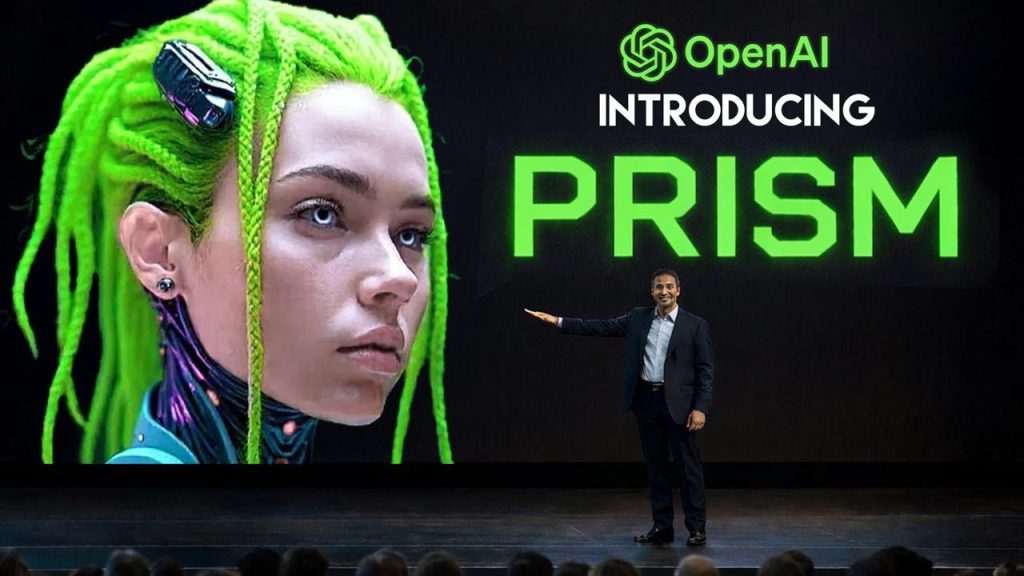



It’s interesting how Open AI is pushing deeper into tools for academic and scientific work.
AI it’s interesting to open for the next World Wide generation.
No thnx. OpenAI will want a piece of your work.
AI is most important financial opportunity for productivity growth for humanity can have better life, not with the other ways.
I am actually glad yahoo is back after over two decades.
Reality-check the hook (so you keep it compelling without overhyping)
The biggest “truth in advertising” framing is:
Prism isn’t an autonomous scientist. Even coverage sympathetic to OpenAI stresses it’s meant to accelerate human scientists’ work, not “do research on its own.”
What is potentially transformative is the workflow shift: instead of copying text between Overleaf/Word/PDFs/reference managers/ChatGPT, the model is inside the document with access to the manuscript’s structure, equations, citations, and surrounding context.
If your title is “changes science forever,” a strong way to justify it is: it changes the “operating system” of day-to-day research work (writing, citations, formatting, collaboration, and literature triage), which is where a huge amount of scientific time is actually spent.
Insightful points of interest worth highlighting (and why they matter)
1) “Cursor for papers” is the real story
Prism is basically: an AI-enhanced writing workspace + research tool for scientific papers, with GPT‑5.2 integrated to revise prose, assess claims, and search prior research. That’s a different product category than “chatbot.”
Content angle: compare the jump from “chat” → “integrated environment” to what happened with coding tools (agents + IDE integration) — OpenAI itself draws that analogy.
2) LaTeX-native + cloud is a big adoption lever
Prism is cloud-based, LaTeX-native, and built on Crixet (acquired by OpenAI) — which matters because it avoids local installs, environment pain, and compile/debug friction.
Why this is interesting: it targets the “infrastructure pain” scientists tolerate because the alternatives are worse.
3) “AI that understands your paper” (not just your prompt)
OpenAI’s product page explicitly pitches project-aware AI that works across the full manuscript context (drafts, revisions, equations, references) and can update elements coherently as the paper evolves.
Demo idea: Ask Prism to update an assumption/parameter and then propagate it through (equation → text → table caption → conclusion). Even if it doesn’t do it perfectly, that’s a great “capability vs. reality” moment.
4) Whiteboard → LaTeX and diagrams is an “hours-to-minutes” feature
OpenAI claims Prism can turn whiteboard equations/diagrams into LaTeX, and Reuters-style reporting describes a demo where a researcher converted a whiteboard diagram quickly — something he said can normally take hours.
Content angle: This is “boring but enormous.” Lots of science progress is gated by friction like figures and formatting.
5) Built-in literature search and citation workflow
Prism bakes in literature search and incorporating related work (OpenAI explicitly mentions arXiv as an example).
The product page also mentions sync with Zotero (citation search).
Novel angle: don’t just say “it finds papers” — talk about “coverage risk” (missing related work) and how AI changes the economics of literature triage.
6) Collaboration is “unlimited” by design
OpenAI emphasizes unlimited collaborators and real-time editing to reduce version conflicts and manual merges.
Why it matters: labs are messy; most papers are multi-institutional; collaboration overhead is real.
7) Prism is free (right now), and that’s strategic
OpenAI says Prism is free for anyone with a ChatGPT personal account and will come to Business/Enterprise/Education later.
Talk-track idea: “Free” dramatically expands adoption… but also raises privacy/IP and “what’s the business model later?” questions (see below).
8) Place Prism in the bigger “AI-as-collaborator” push
OpenAI published a Jan 2026 report framing ChatGPT as a scientific collaborator, citing scale like ~8.4M weekly advanced hard-science/math messages and ~1.3M weekly users on those topics.
Why it’s a compelling connection: Prism is positioned as a product response to that usage — turning “lots of science chat” into “integrated science workflows.”
What you might be missing (high-value skepticism + viewer trust builders)
A) Privacy and sensitive research data are the adoption bottleneck
OpenAI’s Prism help docs say:
Prism does not currently use Zero Data Retention (ZDR) and maintains logs for a period after requests to improve the product.
“Privacy mode” / “no text stored or human-reviewed” and EU-only data residency are requested features, but there’s no committed timeline yet.
Add this to your video:
A short segment called “Can you use this on confidential/unpublished work?” will instantly make your coverage feel more credible.
B) Missing integrations: version control and research-team workflows
From the help docs, notable gaps/rough edges include:
Git integration isn’t available yet (though described as high priority).
Version-history is described as “in progress.”
Some export/backup limitations (e.g., comments not exported; comment positions may not be recoverable).
Novel angle: Prism is “collaboration-first,” but serious labs often treat manuscripts like code: branching, diffs, reproducibility. That tension is worth calling out.
C) “Find related work” is only helpful if citations are reliable
Even when tools link out, your audience will care about:
False positives (papers that sound relevant but aren’t)
Hallucinated/incorrect citations
Overconfident summaries of papers it didn’t truly interpret
A Reuters-style account of a demo explicitly notes the researcher cautioned users to check results for accuracy.
Practical “missing” suggestion: ask for a “Citations with confidence” mode: show evidence, highlight what it read, and separate “found” from “inferred.”
D) Academic integrity + paper mills (the elephant in the room)
Even if Prism is positioned for productivity, the same tooling can accelerate:
mass production of low-quality papers
“citation laundering” (adding plausible citations that weren’t read)
style homogenization
You don’t need to moralize — just flag that journals and peer review will adapt, and the tool’s success depends on guardrails and norms.
Novel ideas and “fresh takes” to make your content stand out
1) Treat Prism like a “research QA” system, not a writing bot
Use Prism to run structured checks:
Consistency checks: do the claims match the figures/tables as described?
Definition drift: are variables defined once and used consistently?
Methods completeness: does the methods section contain enough to reproduce?
This aligns with Prism’s positioning as context-aware across the manuscript.
2) A “related work coverage” workflow (super practical)
Instead of “find papers,” do:
Ask Prism to list the core claims of your introduction
For each claim: “what citation would a reviewer demand?”
Then: “find 2–3 papers per claim”
This turns literature search into a traceable coverage map, not a pile of links.
3) “Whiteboard → publishable figure” challenge
Make it a timed challenge:
Start with a messy whiteboard photo
Convert to LaTeX / diagram
Iterate labels/layout with the AI
This is a clean, visual demonstration that communicates value to non-experts too.
4) The real “science forever” impact: speed of iteration, not one big discovery
OpenAI’s own report emphasizes AI’s near-term value as a productivity upgrade and workflow transformation (shortening cycles from hypothesis → test, etc.).
Even TechCrunch-style coverage frames Prism as helping humans accelerate, not replacing them.
So your novel thesis could be:
Prism doesn’t “discover laws of physics.”
It changes how fast humans can turn messy thinking into checkable, sharable science.
5) Compare it to the broader trend: “AI embedded into the tool you already use”
Mention that Prism fits a broader product pattern: embedding LLMs into workflows (browser, office suite, IDE, etc.), rather than being “just another chatbot tab.”
He said LaTex! 😀
One Love
Always Yahoo gives me bad search results.
It's just a „wrapper”- they copied the idea from Manus AI.
oh gosh, how magnanimous of them to finally include us little people who have already been doing this shit on our own for years now without their benevolence I am paying them a fortune on top of it. Good job AI thank you so much for recognizing there are people other than you guys that might be able to contribute. 🙄🙄🙄🙄🙄
if the transrobot knew anything, it would already know that no serious researcher would use PRISM other than for mathematical formulas, etc…..more garbage from the TV robot…and reference hallucinations are still a major problem…can you imagine trusting chatgpt to your bibliography? chatgpt generally makes dummies feel like they're smart…..smart people know chatgpt dumbs them down.
thanks, great as usual keep up the good work! short clean and informative
Not gonna watch this trash. Just came here to comment that it is in fact trash.
stay on topic
"… Changes Science Forever"
You mean forever FOREVER or just FOREVER forever?
❤
OpenAI does not and never will have ROI. 2 Musk lawsuits are occurring in March
😅😅😅 scientist not going to use it because of privacy issue.
Interesting. As an hobbist that shares science reaseach papers into Ai…on the free plan, to get summaries.
With how many science related links, I shared. I'm not surpised ClosedAi made this "prism" model. Then again, apartally. I am 1 of millions of people asking for science related stuff.😅
Then again, as someome who protentally helpped train it. I'm an litlle worried and excited at the same time. Used correctly, interesting things can start happening, but it could also be abused as well.
With that said, I think that…more good things will happen.🙏🙏🙏