Championing the Visionary Behind Google’s Data Center Innovations in the AI Arms Race
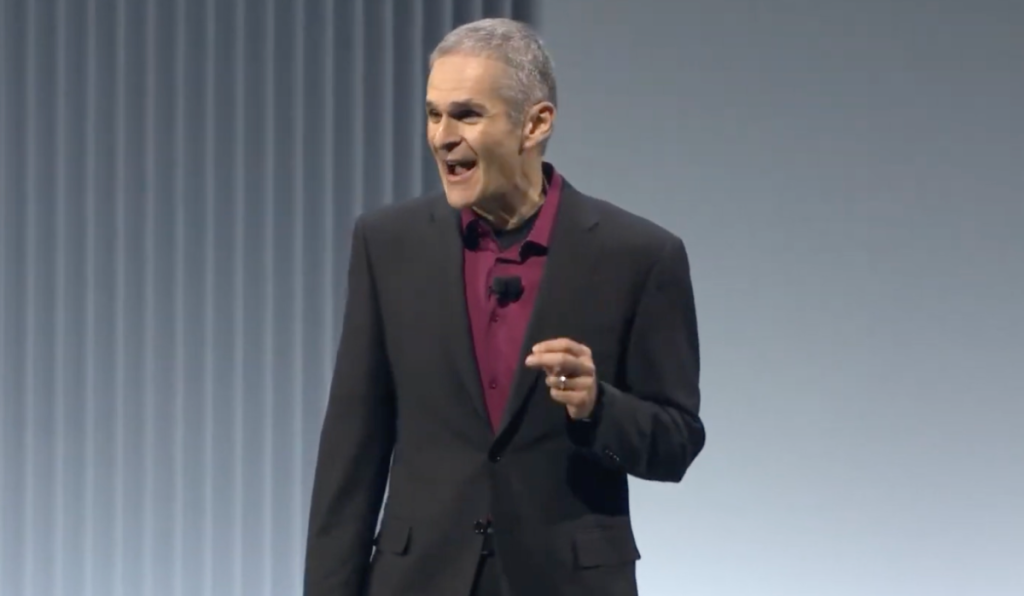
Image Credits:YouTube
Google Elevates Amin Vahdat to Chief Technologist for AI Infrastructure
Google has made a significant move in the competitive landscape of artificial intelligence by promoting Amin Vahdat to the newly established position of Chief Technologist for AI Infrastructure. Reporting directly to CEO Sundar Pichai, this move underscores the growing importance of AI infrastructure as Google anticipates spending up to $93 billion on capital expenditures by the end of 2025—projecting even larger investments in the years to follow.
Amin Vahdat: A Veteran in AI Development
Amin Vahdat is no stranger to the artificial intelligence field. Holding a PhD from UC Berkeley, he began his career as a research intern at Xerox PARC in the early 1990s. Over the last 15 years at Google, Vahdat has been instrumental in building the company’s AI framework, focusing on enhancing computational efficiency on a massive scale. Prior to joining Google as an Engineering Fellow and VP in 2010, Vahdat served as an associate professor at Duke University and later as a professor and SAIC Chair at UC San Diego. His impressive academic record includes around 395 published papers, showcasing his expertise in the domain.
Achievements in AI Infrastructure
Vahdat’s influence and recognition within Google are undeniable. Just eight months ago, he took center stage at Google Cloud Next, where he introduced the seventh-generation Tensor Processing Unit (TPU) named Ironwood. As VP and GM of Machine Learning, Systems, and Cloud AI, he unveiled specifications indicating that each pod contains over 9,000 chips, yielding 42.5 exaflops of computational power—over 24 times that of the leading supercomputer at the time.
During his presentation, Vahdat highlighted the soaring demand for AI computing, which has surged by a staggering factor of 100 million in the past eight years. This rapid growth illustrates the escalating reliance on AI capabilities across various sectors.
Essential Technologies Behind Google’s Success
Behind the scenes, Vahdat has played a crucial role in the subtle yet vital technology that keeps Google ahead of its competitors, such as OpenAI. His responsibilities include orchestrating the development of custom TPU chips, essential for AI training and inference. Additionally, Vahdat has managed the Jupiter network, a high-speed internal infrastructure that interlinks Google’s servers, enabling them to communicate and exchange vast amounts of data seamlessly. This network can theoretically support a video call for all 8 billion people on Earth simultaneously, scaling up to 13 petabits per second.
The Role of Borg and Axion
In addition to his accomplishments with TPU and Jupiter, Vahdat is integrally involved in developing the Borg software system. This cluster management framework coordinates all operational tasks across Google’s data centers, managing which servers will carry out specific jobs, the timing, and duration of these tasks. His oversight has also extended to Axion, Google’s first custom Arm-based general-purpose processors designed explicitly for data centers, emphasizing his commitment to advancing Google’s infrastructure capabilities.
A Strategic Move for Talent Retention
Google’s decision to elevate Vahdat to a C-suite role may serve dual purposes. Not only does it highlight Vahdat’s vital contributions to Google’s AI strategy, but it also aims to ensure talent retention in a highly competitive job market. Attracting and keeping top AI professionals is increasingly challenging as companies offer astronomical salaries and aggressive recruiting strategies. After dedicating 15 years to construct Vahdat into a keystone of Google’s AI endeavor, it makes strategic sense to officially recognize him in this manner.
The Impact on Future AI Initiatives
Vahdat’s promotion paves the way for more focused initiatives in AI infrastructure at Google. With projected financial investments rising, the demand for advanced AI models, machine learning capabilities, and robust infrastructure will only increase. Vahdat’s leadership and experience uniquely position Google to tackle these challenges head-on, further solidifying its standing in the AI race.
Conclusion
Amin Vahdat’s promotion to Chief Technologist for AI Infrastructure marks a pivotal development for Google as it strives to enhance its AI offerings and infrastructure. With an impressive academic background and prior achievements, Vahdat is set to guide Google through future challenges in the AI landscape. As the importance of AI continues to surge, his role becomes ever more critical in ensuring that Google retains its competitive edge. In a rapidly evolving field, Vahdat’s expertise and leadership will be essential for driving innovation and advancing the company’s significant investments in AI technology.
As organizations worldwide ramp up their AI capabilities, the implications of Vahdat’s strategies could extend beyond Google, potentially influencing the broader industry landscape as well.
Thanks for reading. Please let us know your thoughts and ideas in the comment section down below.
Source link
#Googles #answer #arms #race #promote #guy #data #center #tech
About The Author