

Commonwealth Fusion Systems installs reactor magnet, secures partnership with Nvidia.
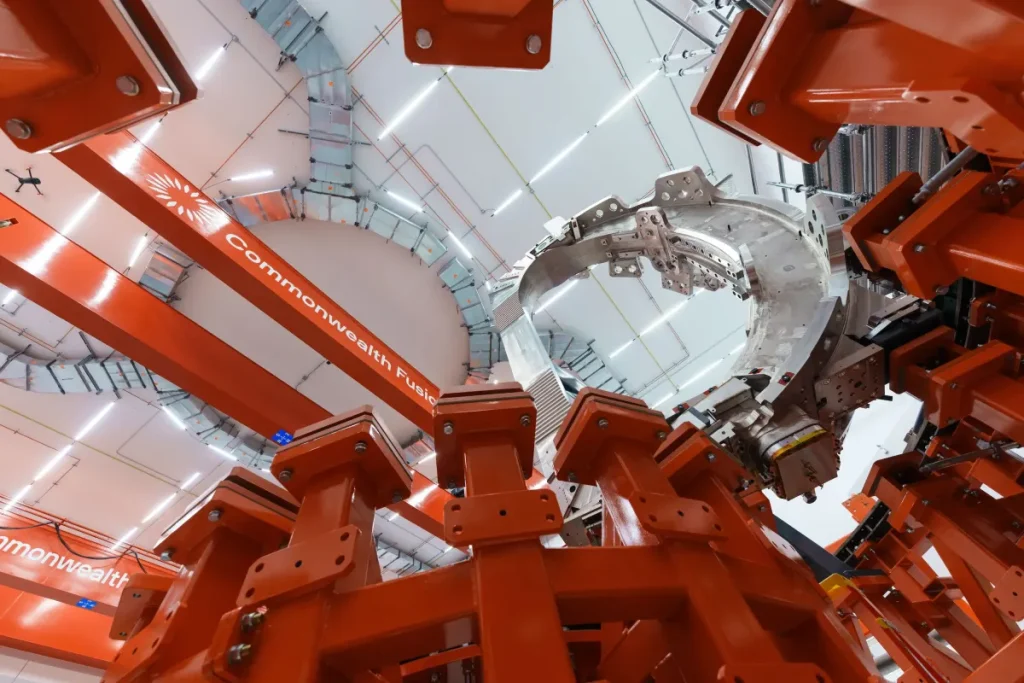
Image Credits:Commonwealth Fusion Systems
Commonwealth Fusion Systems Makes Significant Strides at CES 2026
At CES 2026, Commonwealth Fusion Systems (CFS) announced a major milestone in its ambitious journey to harness fusion power: the installation of the first magnet in its Sparc fusion reactor. This demonstration device aims to become operational next year and represents a significant step towards making fusion energy a reality.
The Role of Magnets in Fusion Energy
The magnet now installed is the first of 18 that will eventually create a doughnut-shaped configuration essential for generating a powerful magnetic field. This field will confine and compress superheated plasma, with the hope that the resulting energy output will surpass the energy required to heat and compress it. If successful, this could revolutionize energy production.
After decades of research and development, fusion energy may soon be more than just a promise. CFS is competing with other organizations to deliver the first electrons to the grid in the early 2030s. Achieving effective fusion power could unleash nearly limitless clean energy, akin to traditional power plants but with far fewer environmental repercussions.
Progress on the Sparc Reactor
According to Bob Mumgaard, co-founder and CEO of CFS, key components for Sparc’s magnets are nearing completion. The company expects to install all 18 magnets by the end of summer 2026. Mumgaard stated, “It’ll go bang, bang, bang throughout the first half of this year as we put together this revolutionary technology.”
Each D-shaped magnet weighs an impressive 24 tons and is capable of generating a 20 tesla magnetic field—more than 13 times stronger than a standard MRI machine. Mumgaard emphasized their power by saying, “It’s the type of magnet that you could use to lift an aircraft carrier.”
To achieve that magnetic strength, the magnets will be cooled to a chilling -253˚ C (-423˚ F), enabling them to safely conduct more than 30,000 amps of current. Meanwhile, within the reactor’s doughnut structure, plasma will reach temperatures exceeding 100 million degrees C.
Developing a Digital Twin
CFS is not stopping at just physical advancements; the company is also collaborating with industry leaders Nvidia and Siemens to develop a digital twin of the Sparc reactor. Siemens is providing design and manufacturing software that will streamline data collection, which will then be utilized with Nvidia’s Omniverse libraries to generate a digital counterpart of the reactor.
While CFS has conducted numerous simulations to gauge various components of the reactor, Mumgaard explained that these existing simulations often generate results in isolation. The digital twin will change this by allowing for real-time comparisons with physical operations throughout the entire development process, enabling a more responsive approach to potential challenges and adjustments.
“Our approach is evolving,” Mumgaard stated. “These are no longer isolated simulations just for design; they will exist alongside the physical project. We’ll continuously compare them to enhance performance continuously.”
The digital twin aims to enable experimentation and parameter adjustments before applying modifications to the actual Sparc reactor, speeding up the learning process. “It will run alongside so we can learn from the machine even faster,” Mumgaard added.
Funding and Future Prospects
Building Sparc has proven to be a significant financial undertaking. To date, CFS has raised nearly $3 billion, including a recent $863 million Series B2 round in August from esteemed investors like Nvidia and Google, as well as nearly three dozen others.
Looking ahead, CFS plans to create its first commercial-scale power plant, Arc, which is expected to cost several more billion dollars, making it the first of its kind in the world.
Mumgaard expresses optimism that AI technologies and advancements in digital twin systems will help expedite the timeline for delivering fusion power to the grid. “As machine learning tools and system representations become more precise, we anticipate accelerating our progress as there is an urgent need for fusion to get onto the grid,” he explained.
The Future of Fusion Energy
With groundbreaking developments taking place at CFS, the global vision for energy sustainability and reliability seems more attainable than ever. If successful, these developments could herald a new era of clean energy.
As CFS and other pioneers in the field advance, the world is watching closely. Not only does fusion power promise sustainability, but it also offers the potential to meet the growing energy demands without the environmental impact carried by traditional energy sources.
For those interested in keeping up with the latest advancements in fusion energy and other technological innovations, TechCrunch will cover highlights and breakthroughs from this year’s CES conference.
As the countdown continues toward the operational start of Sparc, the excitement surrounding fusion energy only intensifies. The possibility of a commercial breakthrough could fundamentally reshape how we generate energy and propel humanity toward a more sustainable future.
Thanks for reading. Please let us know your thoughts and ideas in the comment section down below.
Source link
#Commonwealth #Fusion #Systems #installs #reactor #magnet #lands #deal #Nvidia
About The Author