

Google’s Titans Have Addressed AI’s Major Flaw, Yet…
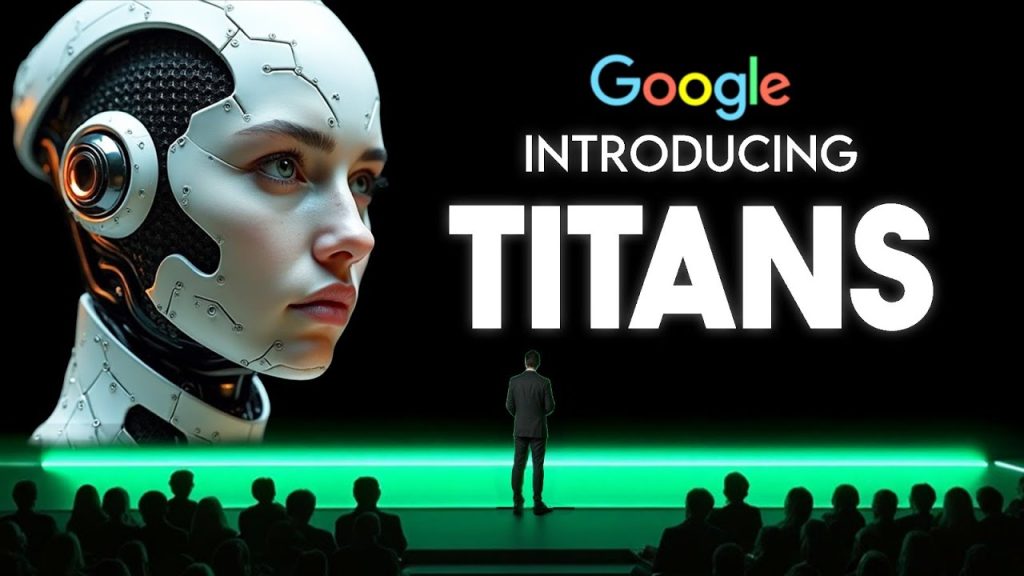
Google’s Recent AI Breakthroughs: A Game Changer in the AI Ecosystem
Google has been on a remarkable roll, unveiling numerous updates across various facets of the AI landscape in just a few days. From a game-changing long-term memory system to new models that drive user engagement, let’s explore these developments shaping the future of AI.
1. Long-Term Memory System
Google’s foray into long-term memory systems marks a significant step forward. This innovative approach aims to expand context windows, enabling AI models to process vast amounts of information effectively. By implementing a long-term memory module, Google has found a way to update and store information dynamically, allowing the AI to learn during use.
This contrasts with traditional models, which struggle with long inputs and may lose critical details. Google has introduced three types of long-term memory: memory as context, memory as gate, and memory as layer. These enhancements aim to provide a robust framework for AI applications.
2. Launch of Lux from Open AGI Foundation
In a parallel development, the Open AGI Foundation has launched Lux, a computer user model that redefines agent interaction. Lux goes beyond mere chat functionalities; it comprehensively interacts with user interfaces by reading screens, executing clicks, and managing tasks across various applications like browsers and spreadsheets.
Lux achieved impressive results on the Mind 2 web benchmark, boasting a score of 83.6 while other models lagged significantly. This performance illustrates Lux’s potential for genuinely transforming how AI interacts with digital environments. Its three operational modes—Actor, Thinker, and Tasker—cater to different user needs, addressing various levels of complexity in task execution.
3. Cost-Efficiency of Lux
Another remarkable aspect of Lux is its cost efficiency. Its operational costs reportedly come in at ten times cheaper per token than its competitors, making it an attractive option for businesses aiming to automate workflows without breaking the bank. Its ability to learn through active interaction rather than passive observation gives it an edge in adaptability and efficiency.
4. The Nano Banana 2 Flash Model
Switching gears, Google is also preparing to introduce the Nano Banana 2 Flash model. This model aims to deliver performance on par with the Pro version at a significantly lower cost. By creating a cost-effective alternative, Google aims to broaden access to high-quality models, especially for tasks requiring rapid image generation or processing of large data sets.
The anticipation surrounding the public announcement in December indicates Google’s strategy to enhance user accessibility and engagement. Offering a competitively priced model reinforces their goal of expanding the Nano Banana line’s reach.
5. AI-Generated Headlines Experiment
In a surprising development, Google has begun testing AI-generated headlines within the Google Discover platform. This experiment has drawn criticism from journalists as the AI reformulates article headlines in ways that can sometimes misrepresent the original intent of the content. Instances of misleading headlines have raised significant concerns about the potential erosion of trust between news outlets and their audiences.
While Google characterizes this as a UI experiment intended to improve user experience, the implications it carries for journalism are notable. As AI continues to filter content, the challenge lies in preserving the integrity of the information conveyed.
6. Gemini’s Surge in User Growth
Another compelling aspect of Google’s recent efforts is the meteoric rise in active users for their Gemini platform. Recent statistics indicate that Gemini experienced a staggering 30% growth in monthly active users compared to a mere 6% increase for ChatGPT during the same timeframe. This trend signals a significant shift in user preference as Gemini’s ecosystem continues to flourish.
Engagement levels further bolster this growth narrative. Gemini users now spend an average of 11 minutes daily in the app, a 120% increase since March. This growing user-base is largely driven by the popularity of features like the Nano Banana image generator, especially among younger audiences seeking creative tools.
7. Competitive Landscape
The announcements around Google’s advances in AI come at a critical time, especially for competitors like OpenAI and Anthropic. In response to the burgeoning growth of Gemini, OpenAI has reportedly shifted its focus toward the development of a new model named Garlic, intended to surpass Gemini 3 in coding and reasoning capabilities.
The competitive dynamics are now shifting rapidly as companies strive to keep pace with one another. Google’s escalating momentum is compelling rivals to react promptly to maintain their relevance in an increasingly crowded marketplace.
Conclusion
Google’s recent updates represent a transformative phase in the AI ecosystem, characterized by enhanced long-term memory capabilities, innovative user models like Lux, and strategic initiatives to expand user engagement across platforms. These advancements pose exciting prospects for AI applications in various fields while challenging existing paradigms.
As competition heats up among major players, the landscape is poised for further shifts that could redefine the nature of user interactions with AI. Keeping an eye on these developments will be crucial for anyone interested in the future of artificial intelligence.
Stay tuned for the next wave of updates as this space continues to evolve at an unprecedented pace.
#Googles #Titans #Solved #AIs #Biggest #Weakness #But..
Thanks for reaching. Please let us know your thoughts and ideas in the comment section.
Source link
About The Author



👉 Get the FREE AI Power Prompts Starter Pack: https://aiskool.io/powerprompts
creepy robot.. urgh
Google has dominated the web since a little after 1998 when it got serious, remember the queues for the 1TB gmail accounts?… OpenAI and every other platform is going to have to break the mold and come up with something untouchable; and sustainable. Or, they'll just flop along, miles behind Google just like Bing has been doing for years.
Some AI players chased benchmarks. Google Gemini brought its ecosystem with it from day one, every step of the way. For 99% of the population, AI ecosystem is where they will live.
Love your channel
Google rewriting anything without explicit permission followed by explicit user edit approval is dangerous and outrageous.
I can't wait to see sriracha model. LOL
looks big
The smart money is heavily on December 9th over the 22nd for one simple reason: logistics.
We know the gemini-live-2.5 API deprecates tomorrow, and Google rarely kills a preview without a successor ready to take the load.
But, more critically, launching tomorrow buys them a two-week safety net for bug fixes and media coverage before the holiday shutdown. Waiting for the 22nd is effectively releasing into a void with skeleton crews and zero press attention.
If they want to own the news cycle, they launch Tuesday; if they launch on the 22nd, it means they're burying a product they aren't confident in.
I pray Artificial Intelligence needs the Power of Quantum Computers, Merry Christmas 🎄 for the New Year 2026, Fault Tolerant Quantum Computer 2029, Quantum Internet Teleportation Artificial Intelligence System over People reading universe program Stargate flight doing better than money restore experience time in advancements nature in technology doing better than death everything in life Aliens among us flying cars and God bless America the future and life extension of the universe. Amen. God bless.
Had that been implemented anywhere?
Never trust chatgpt. Data is harvested
Gemini and Copilot adoption rates aren't entirely voluntary – Google and Microsoft are just injecting them into already-established ecosystems and defaulting them to "on."
Im getting so exhausted from all these constant spontaneous micro updates from all of them. Like not a month between, but all companies were juggling each week..
It feels like maybe my standards are stuck in the past, because this channel about AI has some of the best content around while so much AI-generated material today is sloppy, shallow, or outright annoying. At the same time, all this hype around AI feels like a distraction, especially considering that historically the first serious use-case for advanced robotics has always been military.
People talk about AI “replacing” the lower and middle classes, but I don’t think that’s the right way to frame it. The working class mostly exists in an economy that serves itself. Millionaires may still be tied to that system, but billionaires simply don’t rely on us. It seems more likely that the lower, middle, and working classes will just be left together, outside the upper class’s supply chain entirely.
And if that happens, the only robots most of the public will actually interact with may be enforcement systems—machines built not to serve us, but to monitor us, restrain us, and ensure we’re “safe” by staying indoors and complying with whatever new “supplements” we’re required to take.
This ties uncomfortably close to the messaging that came out of Davos years ago, especially the now-infamous WEF prediction from its creator who said that “you will own nothing and be happy.” It paints a picture of a future where ordinary people lose control over ownership, independence, and personal choice. And with the growing push toward alternative protein sources, it’s easy to see why many people summarize the trend as “you will eat the bugs.”
None of this is far-fetched when you consider how fragile the system really is. It takes only a few days without a functioning supply chain for everything to change. In my city during the lockdowns the stores had arrows written on the floor insisting that you walk down the isles in ONE direction. Fedex gave me a pass to show police if pulled over during lockdowns. I live in Kansas. Those people making those choices were telling us five years of lockdowns. Remember? Nothing left just police and giant corporations.
Yeah , you all say that Google grew and you seem surprised.
But Google was expected to grow. Furthermore to lead.
Google has been seriously investing in AI while the rest were
bullshitting the world with Siris and Bixbies.
Think about that . OpenAi was created to be a counter to Google's obvious monopoly.
Often with people originating from Google , which set the scientific basis for all of this
publishing relevant papers.
It is like Google is the source , and the rest just bigger and smaller streams , because no-one has managed
to invest so much for so long and have the best players for so long.
It is the difference between investing real money and bleeding and ivesting small sums on mature technologies to make a big quickie.
(then playing it a wiseguy , smart efficient and making a ton of money on other people's investment by charging and arm and a leg for
something it was never yours).
Does this ring a bell?
But eventually the novelty which you borrowed and made you strong expires. So people that keep innovating will still outpace you.
But you had your day underthe sun. So, be happy.
My eternal question is, will we get UBI?
No timestamps -> ai summary with Gemini
Are we back to thumbnails with ai robot girls? I thought they disappeared because after every ai video had them everyone hated them?
I think they need to improve how long it maintains its stability during conversations and tasks, as well as memory.
What did people expect? Of couse google will come out on top in the end.
While google is my secondly choice, so I not completely bias. My main favouite is microsoft coploit, which doesnt get enough good attention.
With that said, as the saying goes…."If you know your the best. Theres no need to flex or boost about it".