

Incredible Local Open Source AI Music Software
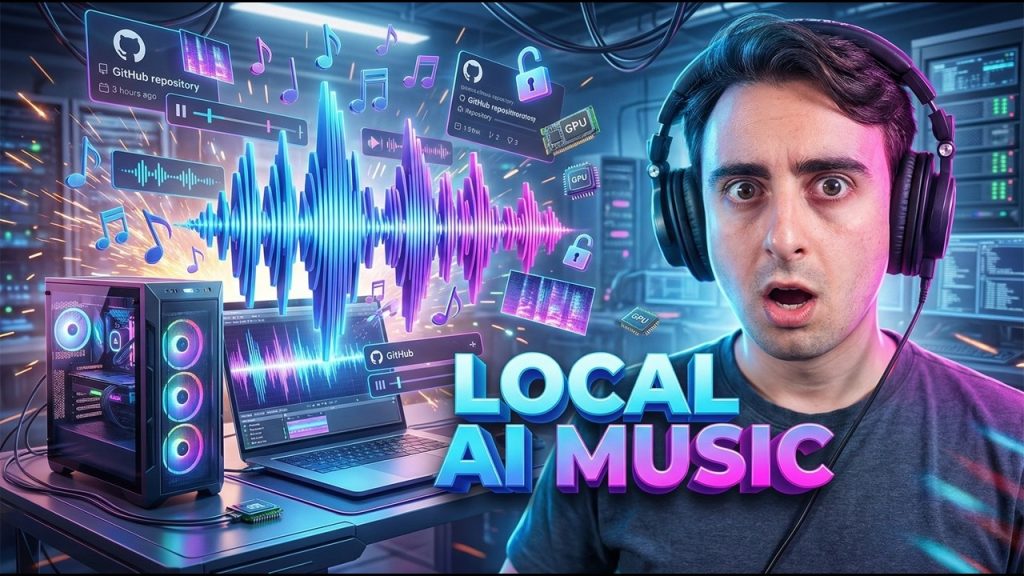
Discovering the Power of Open Source AI Music Tools
The world of music has undergone a significant transformation in recent years, primarily due to technological advancements. One of the most fascinating developments is the emergence of open-source AI music tools. These tools not only empower musicians but also democratize music creation for everyone—whether you’re a seasoned professional or a budding amateur.
What Is Open Source AI Music?
Open source AI music refers to software and tools that utilize artificial intelligence for music composition, generation, and manipulation. Being “open source” means that the source code is available for anyone to use, modify, and distribute. This opens doors for collaboration, innovation, and accessibility, allowing a wider array of individuals to participate in music production.
The Rise of AI in Music Composition
Artificial intelligence has proven to be a valuable ally in the creative process. AI algorithms can analyze vast amounts of music data—from classical symphonies to contemporary pop hits—enabling the software to understand patterns in composition, melody, rhythm, and more. As a result, musicians can generate new musical ideas by simply inputting their preferences or providing a basic framework.
Features of Open Source AI Music Tools
1. Versatility in Genres
One of the standout benefits of open-source AI music tools is their versatility. These platforms can create compositions across various genres, whether it’s orchestral, electronic, jazz, or pop. Users can explore and experiment with styles, allowing for a richer musical landscape.
2. Collaboration Made Easy
Open-source tools promote collaboration among musicians and developers. Artists can share their projects, showcase their skills, and even co-create tracks with others around the globe. This collaborative spirit fosters creativity and generates innovative results that might not have been possible otherwise.
3. Customizability
Since open-source software allows access to the underlying code, users can tweak features to suit their specific needs. Whether it’s adjusting algorithms for better tuning or altering the user interface, the customizability ensures that the software grows with the user’s capabilities and ambitions.
4. Cost-Effective Solutions
With many AI music tools being open source, aspiring musicians don’t have to worry about breaking the bank. Many of these platforms are free to use, enabling individuals from diverse financial backgrounds to access powerful music creation tools without expensive licensing fees.
Popular Open Source AI Music Tools
1. MuseNet
MuseNet, developed by OpenAI, showcases the potential of AI in generating complex and coherent musical compositions. It can generate piano compositions based on various styles and pieces, providing users with an extensive library of sounds and inspirations.
2. Magenta
Google’s Magenta is another remarkable tool for music and art creation. Built on TensorFlow, Magenta invites users to experiment with machine learning for generating music, offering features such as melody generation, accompaniment creation, and more.
3. JukeBox
Also from OpenAI, JukeBox is an AI model that generates music in raw audio format. It is capable of creating songs that span various genres and even mimic the styles of renowned artists. The originality of the compositions offers musicians a unique starting point for their projects.
How to Incorporate AI Music Tools Into Your Workflow
Start Small
If you’re new to using AI music tools, begin with small projects. Experiment with different genres, styles, and features. Use the generated compositions as inspiration or foundations for original pieces.
Collaboration
Engage with other musicians in your community or online. Share your experiences with open-source AI tools and collaborate on projects. The beauty of open-source software is the ability to learn from and build on each other’s work.
Don’t Rely Solely on AI
While AI can be a fantastic asset, balance your creativity with traditional music-making approaches. Use AI-generated music as a starting point or an idea generator but ensure that your personal touch is evident in the final product.
The Future of AI and Music Creation
The evolution of open-source AI music tools signals a new era in the music industry. These innovations will likely continue to blur the lines between technology and artistry. As AI becomes more sophisticated, its ability to inspire creativity and enhance the music-making process will grow exponentially.
Conclusion: Embrace the Future of Music
The world is witnessing an explosion of creativity and innovation, thanks to open-source AI music tools. As technology continues to advance, it opens opportunities for more individuals to express themselves through music, irrespective of their technical skill level. By using these tools, both musicians and aspiring artists can rethink their creative processes and explore unlimited possibilities in music composition. Embrace the future of music and consider integrating open-source AI tools into your creative toolkit today!
#Open #Source #Music #INSANE #Runs #Locally
Thanks for reaching. Please let us know your thoughts and ideas in the comment section.
Source link
About The Author


Wow
👋 Hello there
fucking finally! Music has been lacking in the open weights space
Cool
So basically since it is above suno and udio, it can play any song exactly with accuracy. Can i import an mp3 in it so that i can change the genre?
Incredible. Im gonna run this locally
Love the glasses!!!!!!!! They are fire!
GREAT INFO. THANKS FOR SHARING
This is only helpful to people that have expensive that have great hardware in the computers but its nice to know i have something to look forward too in the future when i upgrade my hp laptop to something else
I've got shivers and not because it's -28C
System requirements? Okay online seems to say 16GB Minimum. Which is exactly what I have. So it may be slow for me etc. Another source suggests 20GB? So I don't know.
Thank you for the demo.
I wanted to hear some examples, so I appreciate it.
Since it is running local can I use my own music library as a learning model?
All Hail Open Source King!!!
It not suno grade by far what I didn't see is the training weights how are newer models trained?
I like what he did with the voice changer. Sounds good. He's got talent.
What I miss most about audio is its ability to really great and period accurate music in vintage genres, psychedelic rock, disco, big band, not many models to my mind seem to do that well.
Soon you will hit 300K subscribers, because you are AWESOME! Gold voice as well.
This was the shift we needed, this is the threat to let Music Labels onow they can no longer prevent the general public from making better music than the artists and songs they try to force on us.
They thought they could still control this by suing Udio & Suno to scare them to prevent us from being able to use their tools, but now they have no control anymore.
They cant sue the whole world and now they can't stop, threaten or contain us anymore.
Serves Udio right for selling out early, they screwed themselves and now are stuck serving Universal
I use Claude code on Linux and it's been utterly transforming the stuff I've gotten done.
Bog standard Suno female singer. Seems really smooth but maybe that's just lack of detail. Really don't know but this is a great development! Thanks for the update.
Were the test done with the unreleased 7b version? The 3b version seems like Suno 3.5 .
Hopefully the 7B can do instrumental.