
Nadella Urges a Shift in Perception: AI is More Than Just ‘Slop’
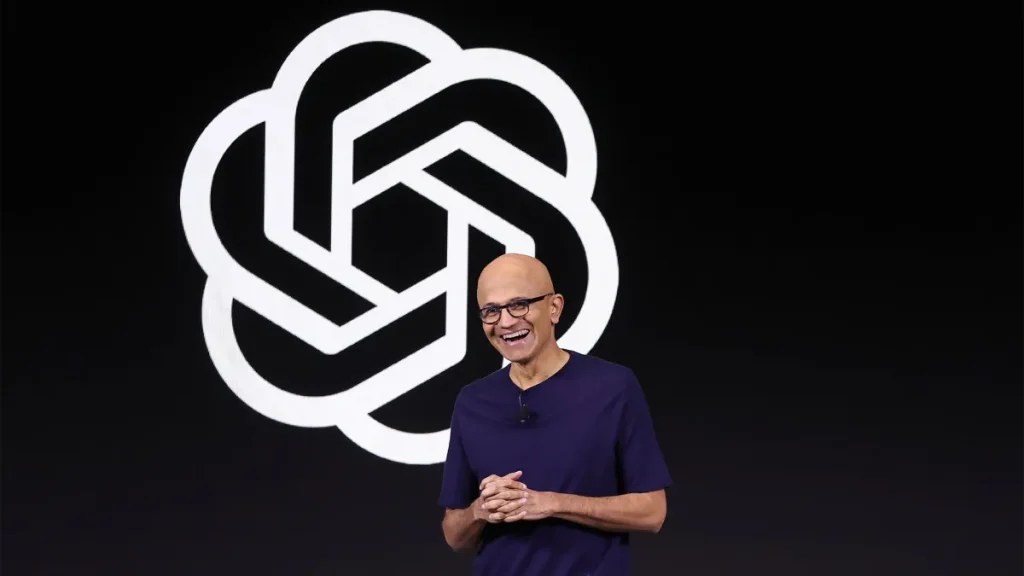
Image Credits:Justin Sullivan / Getty Images
Understanding AI’s Role in the Future Workforce
In the wake of Merriam-Webster naming “slop” its word of the year, Microsoft CEO Satya Nadella recently shared his vision for the future of artificial intelligence (AI) by 2026. In his trademark thoughtful manner, he urged us to reconsider our perception of AI—not as “slop,” but as “bicycles for the mind.”
Rethinking AI: From Slop to Potential
In his blog, Nadella emphasized the need to evolve our understanding of AI. Rather than viewing it merely as a replacement for human labor, he suggested we think of AI as a supportive tool that enhances human potential. He stated: “We need to get beyond the arguments of slop vs sophistication and develop a new equilibrium in our ‘theory of the mind’ that incorporates these cognitive amplifiers.”
This perspective challenges the narrative that often frames AI as a threat to human jobs. Nadella advocates for a shift in the tech industry’s discourse—from portraying AI as a substitute to highlighting its role as a productivity-enhancing tool.
The Prevalent Fear of Unemployment
Despite Nadella’s positive outlook, significant concerns remain about the impact of AI on employment. Prominent figures, including Dario Amodei, CEO of Anthropic, have warned that AI could eliminate up to half of all entry-level white-collar jobs, potentially raising unemployment rates to between 10-20% in the next five years.
However, the current research landscape does not provide a clear picture of the impending crisis. As Nadella points out, many AI tools are not designed to replace jobs; rather, they empower workers who are willing to verify the AI’s output.
Project Iceberg: Insights on AI’s Impact on Jobs
A noteworthy study is MIT’s ongoing Project Iceberg, which aims to measure how AI is affecting the job market. According to the project, AI currently accounts for approximately 11.7% of human-paid labor, not as a direct replacement, but as a task that can be offloaded to technology. Examples include automated paperwork for nurses and AI-generated coding.
While certain jobs, such as corporate graphic designers and marketing bloggers, are facing significant changes, others show that skilled workers using AI tools can produce superior outcomes. Thus, AI does not entirely replace human creativity; rather, it complements and enhances it.
Jobs Flourishing in the AI Era
As 2026 approaches, new data reveals intriguing trends: industries most affected by AI are not only surviving but thriving. Vanguard’s economic forecast for 2026 reports that the 100 occupations most exposed to AI automation are outperforming the broader job market in terms of growth and wage increases. The report concludes that individuals who adeptly leverage AI are becoming more indispensable rather than being replaced.
The Irony of Microsoft’s Layoffs
However, the narrative of AI as job-threatening isn’t without irony. In 2025, Microsoft laid off over 15,000 employees despite achieving record revenues and profits. Nadella attributed these cuts to the need to “reimagine our mission for a new era,” emphasizing “AI transformation” as one of the company’s primary objectives.
Importantly, Nadella did not explicitly link these layoffs to internal efficiencies driven by AI. Instead, the truth behind job losses connected to AI is more complex and reflects broader business strategies rather than direct consequences of automation.
A Market-Wide Phenomenon
Microsoft was not alone in implementing significant layoffs while pivoting toward AI. Research from Challenger, Gray & Christmas indicated that AI-related developments accounted for nearly 55,000 layoffs across the United States in 2025, with major tech companies like Amazon and Salesforce following suit.
Embracing the Fun Side of AI: The Slop Dilemma
For many who find joy in AI-generated memes and short-form videos, the concept of “slop” might not seem entirely negative. These applications of AI provide entertainment and an outlet for creativity, showcasing a different facet of the technology that resonates with the public.
Conclusion: Navigating AI’s Future
The discourse surrounding AI is evolving. Satya Nadella encourages us to envision AI as an augmentative force, enhancing human capabilities rather than replacing them. As we delve deeper into the impacts of AI, it is essential to approach the discussion critically, balancing optimism about the technology’s potential with the realities of job changes in a rapidly evolving landscape.
As we march toward 2026, the challenge will be finding meaningful ways to integrate AI in ways that enhance human work, providing both productivity gains and economic opportunities for all. The conversation is not just about replacing jobs but about reimagining the workforce and the ways we can utilize technology to support human ingenuity and creativity.
Thanks for reading. Please let us know your thoughts and ideas in the comment section down below.
Source link
#Microsofts #Nadella #stop #thinking #slop
About The Author