

Tech Leaders Compete and Celebrate Advancements in AI at Davos
How did Davos turn into a tech conference?
Transformative AI Conversations at Davos 2023
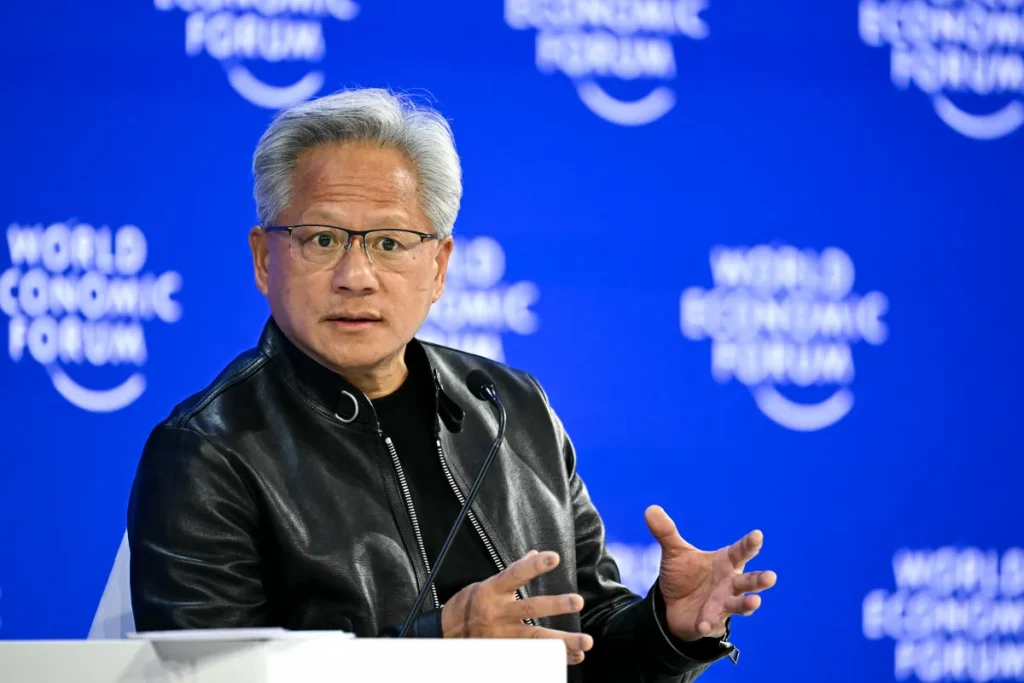
This year’s World Economic Forum in Davos took on a distinctly tech-focused tone, with major appearances from industry leaders such as Tesla’s Elon Musk, Nvidia’s Jensen Huang, Anthropic’s Dario Amodei, and Microsoft’s Satya Nadella. The central topic revolved around artificial intelligence (AI), with CEOs articulating grand visions for its transformative potential while also expressing concerns about a possible bubble inflating around the technology.
A Shift in Focus
In past years, key discussions tended to revolve around global challenges like climate change and poverty. However, Kirsten Korosec, a prominent voice on TechCrunch, observed a shift during this year’s conference. Major companies, including Meta and Salesforce, dominated the promenade, suggesting a prioritization of tech over traditional global issues. Surprisingly, topics deemed critical in previous years, such as environmental concerns, failed to draw significant attention from attendees.
There was also a notable attendance from Musk, who historically skipped Davos. His participation raised eyebrows, as the discussions didn’t delve deeply into substantial innovations but instead showcased a parade of tech executives discussing futures and innovations.
The Geopolitical Landscape of AI
Discussions centered on AI intersected with broader questions about international trade and politics. A significant moment came when Dario Amodei of Anthropic criticized the previous U.S. administration’s decision to allow Nvidia to export chips to China. His comments highlighted the complexities embedded in tech narratives, where AI-related discussions can easily morph into trade and political debates.
Amodei further described data centers as akin to countries filled with “geniuses,” questioning the wisdom of permitting such resources to flow freely to geopolitical adversaries. His remarks exemplified the unique position tech leaders find themselves in, as they not only navigate the cutting-edge landscape of technology but also wrestle with its implications in a global context.
Intercompany Dynamics
CEO interactions revealed underlying tensions, as they frequently exchanged barbs at one another. This year’s Davos felt particularly charged, with noticeable rivalry and competition. Anthropic, a major customer of Nvidia, had representatives who openly critiqued their supplier, showcasing a complexity in their relationship.
Satya Nadella of Microsoft referred to data centers as “token factories,” an abstract term reflecting how companies are analyzing their role in the future economy. His call for increased user adoption underscored his concern that without wider application of AI technologies, a bubble might form that could eventually burst. Nadella’s narrative emphasized the necessity for equitable AI distribution across varied communities, combating the risk of technology being concentrated in wealthier regions.
Investment and Job Creation
Jensen Huang echoed similar sentiments, framing the discussion around AI not only as a tech story but as one of job creation. His emphasis on needing greater investment underscored the potential for AI to serve as a facilitator for future employment — a point he maintained robustly despite concerns about a potential slowdown in technological build-out.
Despite highlighting the urgency for growth, there is an inherent irony in this perspective, as the challenges of overextending investments loom large in a rapidly evolving technological landscape.
New Faces, New Dynamics
The diversity of opinions expressed at this year’s forum cannot be understated. With high-profile leaders engaging directly with one another, attendees witnessed a rare convergence of thought leadership. Korosec noted that this gathering provided an opportunity to hear these leaders in real-time, as they navigated critiques of one another’s strategies and business models.
This environment fostered a competitive atmosphere previously unseen, where executives were not just presenting polished visions but engaging in open dialogues, sometimes peppered with criticism. The dynamic created a tangible energy in the room, stimulating discussions rich with the potential to redefine industry standards.
Conclusion
Davos 2023 marked a pivotal moment in the ongoing conversation about AI and its impact on society. The integration of technology discussions into broader global issues reflects a growing acknowledgment of the intersections between innovation and geopolitics. As executives navigate the complexities inherent in this fast-changing landscape, the stakes are clear: the future of AI technology will be shaped by how these leaders interact, compete, and perhaps occasionally collaborate.
Key themes of rivalry, investment, and the imperative for equitable technological growth emerged prominently, indicating that the conversations held in Davos will shape the trajectories of both the technology and its broader implications in society. It’s clear that the high-powered CEO landscape is evolving, with AI serving as both a beacon of opportunity and a challenge for the world’s business leaders.
Thanks for reading. Please let us know your thoughts and ideas in the comment section down below.
Source link
#Tech #CEOs #boast #bicker #Davos
About The Author


![Everyone in AI Is Making Moves Right Now! [AI ROUNDUP]](https://learnaiwithkesse.wiki/wp-content/uploads/2026/03/AI-Progress-is-Accelerating-Key-Developments-This-Week-AI-ROUNDUP-300x169.jpg)