
The Mixed Reactions to Garry Tan’s Claude Code Setup: Love and Criticism
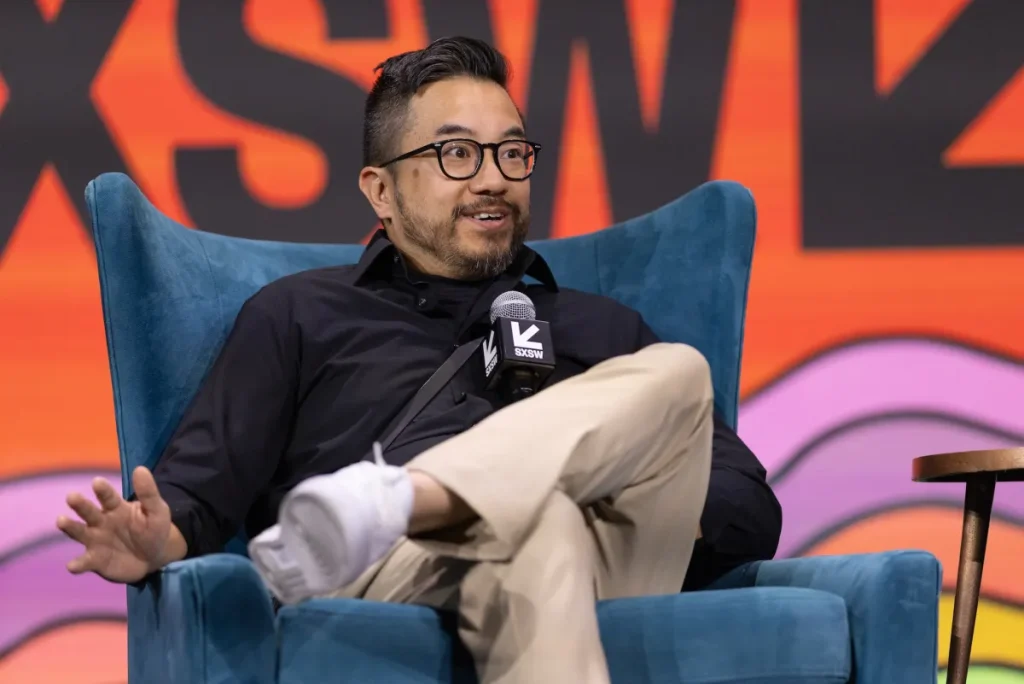
Image Credits:Hutton Supancic / SXSW Conference and Festivals / Getty Images
Garry Tan at SXSW: The AI Revolution and ‘Cyber Psychosis’
At this year’s South by Southwest (SXSW) festival, Garry Tan, the CEO of Y Combinator, captivated audiences with his passionate insights on AI. During an onstage interview with venture capitalist Bill Gurley, Tan humorously admitted to experiencing “cyber psychosis,” a result of his intense enthusiasm for working with AI agents.
“I get about four hours of sleep a night right now,” he stated. He previously joked that many of his CEO peers might feel the same way, touching on the overwhelming excitement that AI innovations have brought to the tech community.
The AI-Driven Transformation
Reflecting on his past, Tan recounted how his first startup required considerable time and investment—$10 million in venture capital and a team of ten over two years. He remembered the extent to which he turned to anti-narcoleptics like modafinil to fuel his hustle. “I was, you know, sort of being on modafinil,” he noted, recalling the intense demands of startup life.
However, with the new wave of AI, Tan finds himself energized and awake without the need for such substances. “I don’t need modafinil with this revolution,” he said. His newfound zeal has led to sleepless nights, filled with ideas for his various projects. “I slept at 4 a.m. and woke up at 8 a.m. I wanted to sleep more, but I couldn’t because I’m excited about what’s happening with my team and my projects,” he shared.
Introducing gstack: Open Source AI Innovation
Just days before his SXSW appearance, Tan released his Claude Code (CC) setup on GitHub under an open-source license, dubbed “gstack.” This setup included six “opinionated” skills designed to instruct AI agents on how to behave in specific roles or tasks. These reusable prompts are found in special “skill.md” files.
“I’ve been having such an amazing time with Claude Code, I wanted you to be able to have my exact skill setup,” Tan posted on X (formerly Twitter). His gstack framework has quickly gained traction, with increasing popularity among developers across various platforms.
Rapid Adoption and Feedback
As of now, the gstack GitHub repository has grown to include 13 skills, reflecting Tan’s rapidly evolving work. His audience has been quick to engage, with nearly 20,000 stars on GitHub and 2,200 forks, meaning many users are adapting the files for their needs.
In his online showcases, Tan demonstrated how gstack operates. He uses Claude, an AI, in multiple capacities: first, as a CEO to assess the viability of startup ideas; then as a software engineer to write features; and finally, as a code reviewer to identify bugs and security issues. Other skills within gstack cover design and documentation, showcasing its versatility.
Controversy: Praise and Criticism
While gstack has been celebrated for its innovative approach, it has not been without controversy. A tweet from Tan, where he indicated that a CTO friend deemed gstack as “god mode” that quickly identified a security flaw in their code, led to backlash. This tweet suggested that gstack might become a standard tool for new repositories, igniting a debate within the tech community.
Comments ranged from admiration to skepticism. A notable reaction came from a founder who expressed embarrassment over Tan’s claims, suggesting the CTO in question should be reevaluated for missing a critical security flaw. Vlogger Mo Bitar referred to the release as evidence of “AI making CEOs delusional,” arguing that gstack is fundamentally just a collection of prompts that many developers already have access to.
The Experts Weigh In
Is gstack genuinely groundbreaking or merely unremarkable? To gain insights, various industry experts including Claude, ChatGPT, and Gemini were consulted.
ChatGPT described gstack as a collection of “reasonably sophisticated prompt workflows” that are not “magical.” It emphasized the importance of simulating an engineering organization structure for effective AI coding rather than simply instructing the AI to build a feature.
In contrast, Gemini characterized the setup as a “sophisticated” approach, labeled it a “Pro” configuration aimed more at improving coding accuracy rather than just simplifying processes.
Claude praised gstack as “a mature, opinionated system built by someone who actually uses it heavily,” asserting it as an exemplary model for Claude Code skill design.
The Power of AI in Coding
In a follow-up post, Tan elaborated on his AI experience, revealing that coding with AI offers a new level of satisfaction. He expressed how AI enables him to convert fleeting ideas into tangible code, reinforcing his belief that coding is not merely about writing; it’s about collaboration and creation. “I speak; it listens, and we create,” he wrote.
The Future of gstack and AI in Development
As Tan continues to expand gstack with new skills, the excitement around AI in the tech industry shows no signs of fading. Whether viewed as revolutionary or merely an incremental improvement, the gstack project can serve as a valuable resource for developers looking to integrate AI into their workflows.
As the landscape of technology evolves rapidly, Garry Tan remains at the forefront of innovations that aim to redefine coding and startup culture. His journey underscores the excitement and challenges of navigating the uncharted territory that AI presents.
In conclusion, while gstack has sparked heated discussions, it exemplifies the growing intersection of AI and software development, hinting at a transformative future. As AI tools continue to gain traction, the way we approach coding and problem-solving may never be the same. For now, the community watches closely to see how Tan’s contributions shape the industry.
Thanks for reading. Please let us know your thoughts and ideas in the comment section down below.
Source link
#Garry #Tans #Claude #Code #setup #love #hate
About The Author