

This Month’s AI Breakthroughs: Biomimetic Robots, Gemini 3.1, OpenAI’s OpenClaw, LYRIA 3, and More
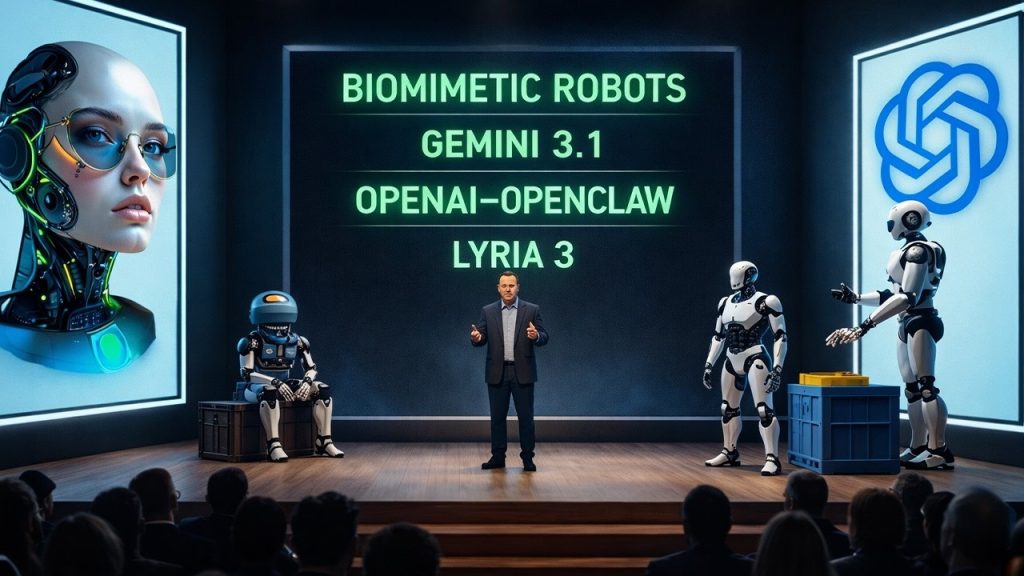
Exploring Cutting-Edge Advances in Robotics: Biomimetic Innovations and More
In the fast-paced world of technology, robotics stands out as a field continually evolving toward greater sophistication and functionality. This blog delves into some groundbreaking developments in biomimetic robots, advanced AI systems, and innovative technologies that are reshaping industries, enhancing human capabilities, and transforming our everyday lives.
Understanding Biomimetic Robotics
Biomimetic robotics draws inspiration from nature, mimicking biological entities to create robots that replicate their movements and functionalities. This approach has garnered significant attention, particularly in areas such as mobility, functionality, and efficiency. By imitating the mechanics of animals and insects, engineers develop robots capable of performing complex tasks in various environments.
Nature as a Teacher
Nature has perfected many mechanisms over millions of years of evolution. For instance, the design of a bird’s wing can inspire drone technology, while the locomotion of a cheetah can inform the development of agile ground robots. These insights enable engineers to build machines that are not only capable but adaptive to a variety of operational contexts.
Latest Developments in Biomimetic Robotics
Recent advancements have brought us closer to creating robots that can navigate challenging terrains, undertake search and rescue missions, and even assist in medical procedures. Some of the most exciting innovations include:
1. Soft Robotics
Soft robots use flexible materials, resembling soft organic creatures rather than rigid machines. These robots are often more adaptable and can safely interact with humans or delicate objects. Industries are exploring their potential in fields like healthcare and manufacturing, where precision and gentleness are essential.
2. Swarming Algorithms
Inspired by the behavior of flocks of birds or schools of fish, swarming algorithms allow robots to work together as a collective unit. This technology enhances efficiency in tasks such as surveillance, data collection, and environmental monitoring. By employing decentralized control and communication, swarming robots can adapt to changing conditions in real-time.
3. Terrestrial and Aerial Mimicry
From robotic fish that can swim like their natural counterparts to drones that emulate the flight of insects, engineers are pushing the boundaries of what is possible in aerial and aquatic robotics. These advancements improve efficiency in various applications, such as environmental monitoring, agriculture, and search and rescue operations.
AI-Powered Robotics: The Driving Force
Artificial intelligence plays a critical role in the evolution of robotics, enabling machines to learn from experience and make informed decisions based on data. The integration of AI with robotics catalyzes innovation across multiple sectors.
Perception and Cognition
AI-powered robots are equipped with advanced perception systems, allowing them to interpret sensory data and navigate complex environments safely. They can identify objects, avoid obstacles, and interact with humans more effectively. Improved cognition further enables robots to adapt to new challenges and learn from their surroundings.
Autonomous Decision-Making
Incorporating machine learning algorithms, robots can analyze data and execute tasks independently, reducing the need for human intervention. This capability is invaluable in sectors like logistics, manufacturing, and agriculture, where efficiency and accuracy are paramount.
The Future of Robotics
The future of robotics is promising, with continuous advancements poised to revolutionize diverse industries. Collaborations between academia, industry, and government entities drive research and development, paving the way for innovations that could significantly enhance human capabilities.
Expanding Applications
As robotics becomes increasingly integrated into our daily lives, we can expect to see robots in roles we haven’t yet imagined. From personal assistants to advanced surgical robots, the potential applications are vast. Furthermore, robotics will likely play a vital role in addressing global challenges such as climate change and resource management.
Ethical Implications and Responsibility
With any technological advancement, ethical considerations emerge. Ensuring that robotics benefits society responsibly is crucial. Engaging in conversations about the ethical implications of AI and robotics will shape a future where technology serves humanity positively.
Conclusion
The evolution of biomimetic robotics and AI-powered machines signals a transformative era for technology and society. By learning from nature and integrating intelligent systems, we create tools that enhance human potential and tackle complex challenges. The journey is just beginning, and as we explore the uncharted territory of robotics, the possibilities are limited only by our imagination. As technology continues to advance, we are likely to see a future where robots and humans collaborate seamlessly, creating a world full of unprecedented opportunities.
Whether through enhancing our daily lives or pioneering solutions to pressing global issues, biological inspiration and artificial intelligence are set to redefine our world. Keeping abreast of these developments will empower us to engage with and shape a future where technology is a force for good.
#SHOCKS #World #Month #Biomimetic #Robots #Gemini #OpenAIOpenClaw #LYRIA
Thanks for reaching. Please let us know your thoughts and ideas in the comment section.
Source link
About The Author





👉 Try Nano Banana 2 images and video with Higgsfield: https://higgsfield.ai/nano-banana-2?utm_source=youtube_s&utm_medium=airevolutionx&utm_campaign=nano_banana_2&utm_content=in_99c14
pink in the head…..freak in the bed