
Tim Cook’s Struggles with Monetizing AI: A Critical Analysis.
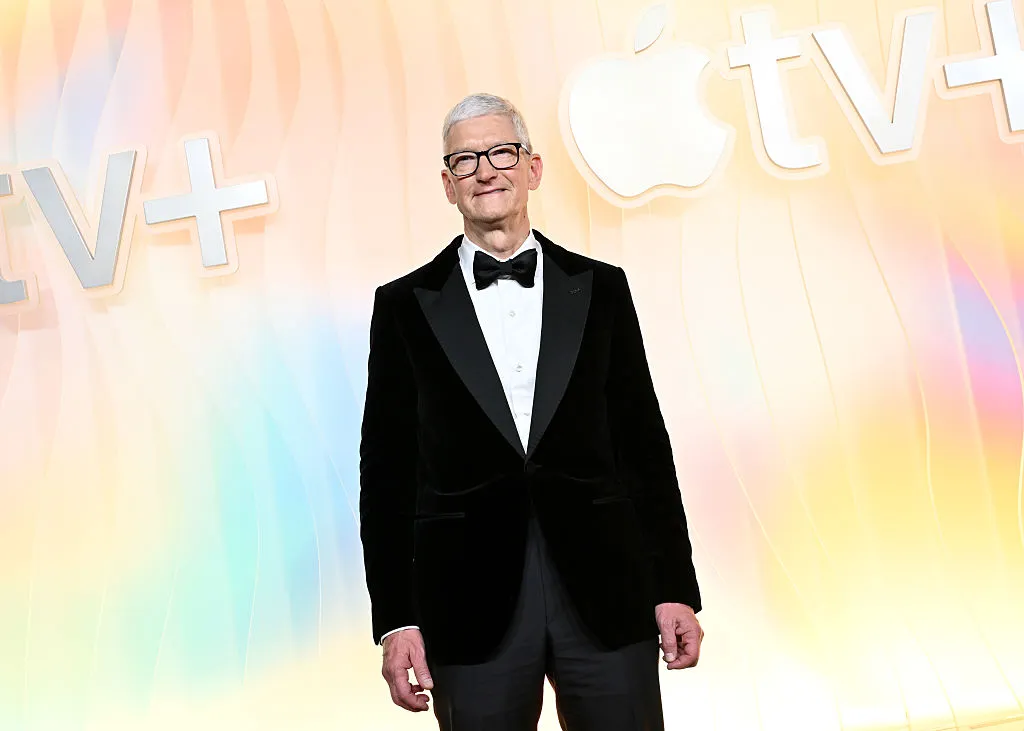
Image Credits:Axelle/Bauer-Griffin/FilmMagic (opens in a new window) / Getty Images
Apple’s Impressive Earnings and the AI Monetization Dilemma
Apple has once again garnered attention by exceeding analysts’ expectations in its latest quarterly earnings report. Revealed on Thursday, the tech giant reported an impressive revenue of $143.8 billion, reflecting a robust 16% year-over-year increase. While many analysts engaged CEO Tim Cook with easy questions during the earnings call, one brave analyst ventured into less-charted territory by asking about Apple’s approach to monetizing its artificial intelligence (AI) initiatives.
The Bold Question on AI Monetization
Morgan Stanley’s Erik Woodring posed a question that few seem willing to tackle: “When I think about your AI initiatives, you know, it’s clear there are added costs associated with that… Many of your competitors have already integrated AI into their devices, and it’s just not clear yet what incremental monetization they’re seeing because of AI…”
Could there be a hint of apprehension beneath Woodring’s polished finance exterior? In what appeared to be a moment of bravery, he broached the subject that lingers in the minds of many investors: the sustainability and profitability of AI.
“So, how do you monetize AI?” he asked straightforwardly.
The Current State of AI in Big Tech
It’s fascinating that this question doesn’t come up more often. While one might expect such inquiries frequently in tech discussions, the reality is that Big Tech has tended to adopt a rather “vibes-driven” approach to AI development. Look at OpenAI: the company has achieved cultural prominence with products like ChatGPT, yet it projects not to turn a profit until 2030. Analysts from HSBC have even expressed skepticism about this timeline, given the enormous estimated funding needs of $207 billion.
When tasked with explaining their vision for financial viability, many tech companies resort to vague assurances rather than concrete strategies. If you ask anyone in the industry how OpenAI plans to achieve break-even, expect an answer akin to shrugging emojis.
Tim Cook’s Response
Amidst the glowing financial report, one would hope for clarity on how companies like Apple plan to recoup their investments in AI. Tim Cook was certainly in a good mood, riding high on the wave of Apple’s success. However, his answer to Woodring’s pivotal question was dishearteningly generalized.
“Well, let me just say that we’re bringing intelligence to more of what people love, and we’re integrating it across the operating system in a personal and private way. I think that by doing so, it creates great value, and that opens up a range of opportunities across our products and services,” Cook explained.
Essentially, Cook implied that Apple’s approach to AI will derive its monetization from the “great value” it brings to users, ultimately leading to an array of opportunities in respective products and services. Sound simple? It might be, but the vagueness leaves one yearning for more clarity.
The Search for Meaningful AI Monetization
As businesses dabble in AI, stakeholders are left wondering about the real financial implications of these initiatives. While it’s true that AI has transformative potential, the crux of the debate revolves around what tangible returns can be expected from investments in this field.
It’s not simply about embedding algorithms into devices; the challenge lies in translating those innovations into revenue streams. For Apple, which has built its empire on consumer trust and product utility, how exactly will they pivot this technological innovation into dollars?
Although Cook’s insistence on “great value” and “opportunities” may sound reassuring, the lack of a definitive strategy raises doubts. Will Apple’s investment in AI lead to streamlined services or enhanced customer experiences that translate to increased revenue? Or will it merely evolve into a “nice-to-have” feature rather than a core service that drives significant financial returns?
Industry Comparisons: A Broader Context
Looking at the broader landscape, Apple’s approach reflects a disparity in strategies among tech giants. Companies have been racing to integrate AI capabilities, from smart home devices to financial services leveraging machine learning for decision-making. However, monetization remains an elusive target across the board.
In contrast to Apple’s measured response, competitors may cite increased efficiency or operational speed as direct benefits of their AI expenditures. For example, companies that have successfully integrated AI analytics into their operations point to improved market insights and reduced operational costs as formulaic benefits informing their bottom lines.
The Implications for Future Investment
The hesitance to discuss AI monetization is something investors need to grapple with. The question isn’t just one of technological advancement; it concerns financial viability. Stakeholders want assurance that their investments will yield returns, particularly as firms navigate the unpredictable waters of AI development.
In addressing these concerns, it becomes crucial for tech companies to establish some form of transparency regarding potential monetary gains. From product releases to revenue projections, equipping investors with a clearer roadmap can help alleviate fears and build confidence in the broader tech ecosystem.
Conclusion: A Call for Clarity
In summary, as Apple showcases its financial accomplishments alongside its AI endeavors, the question of monetization lingers in the backdrop. While Tim Cook’s assurances that they are “bringing intelligence to more of what people love” paint a positive picture, a more concrete strategy is necessary to satisfy inquisitive investors.
As we forge ahead into an increasingly AI-centric world, it will become imperative for tech companies to bridge the gap between technological innovation and profitability. If they manage to do so, they will not only reaffirm their worth in the eyes of investors but also pave the way for a more sustainable future in a rapidly evolving market.
So, here’s a nod to Erik Woodring for daring to ask the hard questions. Let’s hope that in the quest for profits, more members of the tech elite are inspired to follow suit.
Thanks for reading. Please let us know your thoughts and ideas in the comment section down below.
Source link
#Guys #dont #Tim #Cook #monetize
About The Author