
What It Means for xLight to Have Uncle Sam as a Major Shareholder

What does it mean when Uncle Sam is one of your biggest shareholders? Chip startup xLight is about to find out
U.S. Government Invests $150 Million in Semiconductor Startup xLight
The Trump administration’s decision to invest up to $150 million in the semiconductor startup xLight marks a significant shift in the U.S. government’s approach to private sector investment. This move, part of a broader strategy to enhance national technological capabilities, is the third time the U.S. government has taken an equity stake in a startup, raising questions about the implications of such partnerships for American companies and the tech industry.
xLight: A Bold Venture in Semiconductor Manufacturing
xLight, a four-year-old startup based in Palo Alto, California, aims to transform semiconductor manufacturing through innovative technology. The company is developing particle accelerator-powered lasers. These enormous machines, comparable in size to a football field, are designed to create more powerful and precise light sources for chip production. If successful, xLight’s technology could challenge the market dominance of Dutch firm ASML, which currently holds a monopoly on extreme ultraviolet lithography machines.
Government Funding and Equity Stake
According to a recent report by The Wall Street Journal, the U.S. Commerce Department will provide funding to xLight in exchange for an equity stake that will likely make the government the startup’s largest shareholder. This investment utilizes resources from the 2022 Chips and Science Act, representing the first award of its kind during Trump’s second term, although the deal is still preliminary and subject to change.
Prior investments by the government under the Trump administration have included publicly traded companies such as Intel, MP Materials, Lithium Americas, and Trilogy Metals. In addition, the Commerce Department has recently allocated funds to other rare earths startups, further indicating a trend towards direct government involvement in the tech industry.
Reaction in Silicon Valley
The premise of government financial involvement in private startups has generated mixed reactions, particularly within Silicon Valley, where a strong libertarian ethos prevails. Notably, at TechCrunch’s Disrupt event in October, Sequoia Capital’s Roelof Botha quipped, “Some of the most dangerous words in the world are: ‘I’m from the government, and I’m here to help.’”
Venture capitalists are increasingly raising concerns about the implications of government-backed startups competing against their own portfolio companies. These worries extend to the dynamics that may arise when government representatives attend board meetings, potentially altering the competitive landscape of the tech sector.
Leadership at xLight
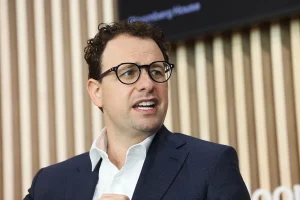
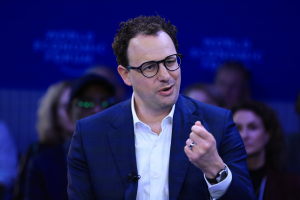
Nicholas Kelez, the CEO of xLight, boasts a background in quantum computing and government laboratories, positioning him to navigate the challenges of advanced semiconductor technology. Supporting him in this ambitious undertaking is Pat Gelsinger, the former CEO of Intel. Gelsinger, who faced difficulties with his previous manufacturing revival plans, expressed his commitment to xLight, stating that the endeavor is “deeply personal” for him.
Gelsinger’s involvement is significant, as he is also a general partner at Playground Global, the venture capital firm that led xLight’s recent $40 million funding round. Together, Kelez and Gelsinger aim not only to compete with ASML but to exceed its technological advancements. While ASML’s machines operate at wavelengths around 13.5 nanometers, xLight is targeting wavelengths as low as 2 nanometers, which could substantially enhance wafer processing efficiency by 30% to 40% while consuming less energy.
The National Security Angle
Commerce Secretary Howard Lutnick has emphasized that this partnership serves national security interests and technological leadership. According to him, the government’s involvement in xLight could “fundamentally rewrite the limits of chipmaking.” However, the initiative has raised ongoing debates about whether taxpayer-funded investments represent a forward-thinking industrial policy or amount to state capitalism dressed in patriotic rhetoric.
Critics remain skeptical, questioning the long-term implications of such investments. Nevertheless, even those critical of government involvement recognize the geopolitical landscape that has necessitated such actions. As Botha pointed out, the United States is compelled to engage in this type of industrial strategy due to the competitive nature of other nations that are utilizing similar policies to advance their own strategic industries.
Future Prospects for xLight
As Kelez and Gelsinger prepare to speak at the upcoming TechCrunch’s StrictlyVC event, the discussion will likely revolve around the ramifications of government support for startups like xLight. Given the current technological race, particularly in the semiconductor domain, there is growing pressure for the U.S. to solidify its position against global competitors.
The potential success of xLight could usher in a new era of semiconductor manufacturing, reshaping the landscape not only for American companies but also signaling the global direction of the tech industry. With goals of improved efficiency and reduced energy consumption, xLight’s approach aligns with broader trends toward sustainability and innovation in technology.
Conclusion
The Trump administration’s investment in xLight illustrates a bold shift in U.S. economic policy, where government intervention seeks to bolster technological advancements in key industries. As the semiconductor sector undergoes transformative changes, the implications of government equity investments will continue to stir debate among industry insiders and policymakers alike. While such partnerships could offer strategic advantages in national security, the long-term effects on the private sector and the ethos of innovation in Silicon Valley remain to be seen.
With xLight at the forefront of this evolving landscape, stakeholders will be closely monitoring the startup’s progress and how it could redefine the future of chipmaking in the United States.
Thanks for reading. Please let us know your thoughts and ideas in the comment section down below.
Source link
#Uncle #Sam #biggest #shareholders #Chip #startup #xLight #find
About The Author