
web analytics

Learn AI With Kesse | Best Place For AI News

We make artificial intelligence easy and fun to read. Get Updated AI News.

SpaceX’s Starship needs 1,800 launches for space data centers to take off.
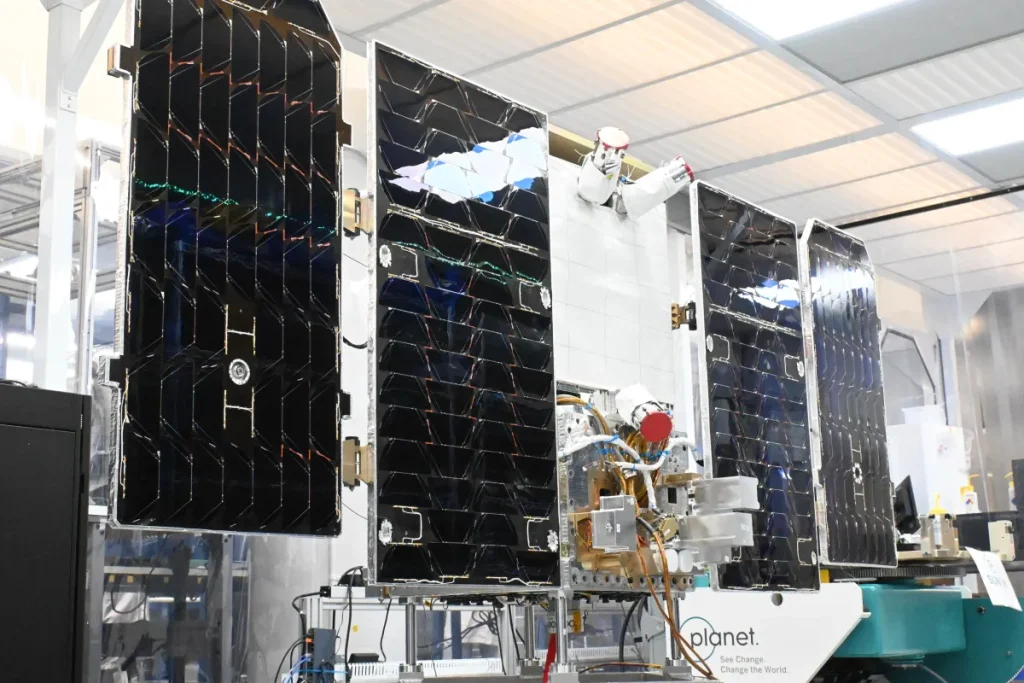
The satellite carrying Google's first TPU into orbit was built by Planet Labs PBC.

Image Credits:Planet Labs PBC under a Planet Labs PBC license.

Google Launches Orbital Compute Satellite with SpaceX

Google’s prototype orbital compute satellite successfully launched today aboard a SpaceX rocket from California, marking the tech giant’s inaugural venture into sending its advanced chips into space. Developed in collaboration with Planet Labs, this satellite aims to demonstrate the performance of Google’s Tensor Processing Unit (TPU)—a direct competitor to Nvidia’s GPUs—under the unique conditions of space.

Mission Objectives and Functionality

The primary mission of this satellite is to verify that the TPU can operate effectively in a space environment. This entails generating a continuous power supply of one kilowatt, managing cooling systems for the chip, and conducting a series of operational models to identify potential issues. “We’ve tested on the ground, but nothing matches the real-world conditions,” stated Travis Beals, the Google executive overseeing Project Suncatcher—a project focusing on creating large-scale compute clusters in Earth’s orbit.

Once operational, the satellite will activate its TPU in 15-minute intervals to prevent overloading its power and thermal management systems. While the current satellite is based on a standard design from Planet Labs, the two companies are collaborating on a more advanced prototype set to launch next year. This future satellite mission will feature two specialized satellites that are designed for intensive computational tasks and will utilize laser communication links for collaboration.

A Long-Term Vision for Space AI

Suncatcher is not the only artificial intelligence payload aboard this SpaceX rocket, which is transporting over 100 different missions, including those from startups like Satlyt and Cowboy Space Company. However, what distinguishes Google’s initiative is its commitment to a long-term vision.

Beals described Project Suncatcher as a “long-term moonshot,” focusing on laying the groundwork for future infrastructure and AI workloads in space. The goal is to establish an orbital data center comprised of a network of 81 satellites in close formation to enable simultaneous processing.

“The bandwidth and latency between TPUs are crucial when executing multi-rack workloads,” Beals explained. He emphasized the importance of anticipating not only current computing needs but also those expected in the next five years. This forward-thinking approach is vital, given that the necessary launch vehicles for effectively scaling up orbital data centers are not yet available.

Publication of Groundbreaking Research

Recently, Google released a peer-reviewed version of its white paper on orbital data centers, which represents one of the most thorough analyses on the logistics of transporting compute resources into orbit. Set to be published in the journal Joule, the paper provides intriguing insights into Google’s perspective on accessing space.

The researchers point out that while their analysis does not qualify as an economic feasibility study, it offers a foresight into how the cost of space launches may decrease over time.

Collaboration with SpaceX for Launches

As with many data center companies, Google depends on SpaceX to facilitate their spacecraft launches. Notably, Google is also a significant investor in SpaceX. The research suggests that the rocket manufacturer has experienced a “learning curve” that has reduced launch costs by around 20% annually since the debut of the Falcon 1 rocket. Based on this trend, the authors believe that it is plausible for SpaceX to lower launch costs to approximately $200 per kilogram by 2035.

Future Launch Requirements

Achieving this cost reduction will require substantial efforts. According to estimates based on payload capacity from Falcon 9 launches, SpaceX’s Starship will need to carry 370,000 tons of payload into orbit. This objective translates to roughly 1,800 launches over the next decade, which averages about 180 launches annually, assuming the vehicle can successfully deliver 200 metric tons per mission.

However, this is a significant challenge for a rocket that has yet to achieve more than five flights in a single year. Despite this, SpaceX remains optimistic. Elon Musk has even suggested that Starship could eventually achieve an hourly launch rate by 2029, though such claims often require cautious scrutiny.

Resilience of Google’s Chips in Space

A positive outcome from Google’s experiments is that their chips appear capable of withstanding the harsh radiation of space. The company had to revise its testing by exposing the chips in a particle accelerator due to the realization that the chips received more shielding than they would face in orbit. While this adjustment resulted in a slight increase in errors within the chip’s logical circuitry, Google remains optimistic that the chips can effectively manage substantial inference workloads in orbit for the projected five-year lifespan of the satellite.

Beals reassured that “the error rate is quite low for typical inference operations—around one in a million.” However, he noted that challenges remain for larger-scale training runs that involve thousands of chips operating for extended periods.

Conclusion

Google’s foray into space with its orbital compute satellite signifies a significant step in harnessing AI capabilities beyond Earth. By partnering with Planet Labs and relying on SpaceX’s launch services, Google is not only testing the limits of its technology but also paving the way for future advances in orbital computing. As research and technology evolve, the hope for a cost-effective, integrated orbital data center becomes increasingly attainable.

Correction Note

It’s important to note that an earlier version of this article mistakenly stated the number of launches required for the Starship as 1,600; it is, in fact, 1,800.

In conclusion, Google’s initiatives in space computing are set to influence how we think about data processing and cloud infrastructure for years to come, driving innovation in both terrestrial and extraterrestrial environments.

Thanks for reading. Please let us know your thoughts and ideas in the comment section down below.

Source link
#Google #thinks #SpaceXs #Starship #launch #times #space #data #centers #ground

About The Author

Leave a Reply

Your email address will not be published. Required fields are marked *

We use cookies to personalize content and ads and to primarily analyze our geo traffic sources. We also may share information about your use of our site with our social media, advertising, and analytics partners to improve your user experience. We respect your privacy and will never abuse your information. [ Privacy Policy ] View more
Cookies settings
Accept
Decline
Privacy & Cookie Policy
Privacy & Cookies policy
Cookie name Active

The content on this page governs our Privacy Policy. It describes how your personal information is collected, used, and shared when you visit or make a purchase from learnaiwithkesse.com (the "Site").

Kesseswebsites and Advertising owns Learn AI With Kesse and the website learnaiwithkesse.wiki. For the purpose of this Terms and Agreements [ we, us, I, our ] represents the owner of Learning AI With Kesse which is Kesseswebsites and Advertising. [ You, your, student and buyer ] represents you as the user and visitor of this site. Terms of Conditions, Terms of Service, Terms and Agreement and Terms of use shall be considered the same here. This website or site refers to https://learnaiwithkesse.com. You agree that the content of this Terms and Agreement may include Privacy Policy and Refund Policy. Products refer to physical or digital products. This includes eBooks, PDFs, and text or video courses. If there is anything on this page you do not understand you agree to reach out to us via email [ emmanuel@learnaiwithkesse.com ] for explanation before using any part of this site.

1. Personal Information We Collect

When you visit this Site, we automatically collect certain information about your device, including information about your web browser, IP address, time zone, and some of the cookies that are installed on your device. The primary purpose of this activity is to provide you a better user experience the next time you visit our again and also the data collection is for analytics study. Additionally, as you browse the Site, we collect information about the individual web pages or products that you view, what websites or search terms referred you to the Site, and information about how you interact with the Site. We refer to this automatically-collected information as "Device Information."

We collect Device Information using the following technologies:

"Cookies" are data files that are placed on your device or computer and often include an anonymous unique identifier. For more information about cookies, and how to disable cookies, visit http://www.allaboutcookies.org. To comply with European Union's GDPR (General Data Protection Regulation), we do display a disclaimer a consent text at the bottom of this website. This disclaimer alerts you the visitor or user of this website about why we use cookies, and we also give you the option to accept or decline. If you accept for us to use cookies on your site, the agreement between you and us will expire after 180 has passed.

"Log files" track actions occurring on the Site, and collect data including your IP address, browser type, Internet service provider, referring/exit pages, and date/time stamps.

"Web beacons," "tags," and "pixels" are electronic files used to record information about how you browse the Site.

Additionally, when you make a purchase or attempt to make a purchase through the Site, we collect certain information from you, including your name, billing address, shipping address, payment information (including credit card numbers), email address, and phone number. We refer to this information as "Order Information."

When we talk about "Personal Information" in this Privacy Policy, we are talking both about Device Information and Order Information.

Payment Information

Please note that we use 3rd party payment processing companies like https://stripe.com and https://paypal.com to process your payment information. PayPal and Stripe protects your data according to their terms and agreement and may store your data to help make your subsequent transactions on this website easier. We never and [ DO NOT ] store your card information or payment login information on our website or server. By making payment on our site, you agree to abide by the Terms and Agreement of the 3rd Party payment processing companies we use. You can visit their websites to read their Terms of Use and learn more about them.

2. How Do We Use Your Personal Information?

We use the Order Information that we collect generally to fulfill any orders placed through the Site (including processing your payment information, arranging for shipping, and providing you with invoices and/or order confirmations). Additionally, we use this [a] Order Information to:

[b] Communicate with you;

[c] Screen our orders for potential risk or fraud; and

When in line with the preferences you have shared with us, provide you with information or advertising relating to our products or services. We use the Device Information that we collect to help us screen for potential risk and fraud (in particular, your IP address), and more generally to improve and optimize our Site (for example, by generating analytics about how our customers browse and interact with the Site, and to assess the success of our marketing and advertising campaigns).

3. Sharing Your Personal Information

We share your Personal Information with third parties to help us use your Personal Information, as described above. For example, we use System.io to power our online store--you can read more about how Systeme.io uses your Personal Information here: https://systeme.io/privacy-policy/ . We may also use Google Analytics to help us understand how our customers use the Site--you can read more about how Google uses your Personal Information here: https://www.google.com/intl/en/policies/privacy/. You can also opt-out of Google Analytics here: https://tools.google.com/dlpage/gaoptout.

Finally, we may also share your Personal Information to comply with applicable laws and regulations, to respond to a subpoena, search warrant or other lawful request for information we receive, or to otherwise protect our rights.

4. Behavioral Advertising

As described above, we use your Personal Information to provide you with targeted advertisements or marketing communications we believe may be of interest to you. For more information about how targeted advertising works, you can visit the Network Advertising Initiative’s (“NAI”) educational page at http://www.networkadvertising.org/understanding-online-advertising/how-does-it-work.

You can opt-out of targeted advertising by:

COMMON LINKS INCLUDE:

FACEBOOK - https://www.facebook.com/settings/?tab=ads

GOOGLE - https://www.google.com/settings/ads/anonymous

BING - https://advertise.bingads.microsoft.com/en-us/resources/policies/personalized-ads]

Additionally, you can opt-out of some of these services by visiting the Digital Advertising Alliance’s opt-out portal at: http://optout.aboutads.info/.

5. Data Retention

Besides your card payment and payment login information, when you place an order through the Site, we will maintain your Order Information for our records unless and until you ask us to delete this information. Example of such information include your first name, last name, email and phone number.

6. Changes

We may update this privacy policy from time to time in order to reflect, for example, changes to our practices or for other operational, legal or regulatory reasons.

7. Contact Us

For more information about our privacy practices, if you have questions, or if you would like to make a complaint, please contact us by e-mail at emmanuel@learnaiwithkesse.com or by mail using the details provided below:

8. Your acceptance of these terms

By using this Site, you signify your acceptance of this policy. If you do not agree to this policy, please do not use our Site. Your continued use of the Site following the posting of changes to this policy will be deemed your acceptance of those changes.

Last Update | 18th August 2024

Save settings
Cookies settings