
SpaceX’s Starship needs 1,800 launches for space data centers to take off.
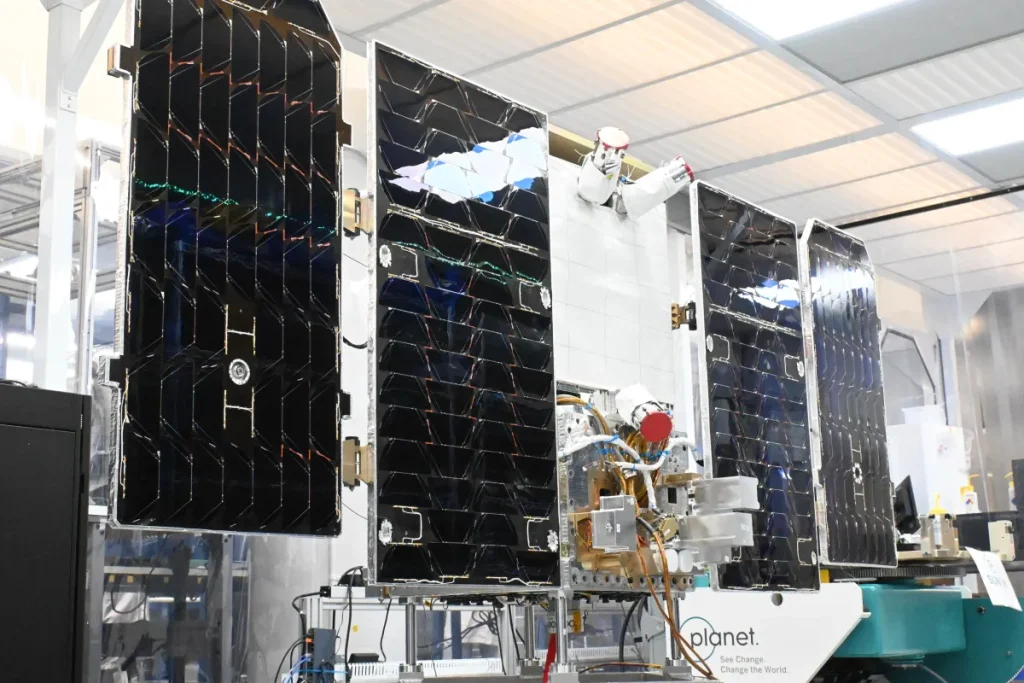
Image Credits:Planet Labs PBC under a Planet Labs PBC license.
Google Launches Orbital Compute Satellite with SpaceX
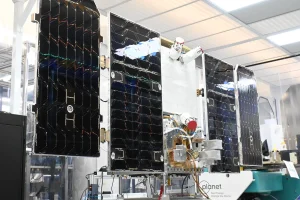
Google’s prototype orbital compute satellite successfully launched today aboard a SpaceX rocket from California, marking the tech giant’s inaugural venture into sending its advanced chips into space. Developed in collaboration with Planet Labs, this satellite aims to demonstrate the performance of Google’s Tensor Processing Unit (TPU)—a direct competitor to Nvidia’s GPUs—under the unique conditions of space.
Mission Objectives and Functionality
The primary mission of this satellite is to verify that the TPU can operate effectively in a space environment. This entails generating a continuous power supply of one kilowatt, managing cooling systems for the chip, and conducting a series of operational models to identify potential issues. “We’ve tested on the ground, but nothing matches the real-world conditions,” stated Travis Beals, the Google executive overseeing Project Suncatcher—a project focusing on creating large-scale compute clusters in Earth’s orbit.
Once operational, the satellite will activate its TPU in 15-minute intervals to prevent overloading its power and thermal management systems. While the current satellite is based on a standard design from Planet Labs, the two companies are collaborating on a more advanced prototype set to launch next year. This future satellite mission will feature two specialized satellites that are designed for intensive computational tasks and will utilize laser communication links for collaboration.
A Long-Term Vision for Space AI
Suncatcher is not the only artificial intelligence payload aboard this SpaceX rocket, which is transporting over 100 different missions, including those from startups like Satlyt and Cowboy Space Company. However, what distinguishes Google’s initiative is its commitment to a long-term vision.
Beals described Project Suncatcher as a “long-term moonshot,” focusing on laying the groundwork for future infrastructure and AI workloads in space. The goal is to establish an orbital data center comprised of a network of 81 satellites in close formation to enable simultaneous processing.
“The bandwidth and latency between TPUs are crucial when executing multi-rack workloads,” Beals explained. He emphasized the importance of anticipating not only current computing needs but also those expected in the next five years. This forward-thinking approach is vital, given that the necessary launch vehicles for effectively scaling up orbital data centers are not yet available.
Publication of Groundbreaking Research
Recently, Google released a peer-reviewed version of its white paper on orbital data centers, which represents one of the most thorough analyses on the logistics of transporting compute resources into orbit. Set to be published in the journal Joule, the paper provides intriguing insights into Google’s perspective on accessing space.
The researchers point out that while their analysis does not qualify as an economic feasibility study, it offers a foresight into how the cost of space launches may decrease over time.
Collaboration with SpaceX for Launches
As with many data center companies, Google depends on SpaceX to facilitate their spacecraft launches. Notably, Google is also a significant investor in SpaceX. The research suggests that the rocket manufacturer has experienced a “learning curve” that has reduced launch costs by around 20% annually since the debut of the Falcon 1 rocket. Based on this trend, the authors believe that it is plausible for SpaceX to lower launch costs to approximately $200 per kilogram by 2035.
Future Launch Requirements
Achieving this cost reduction will require substantial efforts. According to estimates based on payload capacity from Falcon 9 launches, SpaceX’s Starship will need to carry 370,000 tons of payload into orbit. This objective translates to roughly 1,800 launches over the next decade, which averages about 180 launches annually, assuming the vehicle can successfully deliver 200 metric tons per mission.
However, this is a significant challenge for a rocket that has yet to achieve more than five flights in a single year. Despite this, SpaceX remains optimistic. Elon Musk has even suggested that Starship could eventually achieve an hourly launch rate by 2029, though such claims often require cautious scrutiny.
Resilience of Google’s Chips in Space
A positive outcome from Google’s experiments is that their chips appear capable of withstanding the harsh radiation of space. The company had to revise its testing by exposing the chips in a particle accelerator due to the realization that the chips received more shielding than they would face in orbit. While this adjustment resulted in a slight increase in errors within the chip’s logical circuitry, Google remains optimistic that the chips can effectively manage substantial inference workloads in orbit for the projected five-year lifespan of the satellite.
Beals reassured that “the error rate is quite low for typical inference operations—around one in a million.” However, he noted that challenges remain for larger-scale training runs that involve thousands of chips operating for extended periods.
Conclusion
Google’s foray into space with its orbital compute satellite signifies a significant step in harnessing AI capabilities beyond Earth. By partnering with Planet Labs and relying on SpaceX’s launch services, Google is not only testing the limits of its technology but also paving the way for future advances in orbital computing. As research and technology evolve, the hope for a cost-effective, integrated orbital data center becomes increasingly attainable.
Correction Note
It’s important to note that an earlier version of this article mistakenly stated the number of launches required for the Starship as 1,600; it is, in fact, 1,800.
In conclusion, Google’s initiatives in space computing are set to influence how we think about data processing and cloud infrastructure for years to come, driving innovation in both terrestrial and extraterrestrial environments.
Thanks for reading. Please let us know your thoughts and ideas in the comment section down below.
Source link
#Google #thinks #SpaceXs #Starship #launch #times #space #data #centers #ground
About The Author