
Apple introduces new application to analyze AI’s impact on health usage.
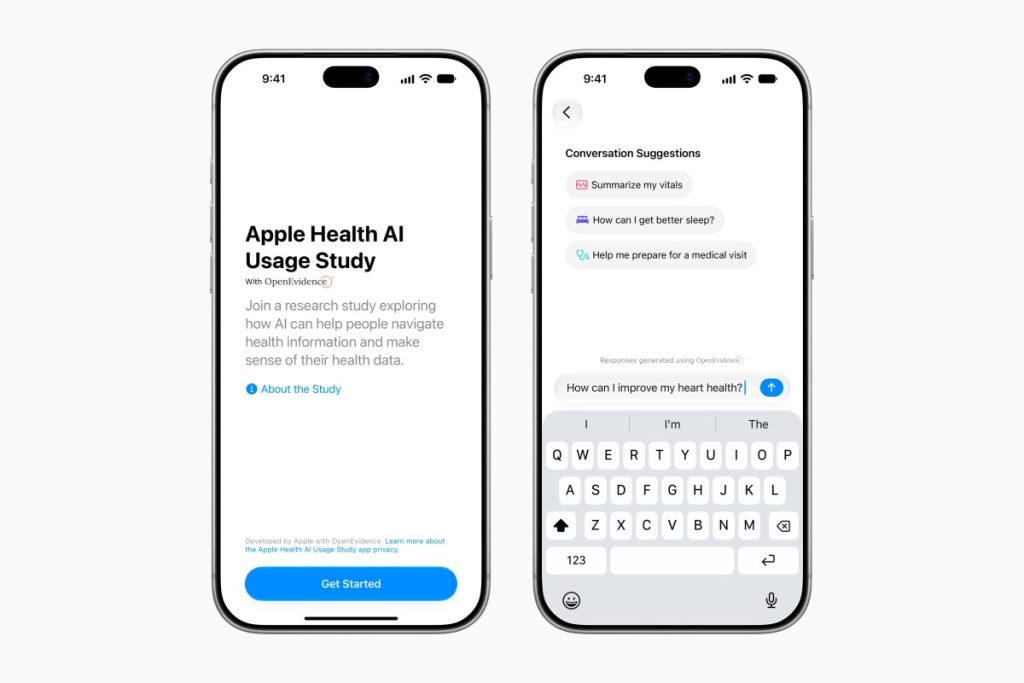
Image Credits:Apple
Apple’s Innovative AI Study App for Health Queries
In a landscape where prominent AI laboratories like OpenAI and Anthropic have invested heavily in developing chatbots tailored for health-related inquiries, Apple is making its own significant strides. Rather than merely emulating the existing models in the market, Apple is embarking on a new research initiative focused on understanding the utilization of AI in health care. The goal is to explore how clinically grounded responses can effectively assist individuals in navigating their health concerns.
Partnership with OpenEvidence
Apple is collaborating with OpenEvidence, a specialized AI company devoted to healthcare solutions, to unveil a groundbreaking study app. This initiative invites U.S. residents aged 21 and older who own an iPhone 15 or newer, with the iOS 26 operating system and Apple Intelligence enabled. Apple aims to engage up to 200,000 participants over the course of more than a year to gain valuable insights.
Features of the New Study App
The innovative app will facilitate users in posing health-related questions, mirroring interactions they might have with established AI tools like ChatGPT or Claude. However, what sets Apple’s initiative apart is its commitment to providing answers grounded in clinical science. The data sources will include reputable publications such as The New England Journal of Medicine, Journal of the American Medical Association, and Nature. Through this app, Apple aspires to deliver simplified responses to common medical inquiries, enhancing user comprehension.
User Involvement and Feedback
Apple recognizes that user feedback is crucial for enhancing the app’s functionality. Participants will have the opportunity to rate the provided answers and share their insights on the relevance and usefulness of the responses. Additionally, monthly surveys will allow users to contribute more detailed feedback on their experiences, facilitating continuous improvement of the application.
Personalized Health Insights
The new app goes beyond just answering questions—it will also allow participants to share health data aggregated from HealthKit. This information may encompass metrics such as resting heart rate, physical activity, sleep patterns, and laboratory test results. By analyzing this data, the app aims to provide personalized recommendations aligned with each user’s health status. Moreover, it can help users better prepare for medical appointments and guide them to specific healthcare providers for inquiries related to pressing medical issues.
Data Privacy and Security Measures
A critical aspect of any health-related app is the protection of user data. Apple has made it clear that all data collected through the application will be anonymized before being transmitted to a secure, third-party cloud provider. Crucially, this data will not be used to train AI models, and OpenEvidence has committed to deleting query and response data within 24 hours to safeguard user privacy.
Commitment to Responsible Innovation
Sumbul Desai, M.D., Apple’s Vice President of Health and Fitness, articulates the company’s philosophy regarding health technology. “At Apple, we believe responsible innovation starts with scientific rigor and clinical grounding. Health is deeply personal, and conducting a dedicated research study is the most thoughtful way to understand how people engage with, comprehend, and evaluate health AI in everyday life,” Desai stated. She emphasized that the insights gained from this study could significantly contribute to the broader scientific discourse surrounding health technology. Apple aims to ensure that as technology continues to evolve, they remain focused on building trustworthy tools that genuinely support individuals throughout their health journeys.
Availability and Future Potential
As of today, the app is ready for download by U.S. users who meet the specified requirements. While it remains uncertain whether Apple plans to integrate AI capabilities into its Health app or the Siri assistant in the future, the potential for innovation is vast. Earlier this year, OpenAI reported that users were submitting over 300 million health-related queries each week, indicating a significant demand for AI-driven health insights.
Conclusion
Apple’s foray into AI for health applications represents a promising step forward in bridging technology with healthcare. By emphasizing data security, user feedback, and scientifically grounded information, the company aims to create a valuable resource for individuals seeking to enhance their understanding and management of health-related issues. Given the increasing reliance on digital tools in health management, Apple’s research study and accompanying app could pave the way for future advancements in AI-driven health solutions. By working with OpenEvidence and prioritizing robust clinical data, Apple sets a high standard for responsible innovation in the health tech landscape. Users are encouraged to participate in this meaningful study, which not only empowers individuals but also contributes to a broader understanding of how AI can impact healthcare delivery and personal health management.
Thanks for reading. Please let us know your thoughts and ideas in the comment section down below.
Source link
#Apple #launches #app #study #people #health
About The Author