
WindBorne secures significant US Air Force contract for balloon data services.
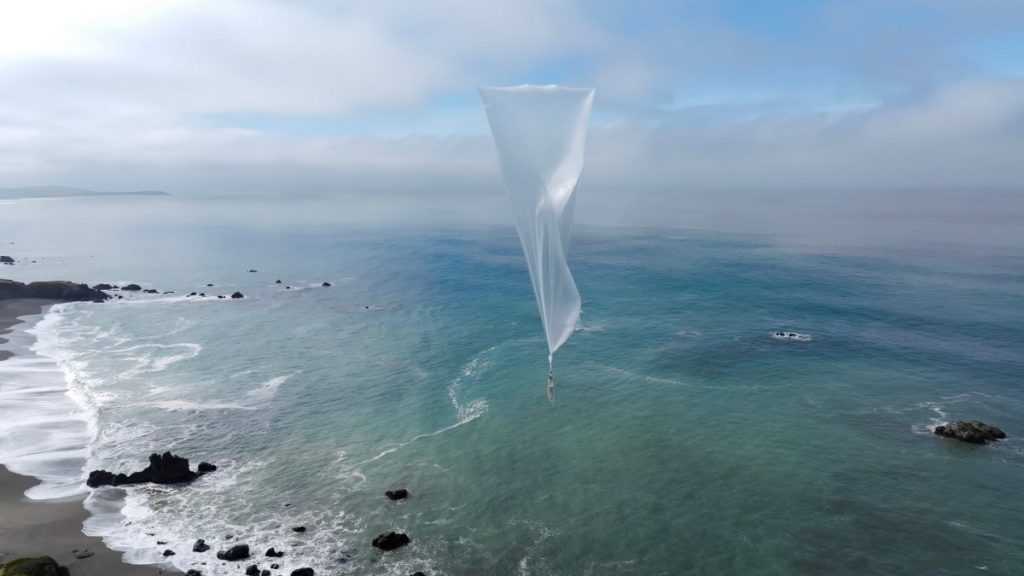
Image Credits:Windborne Systems
U.S. Air Force Enters $50 Million Contract with WindBorne Systems
The U.S. Air Force has secured a lucrative contract with WindBorne Systems, a startup specializing in autonomous weather balloons. This partnership could yield nearly $50 million for WindBorne, a significant milestone for the company.
Fleet of Autonomous Weather Balloons
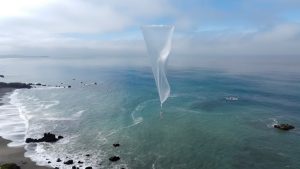
Currently, WindBorne operates around 700 weather balloons circling the globe, gathering atmospheric data through advanced sensors. This data not only serves their clients but also enhances its proprietary AI weather forecasting model. Since its inception in 2015, WindBorne has established itself in Redwood City, California, as a pioneer in delivering real-time, empirical data directly to deep-learning weather systems.
Collaboration with U.S. Government
WindBorne has developed a strong working relationship with various segments of the U.S. government, including key agencies like the National Weather Service, U.S. Air Force, and Navy. Although the recent contract marks the largest engagement to date, it operates on a flexible payment structure where the Air Force purchases data as needed. This allows for targeted data orders based on specific regions and timelines. So far, the Air Force has invested approximately $1.7 million, and WindBorne executives anticipate increased orders in the future.
Growth and Development Initiatives
The contract is not merely a financial boon but a vehicle for continuing the expansion of WindBorne’s balloon fleet. Co-founder and CTO Andrey Sushko highlighted that it will also facilitate research and development aimed at enhancing the performance and hardware of the balloons. Interestingly, this contract was awarded without competitive bidding, underlining the government’s confidence in WindBorne’s unique capability for global data collection.
Funding and Advancements in Forecasting Technology
In a recent update, WindBorne CEO John Dean disclosed that the company had successfully completed a $37 million Series B funding round to support its growth trajectory. Furthermore, WindBorne recently unveiled WeatherMesh 6, its latest iteration of weather forecasting technology. This model is claimed to outperform traditional forecasting methods employed by the European Centre for Medium-Range Weather Forecasts (ECMWF), which previously dominated the field with its physics-based simulations.
The Evolution of AI in Weather Forecasting
The boom in AI-driven weather forecasting can be traced back to advancements in transformer model architectures and the release of a significant weather dataset by the ECMWF. Previously, meteorologists depended on costly supercomputers to run intricate equations simulating atmospheric behavior, but the advent of end-to-end learning has transformed this landscape. By processing years of weather data, AI models can generate quicker and more accurate predictions.
Innovative models from companies and government labs are increasingly showing improved accuracy over traditional forecasting methods. However, both approaches continue to coexist, as they are necessary for a comprehensive understanding of meteorological patterns. Google DeepMind has also entered this arena with its advanced weather model, which has shown promise in enhancing cyclone forecasting tools critical for government responses during hurricane seasons.
Pioneering Unpowered Flight Systems
A noteworthy achievement from WindBorne came in August when it became the first organization to deploy an unpowered flight system to gather data from the eye of a typhoon. This groundbreaking method involves maneuvering the balloons by adjusting their altitude and utilizing techniques like bleeding air or discarding sand ballast to navigate toward necessary winds.
Sushko emphasized the significance of this development, stating that it results from having robust wind and weather models combined with a sufficiently large balloon constellation to ensure coverage in strategic locations. This endeavor represents one of the initial instances where deep learning was applied to make operational decisions in real-time.
The Future of Weather Data Collection
As the partnership between the U.S. Air Force and WindBorne Systems unfolds, there lies immense potential for innovation in weather data collection and forecasting. The advancements in AI and machine learning are poised to further refine the methods used in atmospheric science, making accurate forecasts more accessible and reliable.
With WindBorne’s commitment to research and development, alongside increasing demand from governmental bodies for precise atmospheric data, the future seems bright for both the startup and the broader meteorological community. As they continue to enhance their capabilities, WindBorne may play a pivotal role in how meteorological data is gathered and utilized in essential operations.
This partnership represents a significant leap forward in how weather data is collected and analyzed, reinforcing the need for collaboration between innovative startups and government agencies. With expectations of additional contracts and the scaling of operations, WindBorne is set to solidify its standing in the industry, making strides towards more accurate weather predictions in the years to come.
By leveraging advancements in AI and the unique capabilities offered by its balloon fleet, WindBorne Systems is well-positioned to redefine the landscape of weather forecasting and data utilization.
Thanks for reading. Please let us know your thoughts and ideas in the comment section down below.
Source link
#WindBorne #wins #hefty #Air #Force #contract #balloon #data
About The Author