

Former Plaud executive secures $26M for AI app that discreetly listens.
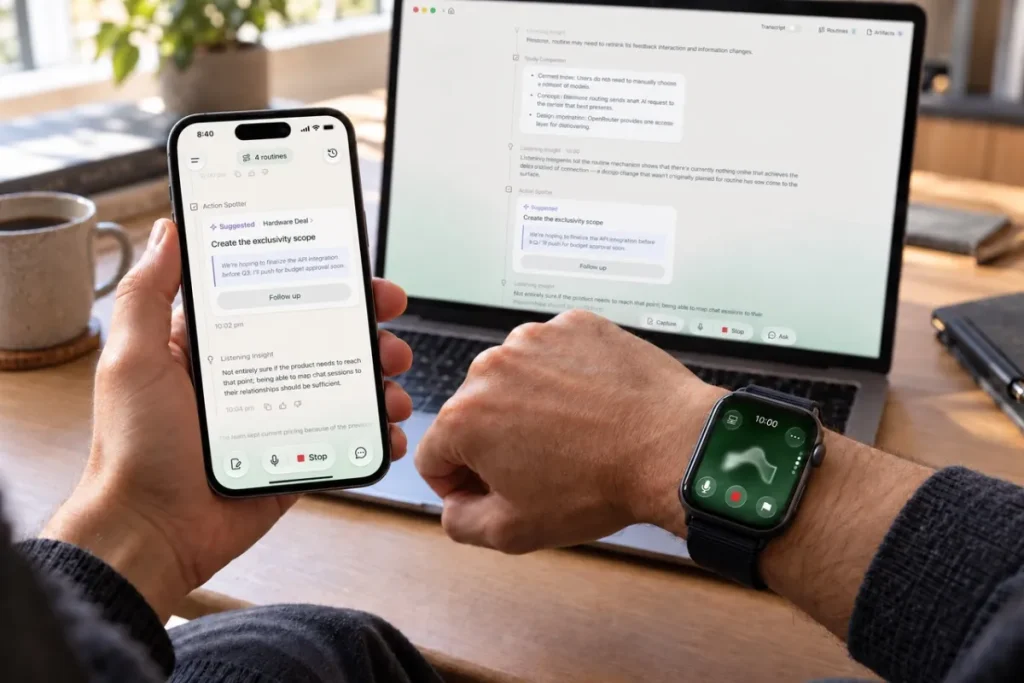
Image Credits:Ambi
The Promise of AI in Personal Assistance
Artificial Intelligence (AI) holds a compelling promise: the more it understands an individual, the better it can assist with tasks and make tailored suggestions. Tech companies assert that achieving this level of personalized assistance requires constant monitoring—through applications and devices that listen, watch, or record user activities to gather comprehensive context.
However, the implications of continuous data collection raise significant privacy and data security concerns. Despite this, emerging startups continue to develop applications designed to provide personalized assistance, undeterred by potential backlash. They firmly believe the market demand for such technology is robust enough to outweigh privacy apprehensions.
Ambi: Revolutionizing Real-Time Intelligence
Among the innovators in this space is Ambi, spearheaded by former Plaud executive Peter Mo. This ambitious app aims to deliver real-time intelligence and insights to users by maintaining an ongoing listening feature. With a recent announcement marking $26 million raised across multiple funding rounds—backed by influential investors like Luminous Ventures and Huaqin—Ambi is poised for significant impact.
Multifunctional Applications Across Devices
Ambi is set to launch applications for iPhones, Macs, and Apple Watches. These apps are designed to function as comprehensive meeting note-takers while allowing users the option to have them continuously listen to gather contextual information throughout the day. This innovative approach stands in contrast to many existing meeting note-taking solutions, which primarily focus on automating post-call tasks based on summaries and action items derived from conversations.
Ambi’s unique proposition is to initiate assistance in real-time during meetings. The AI agent promised by Ambi can proactively suggest relevant information or insights based on users’ calendars, available knowledge, and web data. Furthermore, the platform supports seamless task transition—users can start a task on one device and continue it on another, offering a fluid workflow that enhances efficacy.
Redefining Interaction with AI
Mo emphasized the limitations of current interactions with intelligence, explaining that users often feel confined by traditional interfaces. Conventional devices require waiting for recordings to be processed before valuable insights are available, which can stifle productivity. Ambi’s vision is to eliminate such delays, empowering users to access AI capabilities at any time and from any location.
In the company’s quest to deepen personal relevance, an upcoming desktop application will analyze user activity and retain essential insights. This capability aims to deliver even more personalized suggestions, following in the footsteps of existing apps such as Littlebird and Minimi.
Future Hardware Innovations
Ambi also plans to expand its ecosystem by introducing its own hardware device equipped with a screen, speaker, camera, and microphones. This hardware will enhance its ability to capture context efficiently and present valuable information directly to users.
Addressing Privacy Concerns
The launch of Ambi coincides with rising concerns regarding AI tools that lack sufficient indicators to inform users and others when data is being captured. The potential risks are underscored by instances in which meeting note-taking technologies have faced legal action for recording conversations without participant consent. Furthermore, recent features like Apple’s Voice Intelligence, which continuously transcribes speech, have only heightened these privacy issues.
Mo assures that users will have the flexibility to disable ambient data capture in Ambi’s applications and devices at any moment, with the feature defaulted to “off.” The company insists it does not store recordings and employs encryption for the collected data; however, specifics regarding the type of encryption remain undisclosed. Despite these assurances, the responsibility for transparent communication about data capture rests primarily on users—a challenge described by Mo as a pervasive industry issue.
The Need for Transparency
Mo stressed the necessity for users to disclose when they are using ambient capture technology. “As an industry, we haven’t adequately addressed the problem of disclosure,” he acknowledged. Efforts have been made to prominently feature information about this responsibility, but the challenge persists when users attempt to obscure their data capture practices.
Ambi’s Growing Workforce
As the company strides toward a promising future, Ambi boasts over 50 employees spread across locations in San Francisco, Beijing, Shanghai, and Shenzhen. The startup is actively hiring, focusing on bolstering its go-to-market strategies and acquiring skilled AI engineers dedicated to enhancing speech recognition capabilities.
In conclusion, while Ambi’s foray into continuous data capture raises essential questions surrounding privacy and user consent, its innovative approach to personalized assistance marks a significant step forward in the realm of AI technology. As user expectations shift and demand for more integrated solutions grows, the balance between efficiency and ethical considerations remains a crucial conversation in the tech industry.
Thanks for reading. Please let us know your thoughts and ideas in the comment section down below.
Source link
#Plaud #exec #raises #26M #app #listens #background
About The Author