
Apple’s cautious approach to AI is proving to be a wise strategy.
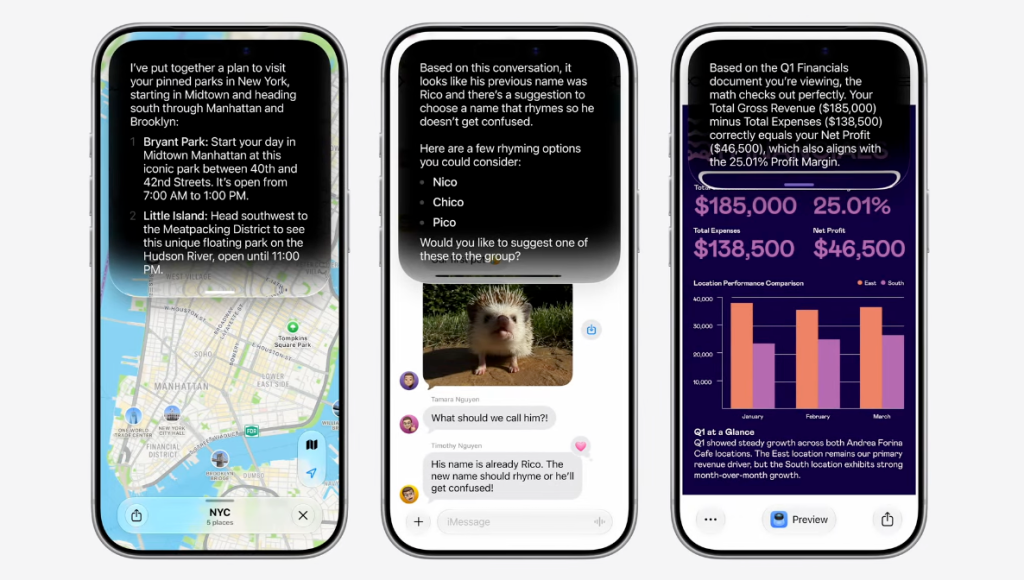
Image Credits:Apple
Apple Takes Significant Steps in the AI Race
For a long time, Apple has faced criticism for lagging in the AI arms race. Many skeptics argue that the company’s unclear AI strategy has diminished its competitive edge, raising concerns on Wall Street that this gap could impact iPhone sales.
Recently, Apple announced what it claims is its most significant AI launch to date: Siri AI. This upgrade incorporates new automated capabilities, developed in collaboration with Google Gemini, into the core of its software.
Is Apple Still Losing the AI Race?
Whether this update will silence the critics who say Apple is “losing” the AI race remains uncertain. Perhaps a more pertinent question is: will Apple customers actually engage with these new features, and will they translate into enhanced business performance for Apple?
Recent announcements came with insightful comments from Craig Federighi, Apple’s senior vice president of software engineering. He remarked, “Some appear to be racing forward, seemingly pursuing AI for the sake of AI, without clear regard for the people — all of us — that it’s ultimately meant to serve.” This statement seems to address criticism regarding Apple’s slower pace in AI development while also recognizing growing consumer skepticism about the AI industry.
Apple’s Approach to AI
Apple aims to position itself as the AI company that aligns with user interests, especially in a climate where many are concerned that AI could threaten jobs and well-being. Federighi’s comments reflect a commitment to harnessing advanced technology for user-centric products, contrasting sharply with the frenetic pace adopted by other tech giants.
New Features with Siri AI
Judging from recent demonstrations, Apple’s new features appear to have real value. Siri can now unearth useful information buried in emails and texts, providing context-sensitive suggestions. It can instantly retrieve up-to-date information from the web, thanks to its partnership with Gemini. Moreover, it is designed to work seamlessly across various Apple devices, improving user flexibility. Like other AI chatbots, Siri can store chat histories, allowing users to revisit past interactions.
Implications for Competitors
By embedding AI capabilities into Siri, Apple could significantly challenge competitors that rely on the App Store for distribution. The integration of AI at the operating system level poses a considerable threat to these rivals, potentially undermining their market advantages.
However, it’s important to note that this version of Siri remains in a beta phase and won’t be widely available until later this year. As such, a definitive assessment of its success must wait.
Apple’s Strategy: Measured and Effective
Despite being a hardware-centric company, Apple’s updates aim to enhance the user-friendliness of its devices, thereby keeping consumers engaged. In contrast, other companies like OpenAI have been struggling to define clear target demographics, bouncing between consumer and enterprise audiences. Similarly, Meta is making large investments in AI without a clear linkage to its existing advertising business.
By comparison, Apple’s more cautious yet deliberate approach appears financially prudent. Remarkably, the company does not rely on a groundbreaking AI strategy to thrive; it has already seen remarkable iPhone sales recently.
Financial Insights: Spending Less, Earning More
As discussions around AI’s profitability grow more prominent, Apple’s financial strategy stands out. It plans to allocate roughly $14 billion in capital expenditures this year, significantly less than the collective $900 billion being invested by other tech giants. Despite lower spending, Apple’s revenue continues to flourish, thanks in part to taxes levied on AI companies utilizing the App Store for their applications.
Conclusion: A Smart Play in the AI Arena
In summary, while the notion of “winning” the AI race is still up for debate, Apple’s strategy to develop a suite of AI features might be the smartest approach. By offering features that feel similar to existing AI tools already available in the App Store, Apple keeps its user base engaged without the need for exorbitant spending.
With a growing lineup of AI functionalities designed to enhance user experience, Apple positions itself not just as a hardware provider but also as an integral player in the evolving AI landscape. The upcoming launch of Siri AI offers a glimpse into how Apple plans to navigate this complex yet crucial sector.
Final Thoughts
Apple’s recent advancements serve as a reminder that success in the tech industry often lies not just in rapid innovation but also in understanding user needs and aligning technology with those needs. As Apple continues to make strides in the AI realm, it remains to be seen how well these changes will resonate with consumers and impact its long-term competitiveness.
Thanks for reading. Please let us know your thoughts and ideas in the comment section down below.
Source link
#Apples #slowandsteady #bet #starting #pretty #smart
About The Author