
Crusoe cancels $1.25B plan for Boom turbines in AI data centers.
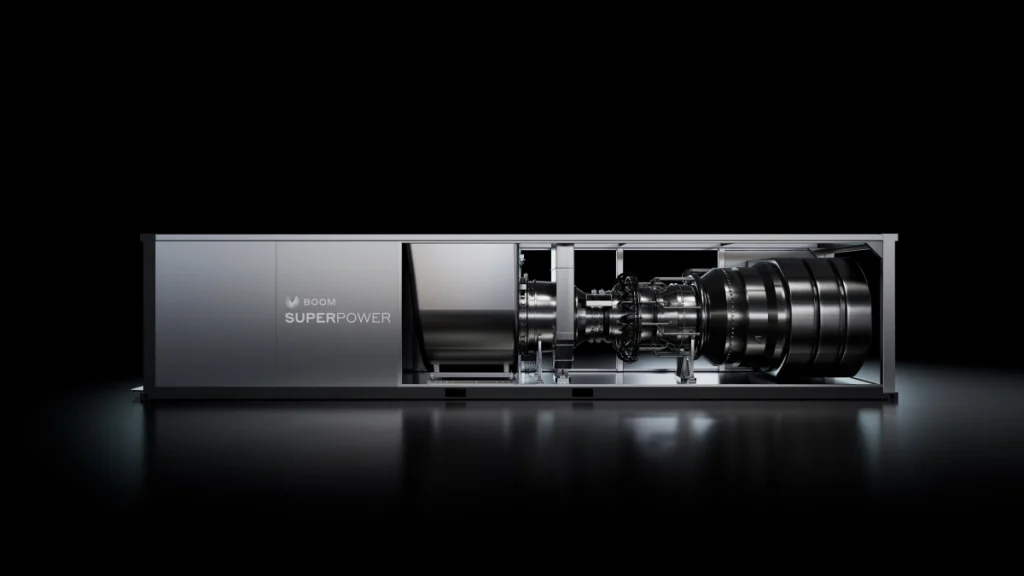
Image Credits:Boom Supersonic
Crusoe Ends Partnership with Boom Supersonic for Power Plants
Crusoe, a prominent AI data center startup based in Denver, has decided to terminate plans to utilize a new line of stationary power plants from Boom Supersonic, another Denver-based company. This change comes on the heels of Crusoe’s impressive fundraising, where it recently secured $3.9 billion in capital for its initiatives.
Background on Crusoe
Founded in 2018, Crusoe initially set out to mine Bitcoin using excess natural gas from oil fields. Since then, it has evolved into one of the foremost builders of AI data centers. The company has notably developed a significant campus in Abilene, Texas, which provides essential computing power to major stakeholders like OpenAI.
Boom Supersonic and Its Ventures
Boom Supersonic is making waves in the aviation industry with its ambitious project to create the supersonic passenger jet known as Overture. In addition to this, the company launched a new business line last year concentrated on selling stationary power plants that utilize a variation of the engine being developed for Overture. This engine, called the Superpower turbine, shares an impressive 80% of its components with the aircraft engine, Symphony.
Partnership Details and Termination
Initially, Crusoe committed to being the first customer for Boom’s stationary power plant venture. The agreement included a substantial investment of $1.25 billion for 29 Superpower turbines, each rated at 42 megawatts. The first delivery was slated for 2027. However, according to Boom Supersonic CEO Blake Scholl, this deal has now been scrapped.
In a post shared on X, Scholl extended his congratulations to Crusoe’s founders, Cully Cavness and Chase Lochmiller, for their recent fundraising achievement. He specified that both companies will not be moving forward with the turbine partnership, acknowledging that Crusoe’s evolving energy requirements no longer included the turbines.
The Road Ahead for Boom Supersonic
Despite losing its initial customer, Boom Supersonic remains optimistic. Scholl mentioned that the company plans to deliver approximately 250 megawatts of Superpower turbines to other clients next year, with a target of reaching 1 gigawatt by 2028. He expressed gratitude for the role Crusoe played in shaping the Superpower product and looked forward to potential collaborative opportunities in the future, should Crusoe reevaluate its energy strategy.
Crusoe’s Response
In response to the development, Crusoe confirmed to TechCrunch that it has indeed severed ties with Boom Supersonic. Andrew Schmitt, a representative for Crusoe, explained the company’s approach to constructing AI data centers. He emphasized that Crusoe builds its facilities with energy sources tailored to the evolving needs of each location, including not only turbines from Boom but also wind, solar, battery storage, and electricity from the grid.
While affirming that Boom has been a commendable partner, Schmitt highlighted that the collaboration did not align with Crusoe’s current projects. “We wish them well,” he said in closing.
Current Projects and Future Directions
Crusoe’s inaugural data center in Abilene, capable of producing 1.2 gigawatts of power, was built to support Oracle and OpenAI, primarily using grid electricity. The facility has a backup gas turbine power plant that is only used when necessary. Additionally, Crusoe is in the process of constructing a new 900 megawatt data center in the same locale for Microsoft, which will incorporate on-site gas turbines.
Impact on Boom’s Future Growth
The cessation of this partnership is a notable setback for Boom Supersonic, which successfully raised $300 million last year to facilitate the launch of its new power plant business. The expectation was that profits generated from this stationary power venture would fund the development of the Overture jet. Losing a significant customer like Crusoe puts additional pressure on the company to quickly secure new contracts.
Scholl did not respond to requests for comments before the publication of this article, but updates may follow upon his response.
Conclusion
Crusoe’s decision to end its partnership with Boom Supersonic signifies a strategic pivot as it seeks to adapt its energy sources to meet the unique demands of its increasingly extensive data center operations. As both companies navigate this shift, the potential for future collaboration remains open, depending on how Crusoe’s energy strategy evolves and if turbines fit into their plans down the line. For now, Crusoe will continue focusing on innovative energy solutions while Boom aims to establish its stationary power plant business with a broadened customer base.
Thanks for reading. Please let us know your thoughts and ideas in the comment section down below.
Source link
#Crusoe #abandons #1.25B #plan #Boom #turbines #data #centers
About The Author