

web analytics

Learn AI With Kesse | Best Place For AI News

We make artificial intelligence easy and fun to read. Get Updated AI News.

Determining the Jury’s Verdict in the Elon Musk and Sam Altman Case
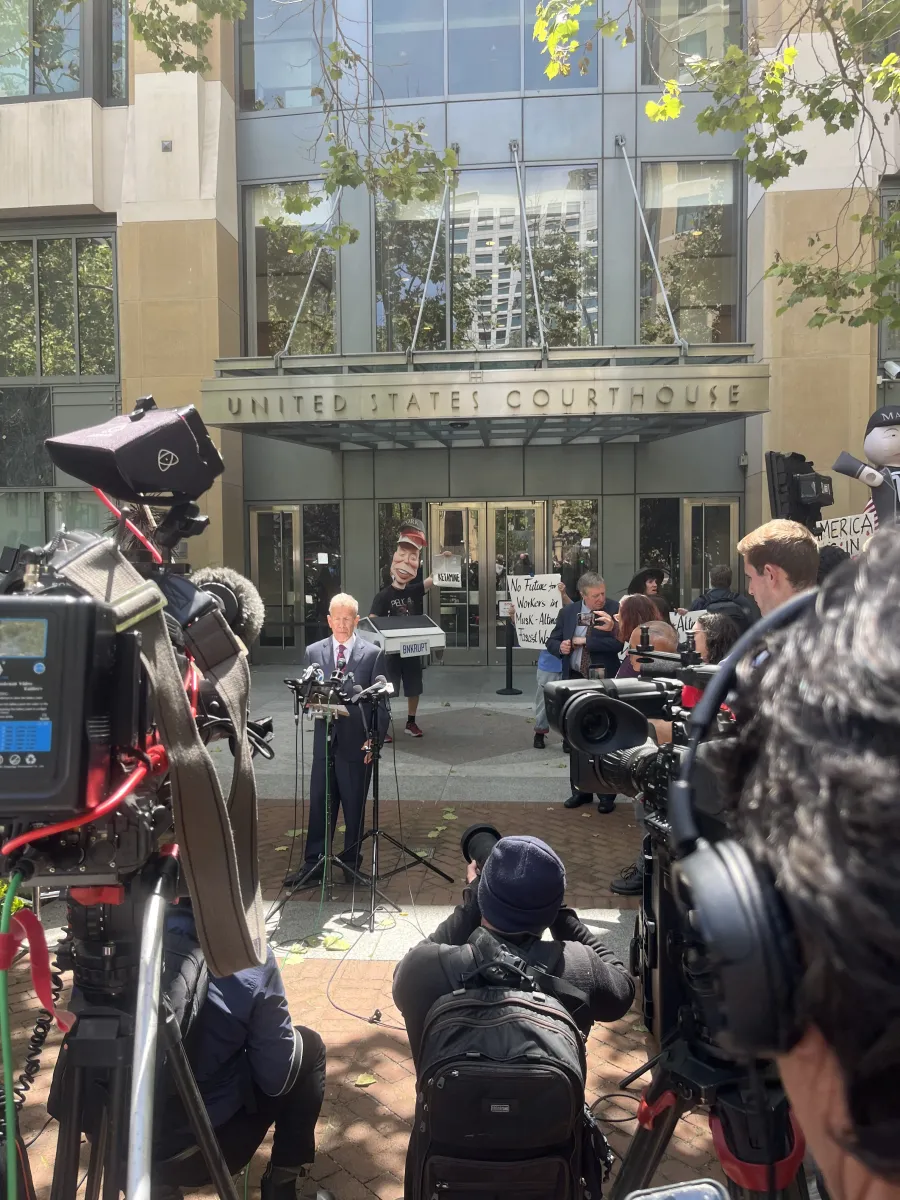
What the jury will actually decide in the case of Elon Musk vs. Sam Altman

Image Credits:Tim Fernholz / Tim Fernholz

Trial Over OpenAI’s Future: Key Issues at Stake

Nine jurors in California are currently deliberating the fate of OpenAI, a leading lab in artificial intelligence, amid legal proceedings initiated by Elon Musk. The trial covers complications arising from Musk’s relationship with OpenAI’s cofounders and Microsoft, spanning from a founding split in 2018 to significant management shifts in 2023. However, the jurors will focus on a few specific legal questions.

Central Legal Questions

Breach of Charitable Trust

The first issue for the jurors is whether OpenAI, along with cofounders Sam Altman and Greg Brockman, breached a charitable trust by failing to use Musk’s donations for their intended charitable purposes. Musk asserts that his contributions were meant to facilitate a nonprofit mission that would democratize the benefits of AI, ensuring no single entity would control it. His team argues that a $10 billion investment from Microsoft in 2023 into OpenAI’s for-profit arm marked a departure from that mission and enriched OpenAI investors at Musk’s expense.

Unjust Enrichment

Musk’s lawyers further claim that the defendants improperly utilized his donations for personal gain via OpenAI’s profit-driven endeavors. They argue that this focus on profit led the nonprofit’s activities to stagnate. In contrast, OpenAI contends that Musk’s donations were adequately allocated by 2020, and that subsequent equity distributions occurred only after Musk exited in 2018. They emphasize that research compensation through stock was critical for progressing toward the goal of Artificial General Intelligence (AGI).

Aiding and Abetting Breach of Charitable Trust

The third key question examines whether Microsoft knowingly aided OpenAI in breaching the charitable trust owed to Musk. His legal team argues that Microsoft was aware of the specific conditions tied to Musk’s donations and significantly contributed to Musk’s perceived injustices. Microsoft, for its part, claims its executives did not have knowledge of such conditions, emphasizing that their investments greatly benefited OpenAI.

OpenAI’s Defenses

OpenAI has raised several defenses against Musk’s claims:

Statute of Limitations

One argument suggests that Musk’s claims could be dismissed based on the statute of limitations. If OpenAI can prove that any alleged harms to Musk occurred before specific dates (August 5, 2021, for the first count and August 5, 2022, for the second), Musk’s claims may be rendered moot.

Unreasonable Delay

OpenAI also argues Musk’s decision to file his lawsuit in 2024 constitutes an unreasonable delay, undermining his quest for damages. They contend that Musk only took action after OpenAI’s successful launch of ChatGPT, which transformed the AI landscape.

Unclean Hands

Another defense posits the doctrine of “unclean hands,” suggesting Musk’s own actions during his tenure at OpenAI were questionable. Evidence has emerged indicating that Musk was forming competitive AI initiatives while still serving on OpenAI’s board, which purportedly conflicted with the organization’s charitable mission.

Implications of the Verdict

Should Musk prevail in his lawsuit, it could fundamentally alter OpenAI’s structure or even lead to its dissolution as a for-profit entity. However, the aftermath remains uncertain, with further hearings planned for next week where both sides will discuss possible consequences of a potential plaintiff verdict.

Breach of Charitable Trust Details

Regarding the breach of charitable trust claim, Musk’s legal team argues that the defendants were fully aware of his intent to support a nonprofit dedicated to AI safety benefits. They believe that the Microsoft investment in 2023 jeopardized this original intent. They claim that all prior investments differed in nature and served to enrich specific stakeholders rather than further the charitable mission Musk championed.

Defense attorneys for OpenAI have pointed out a lack of witnesses who can substantiate claims that specific restrictions were placed on Musk’s donations. Key figures such as Musk’s adviser Jared Birchall have not confirmed any limitations. Instead, they argue that agreements required private fundraising efforts, a process Musk himself attempted in the past.

A forensic accountant from OpenAI testified that Musk’s donations were used appropriately before the key timeline dates, which the defense argues invalidates any claims of trust violations.

Unjust Enrichment Arguments

Musk’s team also highlights that the valuation increases for OpenAI founders and their stakeholders imply Musk’s charitable contributions were diverted for personal gain. They contend that the nonprofit’s activities were neglected, while the for-profit sector flourished without sufficient oversight.

In response, OpenAI argues that the foundation effectively utilized Musk’s contributions by 2020, deeming the distribution of equities to be separate from his donations. They emphasize that the for-profit sector continues to bolster the nonprofit’s mission and that the nonprofit has retained control over for-profit activities, implementing governance adjustments after Altman’s brief dismissal in 2023.

Aiding and Abetting Claims

Musk’s case emphasizes Microsoft CEO Satya Nadella’s involvement during the tumultuous period when Altman was dismissed and reinstated. Musk’s team suggests this underlines Microsoft’s expanding influence over OpenAI’s decisions. Microsoft witnesses counter that they conducted thorough due diligence and were unaware of specific restrictions on Musk’s donations.

Legal Timeframes

Musk’s timeline indicates growing skepticism towards OpenAI’s direction, culminating in his 2024 lawsuit following news of Microsoft’s investment plans. OpenAI’s attorneys argue that the specifics of those plans were disclosed in 2018 and that numerous public communications indicated Musk was aware of OpenAI’s trajectory long before he initiated legal action.

Conclusion: Next Steps in the Case

With Musk’s formal role concluding in 2018 and his last donations completed by 2020, OpenAI’s defense underscores a narrative of appropriate actions taken within legal and operational bounds. Observers are now eagerly awaiting the jury’s decision, as the outcome could have broad implications for the future of one of the world’s most transformative technologies.

Thanks for reading. Please let us know your thoughts and ideas in the comment section down below.

Source link
#jury #decide #case #Elon #Musk #Sam #Altman

About The Author

Leave a Reply

Your email address will not be published. Required fields are marked *

We use cookies to personalize content and ads and to primarily analyze our geo traffic sources. We also may share information about your use of our site with our social media, advertising, and analytics partners to improve your user experience. We respect your privacy and will never abuse your information. [ Privacy Policy ] View more
Cookies settings
Accept
Decline
Privacy & Cookie Policy
Privacy & Cookies policy
Cookie name Active

The content on this page governs our Privacy Policy. It describes how your personal information is collected, used, and shared when you visit or make a purchase from learnaiwithkesse.com (the "Site").

Kesseswebsites and Advertising owns Learn AI With Kesse and the website learnaiwithkesse.wiki. For the purpose of this Terms and Agreements [ we, us, I, our ] represents the owner of Learning AI With Kesse which is Kesseswebsites and Advertising. [ You, your, student and buyer ] represents you as the user and visitor of this site. Terms of Conditions, Terms of Service, Terms and Agreement and Terms of use shall be considered the same here. This website or site refers to https://learnaiwithkesse.com. You agree that the content of this Terms and Agreement may include Privacy Policy and Refund Policy. Products refer to physical or digital products. This includes eBooks, PDFs, and text or video courses. If there is anything on this page you do not understand you agree to reach out to us via email [ emmanuel@learnaiwithkesse.com ] for explanation before using any part of this site.

1. Personal Information We Collect

When you visit this Site, we automatically collect certain information about your device, including information about your web browser, IP address, time zone, and some of the cookies that are installed on your device. The primary purpose of this activity is to provide you a better user experience the next time you visit our again and also the data collection is for analytics study. Additionally, as you browse the Site, we collect information about the individual web pages or products that you view, what websites or search terms referred you to the Site, and information about how you interact with the Site. We refer to this automatically-collected information as "Device Information."

We collect Device Information using the following technologies:

"Cookies" are data files that are placed on your device or computer and often include an anonymous unique identifier. For more information about cookies, and how to disable cookies, visit http://www.allaboutcookies.org. To comply with European Union's GDPR (General Data Protection Regulation), we do display a disclaimer a consent text at the bottom of this website. This disclaimer alerts you the visitor or user of this website about why we use cookies, and we also give you the option to accept or decline. If you accept for us to use cookies on your site, the agreement between you and us will expire after 180 has passed.

"Log files" track actions occurring on the Site, and collect data including your IP address, browser type, Internet service provider, referring/exit pages, and date/time stamps.

"Web beacons," "tags," and "pixels" are electronic files used to record information about how you browse the Site.

Additionally, when you make a purchase or attempt to make a purchase through the Site, we collect certain information from you, including your name, billing address, shipping address, payment information (including credit card numbers), email address, and phone number. We refer to this information as "Order Information."

When we talk about "Personal Information" in this Privacy Policy, we are talking both about Device Information and Order Information.

Payment Information

Please note that we use 3rd party payment processing companies like https://stripe.com and https://paypal.com to process your payment information. PayPal and Stripe protects your data according to their terms and agreement and may store your data to help make your subsequent transactions on this website easier. We never and [ DO NOT ] store your card information or payment login information on our website or server. By making payment on our site, you agree to abide by the Terms and Agreement of the 3rd Party payment processing companies we use. You can visit their websites to read their Terms of Use and learn more about them.

2. How Do We Use Your Personal Information?

We use the Order Information that we collect generally to fulfill any orders placed through the Site (including processing your payment information, arranging for shipping, and providing you with invoices and/or order confirmations). Additionally, we use this [a] Order Information to:

[b] Communicate with you;

[c] Screen our orders for potential risk or fraud; and

When in line with the preferences you have shared with us, provide you with information or advertising relating to our products or services. We use the Device Information that we collect to help us screen for potential risk and fraud (in particular, your IP address), and more generally to improve and optimize our Site (for example, by generating analytics about how our customers browse and interact with the Site, and to assess the success of our marketing and advertising campaigns).

3. Sharing Your Personal Information

We share your Personal Information with third parties to help us use your Personal Information, as described above. For example, we use System.io to power our online store--you can read more about how Systeme.io uses your Personal Information here: https://systeme.io/privacy-policy/ . We may also use Google Analytics to help us understand how our customers use the Site--you can read more about how Google uses your Personal Information here: https://www.google.com/intl/en/policies/privacy/. You can also opt-out of Google Analytics here: https://tools.google.com/dlpage/gaoptout.

Finally, we may also share your Personal Information to comply with applicable laws and regulations, to respond to a subpoena, search warrant or other lawful request for information we receive, or to otherwise protect our rights.

4. Behavioral Advertising

As described above, we use your Personal Information to provide you with targeted advertisements or marketing communications we believe may be of interest to you. For more information about how targeted advertising works, you can visit the Network Advertising Initiative’s (“NAI”) educational page at http://www.networkadvertising.org/understanding-online-advertising/how-does-it-work.

You can opt-out of targeted advertising by:

COMMON LINKS INCLUDE:

FACEBOOK - https://www.facebook.com/settings/?tab=ads

GOOGLE - https://www.google.com/settings/ads/anonymous

BING - https://advertise.bingads.microsoft.com/en-us/resources/policies/personalized-ads]

Additionally, you can opt-out of some of these services by visiting the Digital Advertising Alliance’s opt-out portal at: http://optout.aboutads.info/.

5. Data Retention

Besides your card payment and payment login information, when you place an order through the Site, we will maintain your Order Information for our records unless and until you ask us to delete this information. Example of such information include your first name, last name, email and phone number.

6. Changes

We may update this privacy policy from time to time in order to reflect, for example, changes to our practices or for other operational, legal or regulatory reasons.

7. Contact Us

For more information about our privacy practices, if you have questions, or if you would like to make a complaint, please contact us by e-mail at emmanuel@learnaiwithkesse.com or by mail using the details provided below:

8. Your acceptance of these terms

By using this Site, you signify your acceptance of this policy. If you do not agree to this policy, please do not use our Site. Your continued use of the Site following the posting of changes to this policy will be deemed your acceptance of those changes.

Last Update | 18th August 2024

Save settings
Cookies settings