
web analytics

Learn AI With Kesse | Best Place For AI News

We make artificial intelligence easy and fun to read. Get Updated AI News.

Frontier AI Labs Claims Their Models Disprove the Exponential Time Hypothesis
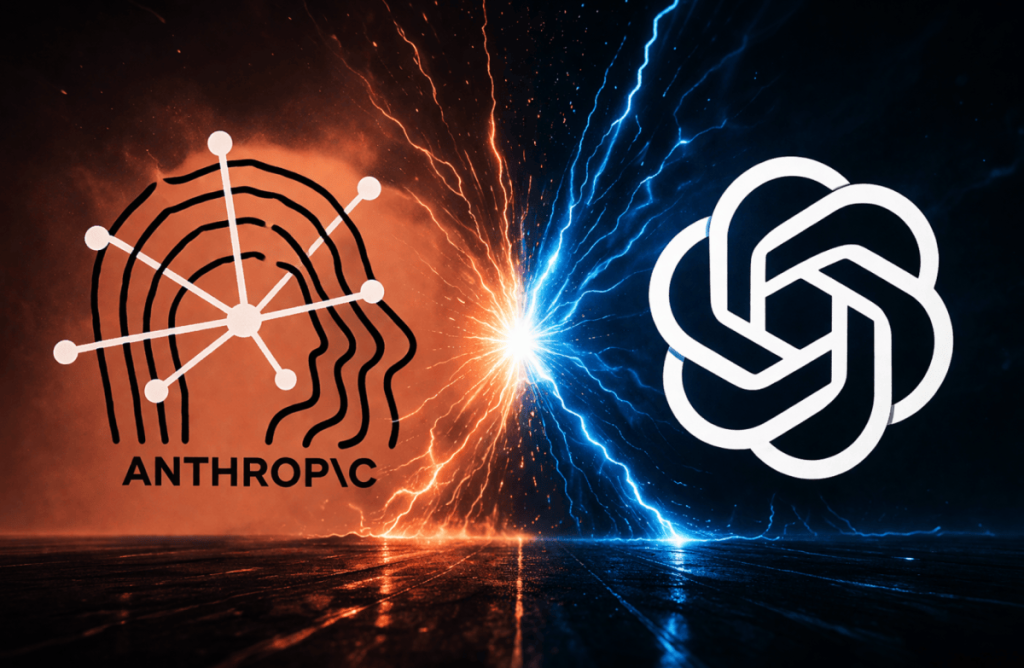
Anthropic and OpenAI logos

Image Credits:ChatGPT

OpenAI’s Groundbreaking Solutions to Long-Standing Math Problems

Yesterday, OpenAI made headlines with the release of solutions to three monumental math problems that have puzzled researchers for years. Among these was a surprising dismissal of the Exponential Time Hypothesis (ETH), a foundational premise in computer science that significantly influences our understanding of computational complexity.

The scientific community’s reaction to this announcement was mixed, combining excitement with skepticism. Levent Alpöge, a mathematician from Anthropic, voiced concerns that OpenAI’s findings might rely heavily on pre-existing research. Shortly after, Anthropic unveiled its own counterargument against the ETH, further fueling the debate.

A New Approach to The Release of Findings

OpenAI’s approach to releasing this work marked a notable evolution. This time, the lab tailored its dissemination method for each academic discipline involved. Mathematicians received their findings via GitHub, while computer scientists formed a collaborative working group. This group requested that the proofs be made public and encouraged OpenAI to sponsor a dedicated conference for further discussion. Physicists, on the other hand, established a working group to determine the best way to share their results.

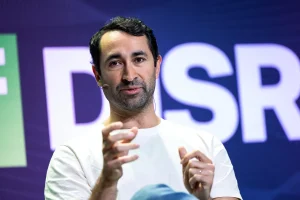
MIT Professor Ryan Williams, an expert in computational complexity, took the lead in organizing the computer science community’s response to these developments. While he has previously criticized OpenAI’s abrupt proof releases, characterizing an earlier incident as a “DDoS attack on mathematicians,” he has since agreed to collaborate with the lab to help steer vital conversations within the field. Alongside UC San Diego colleagues Russell Impagliazzo and Ramamohan Paturi — the latter of whom co-authored the foundational ETH paper published in 1999 — Williams is working to interpret the implications of OpenAI’s findings.

As a first step, the team released an open letter soliciting feedback from the scientific community and initiating discussions on the protocols surrounding AI’s role in mathematical research. “Some parts [of OpenAI’s proof] are routine, but there are two or three alien-looking parts that indicate this is something essential for the entire community to collaborate on,” Williams remarked when speaking to TechCrunch.

Understanding P vs NP and the Role of the ETH

The ETH is intricately linked to the broader P vs NP problem, a question that has intrigued computer scientists and researchers across various disciplines for decades. At its core, investigators aim to discern whether problems that can be easily verified (NP) can similarly be effortlessly solved (P).

Consider Sudoku: once a solution is established, it can be verified rapidly, yet coming up with the correct answer tends to be labor-intensive. This scenario applies to multiple critical problems and underlies many cryptographic systems. With access to the key for a coded message, one can reveal its contents quickly, but cracking the code itself is often computationally prohibitive.

To date, there is no definitive proof confirming the permanence of this dynamic. “P = NP posits that if you can verify a Sudoku solution, you can also generate one easily,” Williams explained. “It implies that this principle should extend to all easily verifiable problems — if one can verify quickly, one should also be able to solve quickly. It almost seems too good to be true.”

Consequently, most in the field operate under the assumption that P ≠ NP, and the ETH supports this view by suggesting that even the most efficient algorithms require exponentially more time to tackle solutions as the number of variables in designated challenges increases.

OpenAI and Anthropic’s Claims

The models developed by OpenAI and Anthropic propose algorithms capable of solving complex puzzles in “sub-exponential” time, which suggests speeds exceeding those previously perceived as possible. If verified, these claims could denote a scientific refutation of the ETH, potentially paving the way for algorithms exhibiting characteristics aligned with P = NP.

“Every computer scientist should reevaluate the viability of P = NP, but individual perspectives may differ,” Williams acknowledged. “This challenge questions many intuitions we held regarding the tractability of hard NP problems. However, I also believe that we may not have reached a definitive conclusion yet. OpenAI’s current algorithm might not even be the best possible solution out there.”

The Journey Ahead for Computer Scientists

The longevity of the ETH has led it to be cited in numerous academic papers over the past ten years, all of which will require reexamination if the AI labs’ assertions hold up. Williams has emphasized the need for a conference supported by OpenAI to facilitate this reevaluation, stating, “This situation will impact many researchers’ work, necessitating a conversation about the next steps. Beyond understanding the new algorithms, we must consider which foundational principles need readdressing.”

Beyond theoretical implications, practical cybersecurity concerns are equally pressing. Williams pointed out that enhanced algorithms may render cryptographic systems dependent on certain key lengths obsolete. He promptly inquired whether OpenAI had assessed if their findings posed any threats to existing crypto systems. Fortunately, their examination indicated that current systems remain secure, alleviating some immediate concerns.

The Evolving Paradigm of Scientific Discovery

While the paradigm surrounding AI and scientific exploration is still developing, Williams maintains an optimistic outlook despite inherent challenges, particularly regarding training the next generation of scientists. His dual expertise in computer science and high-level mathematics may have equipped him better for this transition than his pure mathematics counterparts.

“AI is compelling researchers to adopt a more ambitious approach to their work,” he asserted. “It prompts us to consider that if everything I once focused on is now low-hanging fruit for AI solutions, what elevated questions should I pursue moving forward?”

As the scientific community continues to grapple with these significant findings, the unfolding narrative will inevitably shape the future of ethics, research protocols, and the role of AI in mathematics and beyond.

Thanks for reading. Please let us know your thoughts and ideas in the comment section down below.

Source link
#Frontier #labs #models #refuted #Exponential #Time #Hypothesis

About The Author

Leave a Reply

Your email address will not be published. Required fields are marked *

We use cookies to personalize content and ads and to primarily analyze our geo traffic sources. We also may share information about your use of our site with our social media, advertising, and analytics partners to improve your user experience. We respect your privacy and will never abuse your information. [ Privacy Policy ] View more
Cookies settings
Accept
Decline
Privacy & Cookie Policy
Privacy & Cookies policy
Cookie name Active

The content on this page governs our Privacy Policy. It describes how your personal information is collected, used, and shared when you visit or make a purchase from learnaiwithkesse.com (the "Site").

Kesseswebsites and Advertising owns Learn AI With Kesse and the website learnaiwithkesse.wiki. For the purpose of this Terms and Agreements [ we, us, I, our ] represents the owner of Learning AI With Kesse which is Kesseswebsites and Advertising. [ You, your, student and buyer ] represents you as the user and visitor of this site. Terms of Conditions, Terms of Service, Terms and Agreement and Terms of use shall be considered the same here. This website or site refers to https://learnaiwithkesse.com. You agree that the content of this Terms and Agreement may include Privacy Policy and Refund Policy. Products refer to physical or digital products. This includes eBooks, PDFs, and text or video courses. If there is anything on this page you do not understand you agree to reach out to us via email [ emmanuel@learnaiwithkesse.com ] for explanation before using any part of this site.

1. Personal Information We Collect

When you visit this Site, we automatically collect certain information about your device, including information about your web browser, IP address, time zone, and some of the cookies that are installed on your device. The primary purpose of this activity is to provide you a better user experience the next time you visit our again and also the data collection is for analytics study. Additionally, as you browse the Site, we collect information about the individual web pages or products that you view, what websites or search terms referred you to the Site, and information about how you interact with the Site. We refer to this automatically-collected information as "Device Information."

We collect Device Information using the following technologies:

"Cookies" are data files that are placed on your device or computer and often include an anonymous unique identifier. For more information about cookies, and how to disable cookies, visit http://www.allaboutcookies.org. To comply with European Union's GDPR (General Data Protection Regulation), we do display a disclaimer a consent text at the bottom of this website. This disclaimer alerts you the visitor or user of this website about why we use cookies, and we also give you the option to accept or decline. If you accept for us to use cookies on your site, the agreement between you and us will expire after 180 has passed.

"Log files" track actions occurring on the Site, and collect data including your IP address, browser type, Internet service provider, referring/exit pages, and date/time stamps.

"Web beacons," "tags," and "pixels" are electronic files used to record information about how you browse the Site.

Additionally, when you make a purchase or attempt to make a purchase through the Site, we collect certain information from you, including your name, billing address, shipping address, payment information (including credit card numbers), email address, and phone number. We refer to this information as "Order Information."

When we talk about "Personal Information" in this Privacy Policy, we are talking both about Device Information and Order Information.

Payment Information

Please note that we use 3rd party payment processing companies like https://stripe.com and https://paypal.com to process your payment information. PayPal and Stripe protects your data according to their terms and agreement and may store your data to help make your subsequent transactions on this website easier. We never and [ DO NOT ] store your card information or payment login information on our website or server. By making payment on our site, you agree to abide by the Terms and Agreement of the 3rd Party payment processing companies we use. You can visit their websites to read their Terms of Use and learn more about them.

2. How Do We Use Your Personal Information?

We use the Order Information that we collect generally to fulfill any orders placed through the Site (including processing your payment information, arranging for shipping, and providing you with invoices and/or order confirmations). Additionally, we use this [a] Order Information to:

[b] Communicate with you;

[c] Screen our orders for potential risk or fraud; and

When in line with the preferences you have shared with us, provide you with information or advertising relating to our products or services. We use the Device Information that we collect to help us screen for potential risk and fraud (in particular, your IP address), and more generally to improve and optimize our Site (for example, by generating analytics about how our customers browse and interact with the Site, and to assess the success of our marketing and advertising campaigns).

3. Sharing Your Personal Information

We share your Personal Information with third parties to help us use your Personal Information, as described above. For example, we use System.io to power our online store--you can read more about how Systeme.io uses your Personal Information here: https://systeme.io/privacy-policy/ . We may also use Google Analytics to help us understand how our customers use the Site--you can read more about how Google uses your Personal Information here: https://www.google.com/intl/en/policies/privacy/. You can also opt-out of Google Analytics here: https://tools.google.com/dlpage/gaoptout.

Finally, we may also share your Personal Information to comply with applicable laws and regulations, to respond to a subpoena, search warrant or other lawful request for information we receive, or to otherwise protect our rights.

4. Behavioral Advertising

As described above, we use your Personal Information to provide you with targeted advertisements or marketing communications we believe may be of interest to you. For more information about how targeted advertising works, you can visit the Network Advertising Initiative’s (“NAI”) educational page at http://www.networkadvertising.org/understanding-online-advertising/how-does-it-work.

You can opt-out of targeted advertising by:

COMMON LINKS INCLUDE:

FACEBOOK - https://www.facebook.com/settings/?tab=ads

GOOGLE - https://www.google.com/settings/ads/anonymous

BING - https://advertise.bingads.microsoft.com/en-us/resources/policies/personalized-ads]

Additionally, you can opt-out of some of these services by visiting the Digital Advertising Alliance’s opt-out portal at: http://optout.aboutads.info/.

5. Data Retention

Besides your card payment and payment login information, when you place an order through the Site, we will maintain your Order Information for our records unless and until you ask us to delete this information. Example of such information include your first name, last name, email and phone number.

6. Changes

We may update this privacy policy from time to time in order to reflect, for example, changes to our practices or for other operational, legal or regulatory reasons.

7. Contact Us

For more information about our privacy practices, if you have questions, or if you would like to make a complaint, please contact us by e-mail at emmanuel@learnaiwithkesse.com or by mail using the details provided below:

8. Your acceptance of these terms

By using this Site, you signify your acceptance of this policy. If you do not agree to this policy, please do not use our Site. Your continued use of the Site following the posting of changes to this policy will be deemed your acceptance of those changes.

Last Update | 18th August 2024

Save settings
Cookies settings