Key Takeaways Following Jensen Huang’s Visit to Japan
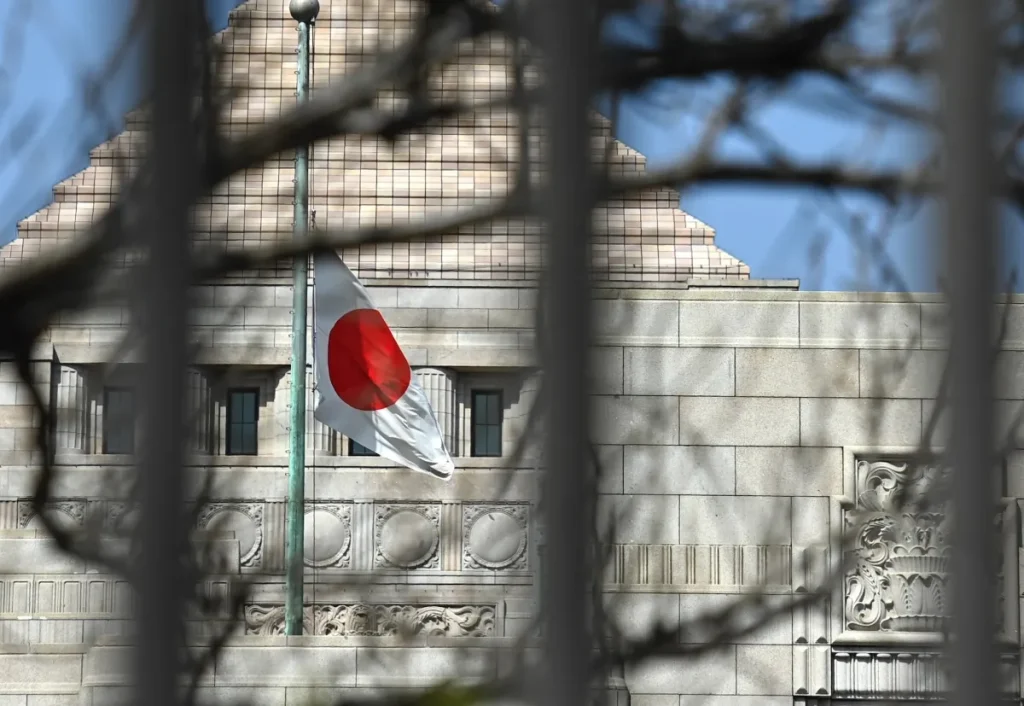
Image Credits:David Mareuil / Anadolu Agency / Getty Images
Nvidia’s Strategic Engagement in Japan
Nvidia’s CEO Jensen Huang visited Tokyo on July 15 and 16, meeting with Japan’s leading industrial and chip supply leaders. This visit followed prominent speeches in Taiwan and South Korea in the past few months. Huang’s agenda included securing a series of impactful deals that encompass Japan’s entire technology landscape, including a national AI factory, collaborations with key robotics companies, and agreements with material suppliers crucial for Nvidia’s next-generation AI chips. His message was unequivocal: Nvidia aims to leverage Japan’s manufacturing prowess, aiming to shape the future of AI in an industry centered around factory floors, robots, and machines.
A Historic Partnership
Three decades ago, a modest $5 million investment from Sega played a pivotal role in keeping Nvidia afloat during its early financial struggles. Today, both Nvidia and Japan’s industrial giants find themselves in a mutually beneficial relationship, this time focused on ushering in the era of physical AI through three key initiatives.
Noetra: Japan’s Sovereign AI Initiative
Japan is keen to develop its own AI systems for factories and robots, eschewing reliance on American or Chinese technologies. To achieve this, the Japanese government has assembled around 44 local firms, including key players like SoftBank, Sony, NEC, and Honda, earmarking up to 1 trillion yen (approximately $6.2 billion) over five years for “physical AI” development. This effort aims to establish a domestic software foundation for robots, vehicles, and manufacturing systems. While Japan aspires to create its own AI brain, Nvidia will provide the necessary hardware.
Nvidia plans to construct a “Vera Rubin AI factory,” a state-of-the-art data center set to launch in 2028. This facility will feature 13,750 Vera CPUs and 27,500 Rubin GPUs, delivering a massive 140 megawatts of power. Noetra is set to oversee the implementation of this facility, which will roll out in three phases: starting with a reasoning model focused on Japanese-language capabilities in fiscal 2026, moving to an omni-modal system capable of processing various forms of data by 2028, and culminating in a “Real-world Native AI” designed for robotics applications by 2030.
A Robotics Coalition
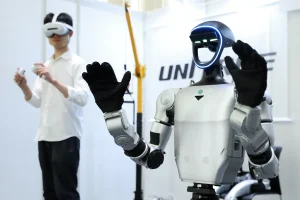
Spearheading the robotics initiative, Nvidia is rallying Japan’s top industrial players around its Cosmos models. Major firms, including Fanuc, Yaskawa, Kawasaki Heavy, Fujitsu, Hitachi, NEC, Sony, and SoftBank, are joining forces to enhance their AI capabilities by leveraging Nvidia’s open-model Cosmos initiative, launched earlier this year.
During Huang’s visit, he introduced Cosmos 3 Edge, a model compatible with Nvidia’s Jetson Thor chips designed for onboard processing in machines. Some companies, such as Honda R&D and Omron, are already exploring shared control systems and building upon these advanced tools. Huang emphasized the importance of this moment, calling it “a once-in-a-generation opportunity for Japan” to reinvent manufacturing for a new age of intelligent industries.
Toyota: Leading the Charge in Automotive AI
Toyota, another key player in this collaboration, has integrated Nvidia chips extensively across its technology stack. The automaker has committed to using Nvidia’s Drive platform for its next-generation vehicles, with enhancements that also extend into manufacturing processes. This includes simulations to design production lines and develop software that governs vehicle functions and road traffic monitoring. While Toyota’s vehicles will feature advanced driver-assistance technologies, this approach is more cautious than competitors like Waymo and Tesla, which aim for a higher degree of autonomous operation.
Japan’s Vision for AI and Robotics
Huang’s presence in Japan underscores the nation’s pivot toward physical AI as a cornerstone of its industrial policy. In response to a declining workforce, Japan aims to deploy 10 million AI-equipped robots across 18 different sectors by 2040, with a backing of $65 billion in public and private investments focused on physical AI.
Moreover, Japan’s sweeping AI Robotics Strategy, unveiled in March, seeks to capture over 30% of the global AI robotics market by 2040, a segment valued at around ¥20 trillion (approximately $133 billion). With the Ministry of Economy, Trade, and Industry (METI) supporting a local foundation model for operating these machines, Noetra’s Nvidia-powered AI factory is poised to facilitate the training of expansive models—potentially in the trillions of parameters.
The Push for Sovereignty in AI
At a broader level, Japan is working to establish its own data, computational resources, and infrastructures. As the U.S. and China lead the way in advanced AI, Tokyo recognizes the need to decrease reliance on external AI systems. During Huang’s visit, he appeared alongside Trade Minister Ryosei Akazawa at the government’s physical AI launch event, with Prime Minister Sanae Takaichi joining via video link. The Takaichi administration has made AI and semiconductor development central to its growth strategy, targeting an ambitious ¥370 trillion (about $2.3 trillion) in total investments by 2040. Noetra’s facility, which Nvidia touts as “the world’s first national AI infrastructure,” exemplifies Japan’s strategic push for autonomy in this vital sector—albeit for now, still reliant on American-made chips.
Engaging with Japan’s Tech Leadership
During his two-day visit, Huang engaged in discussions with nearly every significant figure in Japan’s tech scene. These included CEOs from major companies like Toyota, Fanuc, Yaskawa, Fujitsu, and Kawasaki, fostering discussions over lunch, as well as more informal dialogues over food and drinks in local izakayas.
Huang’s playbook has been consistent, echoing strategies implemented during recent visits to Taiwan and South Korea, where he successfully forged significant partnerships. This latest Tokyo trip signaled a renewed focus on integrating robotics, optimizing supply chains, and harnessing the power of advanced chips to elevate Japan’s industrial landscape.
Nvidia’s consistent engagements highlight a vision not just for successful partnerships but for reshaping the very fabric of industrial automation and smart manufacturing in one of the world’s most advanced economies.
Thanks for reading. Please let us know your thoughts and ideas in the comment section down below.
Source link
#watch #Jensen #Huangs #Japan #visit
About The Author