
Musk’s quicker route to increased gas turbines faces environmental pollution challenges.
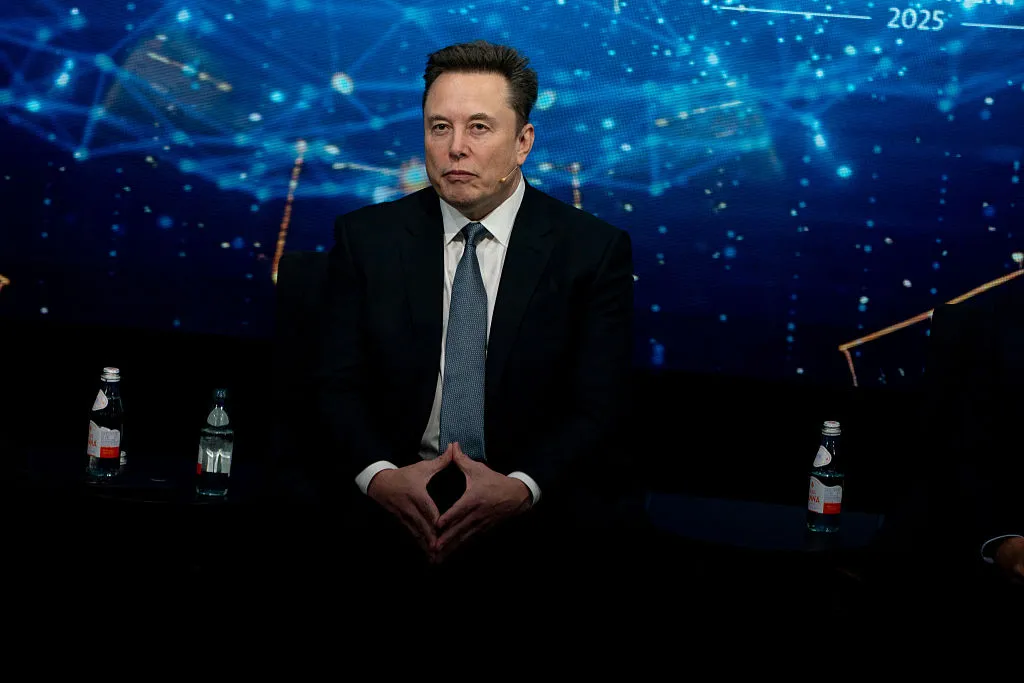
Image Credits:Stefani Reynolds/Bloomberg / Getty Images
Elon Musk’s Game-Changer: In-House Turbine Manufacturing to Tackle AI Constraints
Elon Musk has recently announced a potential breakthrough in addressing one of the major bottlenecks in the AI industry: the production of hard-to-manufacture turbine components. This revelation stems from Musk’s confirmation on Saturday regarding SpaceX’s clandestine foundry located in Bastrop, Texas. This confirmation comes in response to a report by The Information, which highlighted SpaceX’s job listings mentioning a “blades and vanes foundry.” The report also pointed out that SpaceX acquired approximately 830 acres adjacent to its existing Starlink factory in Bastrop between March and June.
Solar Capacity Development and Natural Gas Dependency
Musk elaborated on SpaceX and Tesla’s ongoing efforts, stating that both companies are racing to generate solar production capacity of 100GW annually. However, he emphasized the continued necessity for natural gas to complement solar energy in the short term. The main obstacle in natural gas turbine production, according to Musk, lies in the casting of blades and vanes. He asserted that by managing in-house casting at SpaceX, the timeline for bringing natural gas turbines online could be shortened by up to 18 months, representing a significant shift in the landscape.
The AI Industry’s Power Grid Challenge
This development is critical given the challenges currently plaguing the AI sector. While GPU shortages persist—Nvidia’s new Blackwell chips still face long lead times—a new limitation has emerged: the physical power grid. The International Energy Agency forecasts a doubling of global electricity consumption by data centers by 2030. Additionally, GE Vernova has reported that it is effectively sold out of production capacity through this date, primarily due to skyrocketing demand from AI infrastructure.
In light of this, hyperscalers such as Amazon, Google, Meta, OpenAI, and Microsoft are increasingly adopting a strategy of constructing private gas-powered facilities adjacent to data centers to circumvent grid constraints. Having previously prioritized renewable resources like wind and solar energy, these companies are now turning their focus to natural gas as a means to expedite data center operations.
The Casting Bottleneck Explained
The challenge of casting gas turbine blades is substantial. These components must endure extreme temperatures ranging from 3,000 to 3,600 degrees Fahrenheit—approximately 800 degrees above the melting point of the metal alloy used. Achieving this requires advanced internal cooling channels and thermal-barrier coatings, along with a precise casting method. Presently, only four companies are adept at large-scale casting of these components, and they are all operating at full capacity.
A significant aspect of the casting process involves creating each turbine blade as a single, continuous crystal, grown slowly within a vacuum furnace. This is essential to avoid the microscopic seams that could lead to structural failure under stress. Given that power-plant turbine blades are considerably larger than those used in jet engines, producing them without defects is even more challenging.
Potential Advantages for SpaceX
Should SpaceX successfully establish its foundry, it would gain a critical manufacturing capability that other AI infrastructure developers currently rely on a small number of firms for, thereby giving SpaceXAI an unparalleled competitive edge. This advantage would be particularly difficult for well-funded competitors lacking in-house manufacturing capabilities to replicate rapidly.
However, the implications extend beyond production speed. The rapid rollout of additional gas turbines comes with serious environmental and health concerns, as evidenced by the federal lawsuits and documented research regarding pollution emanating from such facilities.
Environmental Concerns in Memphis
A prominent case reflecting these issues is SpaceXAI’s operation of gas turbines in Memphis to power its Colossus data centers, ongoing since 2024. Here, the NAACP has accused the company of running turbines without the necessary permits and pollution controls mandated by federal law. Critics highlight that these turbines emit harmful substances, such as smog-forming compounds and formaldehyde, which are associated with respiratory illnesses and certain cancers. Research from the University of Memphis indicates that air quality in nearby neighborhoods, already burdened by industrial pollution, has worsened since the data center’s establishment.
Broader Impacts of Gas Turbines
While Memphis serves as the most visible example of this struggle, similar disputes are unfolding wherever gas turbines are being deployed to address power shortages in data centers. In Virginia’s “Data Center Alley,” a study commissioned by the Piedmont Environmental Council utilized the EPA’s COBRA health-impact model. It concluded that emissions from just one facility’s eight gas turbines could reach over 2.5 million people across different counties. The effects would disproportionately impact marginalized communities, potentially resulting in an estimated 3.4 to 6.5 additional premature deaths annually, equating to $53 million to $99 million in health-related damages each year.
Conclusion
Musk’s ambitions with SpaceX’s in-house turbine manufacturing stand to reshape the operational dynamics of the AI industry and its reliance on natural gas. However, the associated environmental ramifications challenge the narrative of progress, spotlighting the complexities of balancing technological advancement with ecological preservation and community health. As this story unfolds, the repercussions of Musk’s initiative—both positive and negative—will be closely watched by industry stakeholders and communities alike.
Thanks for reading. Please let us know your thoughts and ideas in the comment section down below.
Source link
#Musks #faster #path #gas #turbines #pollution #problem
About The Author