
Notion Transforms Workspace into a Central Hub for AI Agents
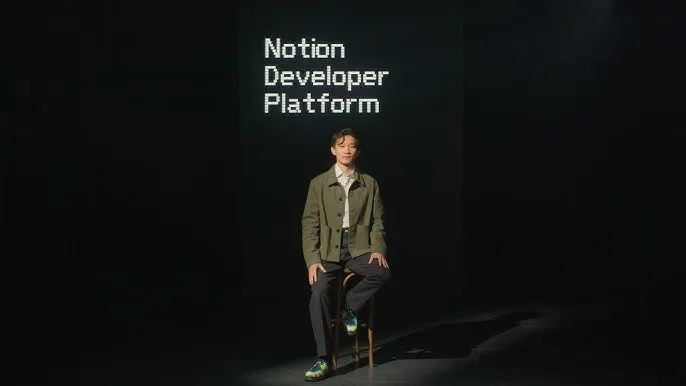
Image Credits:Notion
Notion Enters the Age of Automation with New Developer Platform
Notion, the productivity software company renowned for its collaborative note-taking capabilities, has announced a significant leap into the era of automated workflows and AI integration. During a recent livestreamed product announcement, the company unveiled a new developer platform that enhances its custom AI agents, facilitates connections with external agents, and empowers teams to create complex, automated workflows that can pull data from various databases.
Transforming from Note-Taker to Automation Hub
By introducing an orchestration layer that coordinates AI tasks across multiple tools and data sources, Notion is redefining its role. Rather than merely serving as a note-taking application with AI features, it is positioning itself as a central hub where individuals and AI agents can collaboratively engage across different software platforms and databases.
Back in February, Notion first released its Custom Agents—AI companions designed to take on repetitive tasks such as responding to frequently asked questions and compiling project updates. According to Notion, customers have created over 1 million agents since the launch, demonstrating significant interest and adaptive use of this technology.
Despite the impressive adoption rate, these agents faced several limitations. They couldn’t interact with external data or apply custom logic, leaving teams to rely on third-party automation tools or develop their own scripts on private infrastructures merely to work around these barriers.
Ivan Zhao, Notion’s co-founder and CEO, acknowledged these historical shortcomings during the livestream, stating, “It’s true that, historically, Notion hasn’t been the most developer-focused platform. But things are changing.”
Introducing Custom Code with Notion Workers
The new developer platform allows teams to deploy their own custom code via Notion Workers, a cloud-based environment designed for this purpose. Users can write and deploy their logic within a secure sandbox, ensuring that their code operates independently without impacting other systems. This capability enables teams to synchronize data into Notion, create custom tools, and initiate actions using webhooks—automated signals that activate tasks when events occur in other applications—without relying on external systems.
Moreover, one of the standout features is the option to allow users to forgo code writing altogether. Notion eliminates the technical barrier by enabling users to utilize their preferred AI coding agents for this.
The introduction of Workers will operate under the same credit system as Custom Agents. Remarkably, Notion is offering this service free through August to encourage developers to experiment and innovate.
Effortless Data Syncing from External Sources
Another critical feature of the Notion Developer Platform is the ability to sync data from external sources. Utilizing the Workers framework, the platform allows users to pull in data from any database that offers an API. This means that organizations can easily integrate data from services like Salesforce, Zendesk, and Postgres into their Notion workspace, ensuring that information remains up-to-date.
Zhao emphasized the versatility of this feature by stating that Notion databases can now serve as a “sheer canvas to power both your workflows and your agents.”
Enhanced Logic for Agents
In addition to data syncing, Notion Workers will enable the development of agent tools featuring custom logic. This is particularly beneficial in scenarios where simply connecting with an external third-party via the Model Context Protocol (MCP)—an emerging standard that links AI tools to external sources—might not be sufficient.
The platform also allows users to engage directly with their external AI agents within Notion. This means they can assign tasks and monitor progress in a way that feels seamless, as though these agents are part of Notion’s own ecosystem. At launch, several partner agents, including Claude Code, Cursor, Codex, and Decagon, are already supported, with plans to integrate more over time.
External Agent API for Seamless Integration
To further enhance connectivity, Notion has introduced an External Agent API. This feature allows organizations to link their internal agents tailored to specific business needs with Notion, streamlining workflows and data handling.
A Shift in Notion’s Strategy
The arrival of the Developer Platform marks a strategic transition for Notion. By evolving into a programmable platform, it is set to compete with other established workflow automation tools. As businesses increasingly seek ways to automate knowledge work and implement internal AI systems, a platform that integrates agents, custom code, and live data in one cohesive space transforms Notion into something more than a productivity app; it becomes essential infrastructure.
This trend aligns with a broader movement in the AI sector, where companies are transitioning from standalone chatbots to offering more comprehensive, agentic tools capable of taking actionable steps across various software ecosystems.
The Vision for the Future
Zhao encapsulated the overarching vision for the Notion Developer Platform by stating, “Any data, any tool, any agent—that’s the big picture.” This ambitious outlook reflects Notion’s commitment to adapting to the evolving digital landscape and empowering users to harness the full potential of AI and automation.
In summary, Notion’s new features and platform capabilities signify a pivotal moment for both the company and its users. By providing tools that not only enhance productivity but also enable seamless collaboration with external agents and data sources, Notion is setting the stage for a future where workflows are more efficient, automated, and interconnected than ever before.
Thanks for reading. Please let us know your thoughts and ideas in the comment section down below.
Source link
#Notion #turned #workspace #hub #agents
About The Author