This startup believes India’s gig economy can train robots globally.
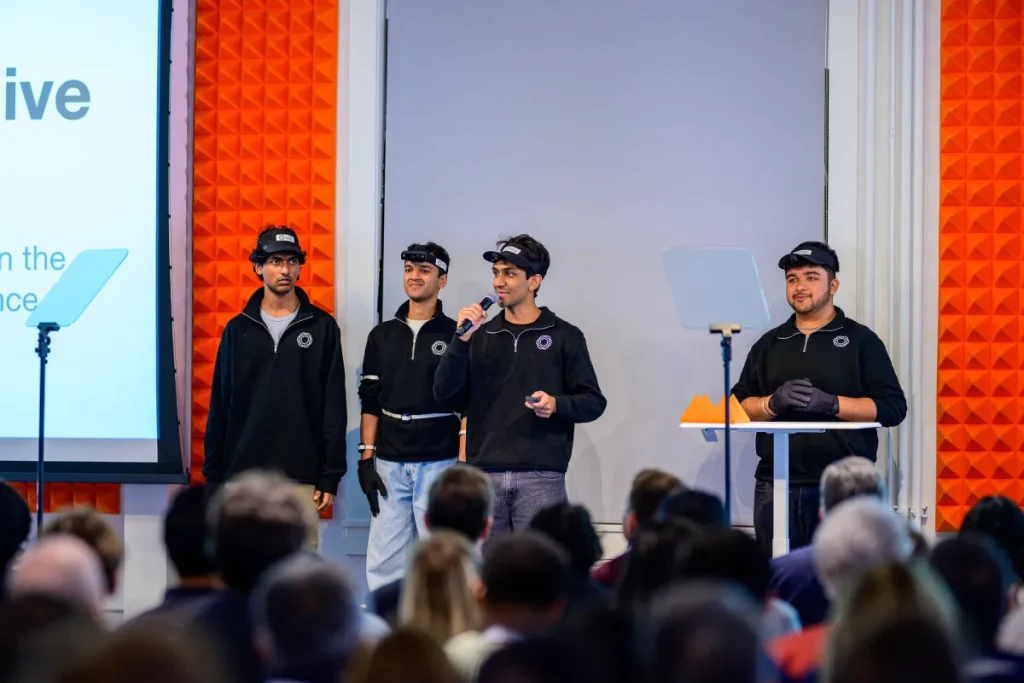
Image Credits:Human Archive
Rise of India’s Online Food Delivery and Home Services
In recent years, India’s online food delivery sector has experienced remarkable growth, highlighted by the public listings of major players like Zomato and Swiggy, alongside a surge in cloud kitchens. Concurrently, startups focusing on home services, particularly on-demand staffing platforms like Urban Company, Snabbit, and Pronto, have gained significant traction.
Human Archive: A New Player in Data Collection
Amidst this booming landscape, Silicon Valley-based Human Archive is seizing the opportunity by partnering with various home service providers. The startup is utilizing innovative technology that involves having workers wear specialized caps fitted with cameras. This approach collects egocentric (first-person perspective) video data of everyday tasks, which may be leveraged for training robots.
While specific partners haven’t been disclosed, Human Archive has indicated its collaboration with companies across the home services, hospitality, and restaurant sectors. Currently, it has over 1,000 active headsets deployed in various locations throughout India.
Funding and Vision
On the back of this development, Human Archive recently announced that it has secured $8.2 million in funding from notable investors, including Wing Venture Capital, NVP Capital, Y Combinator, and several prominent angel investors from leading tech companies. The startup was founded by four students—Samay Maini, Rushil Agarwal, Shloke Patel, and Raj Patel, with Raj serving as the CEO. Their combined backgrounds encompass research in robotics, hardware, and tactile data.
Human Archive’s inception reflects a strategic bet on the future of the AI industry. As robotics labs and AI firms strive to build machines capable of executing physical tasks, they encounter a significant challenge: a lack of high-quality, real-time training data illustrating how humans perform everyday activities. Human Archive posits that India’s burgeoning gig economy offers an abundant, underutilized source of such data.
Challenges in Collaboration
Despite its innovative approach, Human Archive has faced obstacles in securing partnerships with larger home service companies. Notably, it was declined by major players like Pronto and Urban Company for collaboration. Reports have surfaced indicating that these companies are now seeking partnerships for data collection, calling into question the earlier rejections.
Urban Company’s CEO publicly expressed the company’s disinterest in such arrangements, prompting responses from Human Archive’s CEO. Co-founder Rushil Agarwal even noted a negative experience when discussing potential partnerships, suggesting some reluctance from established players to engage with new technological initiatives.
Data Collection Innovation
While Human Archive grapples with partnership difficulties, it stands out by using and developing various devices for data collection. These include tactile gloves, full-body motion capture suits, and wrist cameras that can collect data on motion and tactile force. All collected information is synchronized with RGB-D technology, which combines real-time color imagery with depth data to provide richer datasets for AI labs.
In its initial phases, Human Archive relied on makeshift setups and off-the-shelf equipment to gather data. The startup has since moved to custom-built hardware that integrates various data collection devices, deploying over 50 different data-gathering tools to enhance its operations.
Fine-Tuning AI Models
Human Archive aims to refine its AI models using the data it collects, enabling robots to perform tasks more effectively. This development could demonstrate the value of Human Archive’s offerings to potential clients and improve its internal models.
Zach DeWitt from Wing VC noted that Human Archive holds a unique advantage in its ability to collect diverse, synchronized data types. He emphasized that the specificity and scale of their datasets make them invaluable for research within major labs and universities.
Consumer Engagement Strategy
Despite setbacks with larger companies, Human Archive has partnered with smaller startups to facilitate data collection through consumer engagement. When a worker arrives for a home service, customers can opt for a reduced price in exchange for consenting to data collection, or pay the full rate for a service without recorded data. The majority of consumers reportedly prefer the discounted rate, particularly as video documentation can help resolve common disputes over service quality.
For participating in data collection, workers are compensated at a base rate of $1 per hour, which is lower than that of competitors, who offer rates between ₹250 and ₹400 (approximately $2.63 to $4.20). However, Human Archive’s localized presence in India allows it to maintain operational cost efficiency while providing flexible earning opportunities.
Addressing Privacy Concerns
Alongside wage-related issues, Human Archive must navigate privacy considerations arising from video data collection. It remains unclear what information is communicated to workers about the usage of their footage. The startup indicates its compliance with India’s Digital Personal Data Protection Act, maintaining anonymity in recordings by blurring faces and providing privacy policies that outline the purpose of data collection.
The Indian Ministry of Electronics and Information Technology is reportedly scrutinizing the data-collection practices employed by startups like Human Archive, particularly regarding consent mechanisms.
Expansion Plans
Initially focused on India, Human Archive is now exploring avenues for expansion into Southeast Asia and the U.S. The company is developing a broader platform that allows participants to contribute to data collection in exchange for compensation. Additionally, it aims to introduce services in the U.S. enabling cleaning or cooking in return for data gathering, although these initiatives are still in the pilot phase.
Conclusion: The Future of Physical AI
As numerous well-funded startups aim to develop physical AI, the need for comprehensive training data showcasing human labor continues to grow. Human Archive is positioning itself to meet this demand, but its scalability will rely heavily on the partnerships it forges and the uniqueness and volume of data it can accumulate. The interplay between data collection, privacy, and consumer preferences will be pivotal as the company navigates this rapidly evolving landscape.
Thanks for reading. Please let us know your thoughts and ideas in the comment section down below.
Source link
#startup #betting #Indias #gig #economy #train #worlds #robots
About The Author