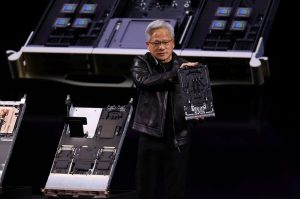

What happened to Nvidia’s security team during the incident?

Image Credits:Jens Kalaene / Getty Images
Nvidia’s Leadership Shake-Up Raises Security Concerns
In August, few noticed when Nvidia’s long-serving chief security officer (CSO) and head of product security, David Reber, abruptly stepped down. Just two and a half months later, the company’s CEO, Jensen Huang, resigned amid escalating scrutiny regarding his extramarital affairs, which notably included a relationship with an executive at Megaspeed, a Singapore-based data center under investigation for allegedly diverting Nvidia’s technology to China. Huang’s situation soon escalated as two more affairs with Nvidia employees surfaced.
Reber, who had dedicated four years to his role as CSO and seven years at Nvidia overall, cited health issues as the reason for his departure. He revealed on LinkedIn that he had been diagnosed with young-onset Parkinson’s disease over two years ago. “This wasn’t a pivot I had planned. But I know what needs to come first: family and health,” he explained.
Transition of Security Leadership
Following Reber’s exit, Saša Zdjelar was appointed as his successor. Zdjelar brought a wealth of experience from his previous roles, including 17 years as a senior IT manager at ExxonMobil and subsequent positions at Salesforce and cybersecurity firm ReversingLabs. However, Zdjelar did not respond to inquiries about the transition or the insights the security team may have had regarding recent events.
While no direct public link has been drawn between Reber’s resignation or Zdjelar’s appointment and the ongoing investigations into Megaspeed, questions linger about the awareness of Nvidia’s security team related to both Megaspeed’s scrutiny and Huang’s personal entanglements. Nvidia has not offered commentary on the staffing changes or the situation surrounding Huang.
Understanding the Risk Posed by High-Profile Relationships
Traditionally, there is a delineation between the responsibilities of security teams and other corporate functions such as Human Resources or the legal department when it comes to handling relationships between executives and employees. Yet, security experts warn that extramarital affairs—even those occurring within a corporate environment—can expose a company to leverage from foreign intelligence, particularly if the executive seeks to keep such matters concealed. Huang’s relationships, especially with an executive from a federally investigated organization, fall squarely outside typical parameters of workplace conduct.
Identifying these risks can be complex. As Nicholas Eftimiades, a former senior intelligence officer, explains, intelligence services often gather information through casual conversation rather than direct hacking, making it challenging for security teams to detect potential threats.
Internal Awareness and Concerns
Despite the lack of transparency from Nvidia, some internal personnel seemed to have knowledge of ongoing issues. Reports indicate that Nvidia’s legal team was entangled with the Megaspeed inquiry over a year ago. This connection raises questions about what Nvidia’s security team was aware of concerning Huang’s conduct and whether any concerns were relayed formally.
Notably, accounts about Huang’s relationships suggest a level of awareness among colleagues, even if these actions do not directly violate Nvidia’s code of conduct. Five Nvidia employees indicated that Huang had been involved with a vice president under his direct supervision, while other reports indicated additional relationships. The crucial question remains: Did security leadership have any awareness or involvement regarding these findings?
Limitations of Security Teams
Even if security personnel were informed of Huang’s affairs, Eftimiades emphasizes the often limited resources available to corporate security teams. Generally underfunded and viewed as a cost center rather than a driver of revenue, these teams may encounter resistance when trying to elevate warnings or concerns. As Eftimiades points out, executives frequently respond to security team alerts with a mantra of “not a nickel more than compliance.”
Many organizations also maintain a narrow view of what security entails. As Don Aviv, CEO of Interfor International, alongside author Jeremy Hurewitz, pointed out in an opinion piece, there is a persistent focus on physical security threats and cyberattacks, neglecting important aspects, such as insider threats and the cultivation of relationships by foreign intelligence services.
For a company of Nvidia’s scale with extensive business dealings, one would expect a more comprehensive approach to security; however, the possibility remains that they may not have followed best practices.
The Evolving Landscape of Intelligence Threats
Even within the realm of corporate espionage, security teams confront challenges that might surpass their capacity. Eftimiades explains a common scenario where a CEO expresses frustration regarding a board’s reluctance to act on known threats, thereby unintentionally highlighting specific individuals as obstacles. Such insights provide foreign intelligence entities with opportunities to infiltrate vulnerable sections of an organization.
Contrary to prevailing beliefs, adversarial intelligence services often seek less from a technological standpoint than they do from policy insights. Understanding the dynamics of who advocates for changes and who acts as a blocker can create vulnerabilities that may not be easily identifiable. Eftimiades likens this to cancer—tricky and pervasive, once it gains footholds, it seeks to spread.
The playbook for such activities is not new, particularly concerning China, and many executives have reported approaches from foreign agents. Eftimiades also recounts unsettling stories of U.S. diplomats encountering troubling situations that suggest foreign interest in personal relationships. The current espionage landscape tends to build long-term relationships rather than fleeting contacts, which can complicate detection efforts.
Technology’s Role in Modern Espionage
While human intelligence remains vital, technology plays an increasingly important role in espionage. For example, devices like IMSI catchers can mimic cell towers, enabling unauthorized access to nearby mobile phones. These devices can be quite portable and pose a genuine threat to corporate data security.
It remains uncertain whether such technology was employed against Huang, who is likely using enhanced safeguards against breaches. However, as inquiries continue, answers regarding Nvidia’s security framework and the responsibilities of its team remain pending.
Conclusion: A Call to Vigilance
The ongoing incidents at Nvidia serve as a pointed reminder for corporations to evaluate their vulnerability and preparedness concerning espionage and insider threats. Eftimiades emphasizes that this situation should be viewed as a “wake-up call” for U.S. industries that may not be fully aware of China’s sophisticated tactics. The cost of intellectual property loss is astronomical, and as Eftimiades aptly articulates, “Whatever we think we’re doing isn’t working.” As Nvidia grapples with the fallout, other organizations should take note and proactively assess their security measures before they find themselves in a similar predicament.
Thanks for reading. Please let us know your thoughts and ideas in the comment section down below.
Source link
#Nvidias #security #team
About The Author