

Firestorm Labs secures $82M to deploy drone manufacturing facilities in the field.
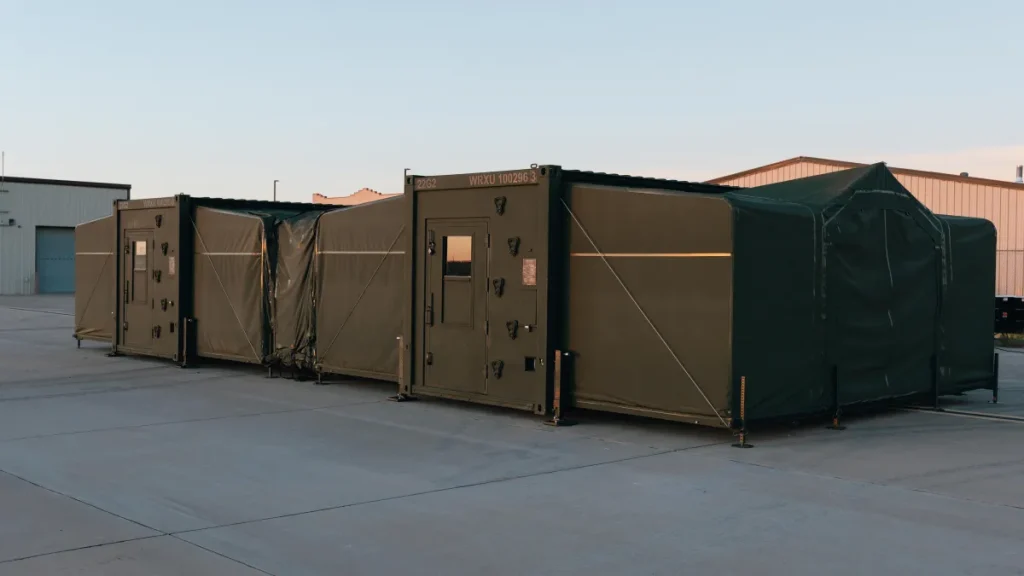
Image Credits:Firestorm Labs
Revolutionizing Drone Manufacturing in Conflict Zones
In modern warfare, especially in the Pacific, logistical challenges pose significant hurdles for military operations. Traditional drone factories are often located thousands of miles away from combat zones, making the transport of critical parts vulnerable to enemy attacks. In response to this pressing issue, the innovative defense startup Firestorm Labs has introduced a groundbreaking solution: a mobile drone factory that fits within a standard shipping container.
Major Funding Achievement
On Wednesday, Firestorm Labs announced a successful $82 million Series B funding round, led by Washington Harbour Partners. Notable investors also include NEA, Ondas, In-Q-Tel, Lockheed Martin, Booz Allen Ventures, Geodesic, and Motley Fool Ventures. This latest funding brings the company’s total financial backing to $153 million, enabling further development of its technology aimed at enhancing wartime logistics.
A Shift from Drone Manufacturing to Mobile Production
Initially founded as a drone manufacturing company, Firestorm Labs evolved its business model in response to customer requests for localized production capabilities. Recognizing the need for agility in military operations, the company pivoted to develop a portable manufacturing system that can be deployed closer to the front lines.
Two key figures in this transition are CEO Dan Magy and his co-founders. Magy, a serial entrepreneur in defense technology, is complemented by Chad McCoy, a seasoned special operations veteran, and Ian Muceus, the company’s CTO with extensive expertise in 3D printing.
The xCell Manufacturing Platform
At the heart of Firestorm’s innovation is the xCell platform—an advanced containerized manufacturing unit capable of printing drone systems in under 24 hours. This system is versatile, allowing for multiple configurations based on mission requirements, including roles in surveillance and electronic warfare. When asked if these drones are equipped for lethal operations, Magy confirmed their capability, stating that all systems are delivered to U.S. Department of Defense (DoD) commands for deployment according to military protocols.
Recognizing the Need for Contested Logistics
The Pentagon has identified contested logistics as one of six critical national technology areas, highlighting the importance of maintaining a steady flow of weapons and supplies even under fire. Firestorm Labs is strategically positioned in this landscape, generating revenue through hardware sales and contracts with various branches of the U.S. military. Notably, the Air Force contract with Firestorm has a ceiling of $100 million, although only $27 million has been allocated to date.
Real-World Applications and Deployments
The cutting-edge technology behind xCell has seen practical application, with two units currently deployed in the United States: one at the Air Force Research Laboratory in Rome, New York, and another with the Air Force Special Operations Command in Florida. While the company is cautious about disclosing specific operational details, they have confirmed that xCell units are active in the Indo-Pacific region, addressing urgent logistical challenges faced there.
Advanced 3D Printing Capabilities
Each xCell unit is equipped with an industrial-grade HP 3D printer, which fabricates the body and shell of each drone on-site. Firestorm has secured a five-year global exclusive agreement with HP to utilize its industrial 3D printing technology in these mobile manufacturing units. While the drones are constructed using 3D printing, the actual weaponry is added separately, ensuring that the systems are combat-ready upon deployment. This rapid fabrication capability has proven effective; for example, the Army has employed xCell to produce replacement parts for Bradley Fighting Vehicles on-site, drastically reducing procurement timelines from months to days.
Addressing the Broader Challenges of Modern Warfare
The logistical issues facing military operations extend beyond mere distance. Static manufacturing sites are susceptible to enemy targeting, a lesson underscored by the experiences of Ukraine. Moreover, in today’s fast-evolving conflict environment, drone designs can shift quickly—changing within days rather than months. Magy emphasizes this need for agility, stating that adaptability in design and production is critical for modern military effectiveness.
The Indo-Pacific Focus
For Firestorm Labs, the Indo-Pacific theater represents the most significant operational challenge given the increasing complexity of logistics in modern warfare. The startup aims for the xCell platform to achieve full operational status in that region, ideally within the next two years. This ambition underscores Firestorm’s commitment to transforming how military logistics are addressed in high-stakes environments.
Conclusion
Firestorm Labs is at the forefront of a transformative change in military drone production and logistics. By enabling on-the-spot manufacturing through their xCell platform, the company is poised to significantly improve the flexibility and responsiveness of military operations. With continued support and funding, Firestorm is paving the way for the future of defense technology, ensuring that U.S. armed forces are equipped with the tools they need to meet the challenges of modern conflict.
In an era where speed and adaptability are crucial, Firestorm Labs stands as a beacon of innovation, demonstrating how advanced technology can address some of the most pressing issues faced by military forces worldwide.
Thanks for reading. Please let us know your thoughts and ideas in the comment section down below.
Source link
#Firestorm #Labs #raises #82M #drone #factories #field
About The Author