
Relativity Networks secures $22 million to deliver faster fiber for data centers.
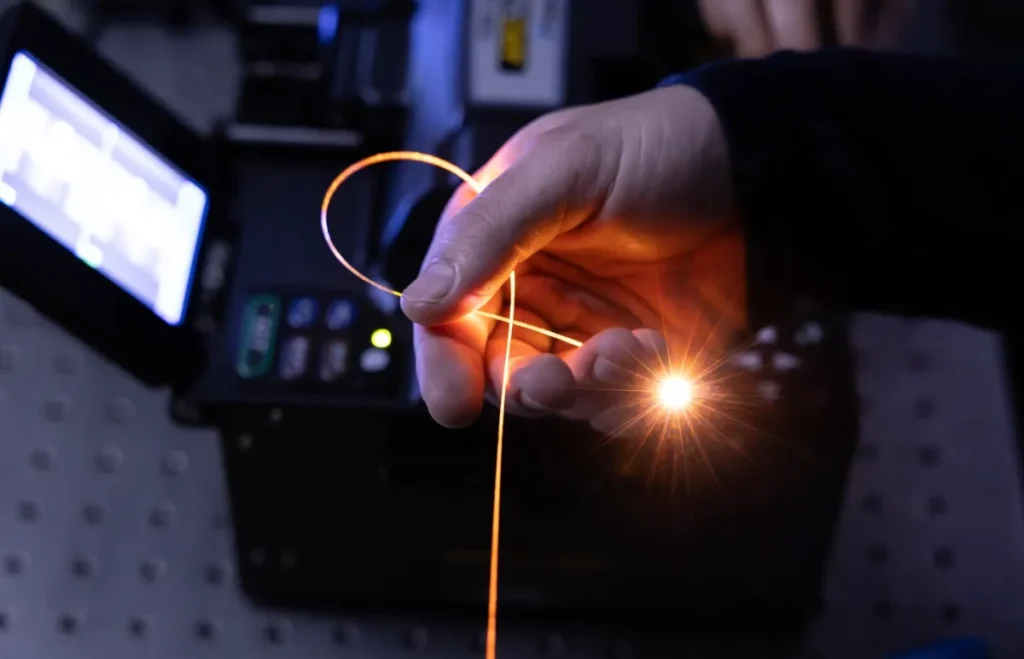
Image Credits:Relativity Networks
The Future of Data Center Development: Fast Fiber Technology
Data center developers are projected to invest up to $4 trillion by the decade’s end, facing significant constraints imposed by political regulations and power-grid limitations regarding site selection. However, a new contender in the fiber optics arena is emerging, aiming to reshape the geographical dynamics of data center construction. Relativity Networks, a pioneer in hollow-core fiber technology, believes that enhancing fiber speed could unlock new possibilities for data center deployment.
Funding Highlights
On Tuesday, Relativity Networks secured $22 million through SAFE note funding from prominent investors, including Rhapsody Venture Partners, Bell Ventures Inc., and Faster Than Glass LLC. The SAFE note structure allows early investors to convert investments into shares during the company’s first priced round, making it an attractive option for pre-seed and seed funding. In addition, the company has gained a $40 million follow-on order from an unnamed leading hyperscaler.
Introducing Hollow-Core Fiber
Relativity Networks specializes in hollow-core fiber, an innovative technology that enables data to be transmitted at speeds 30% faster than conventional glass fiber. Traditional fiber optics transmit light through fiber-optic glass, while hollow-core fiber utilizes a vacuum chamber at the core of the line. This design considerably approaches light speed’s theoretical limit, resulting in significant performance improvements.
Benefits of Faster Fiber
The difference in latency might seem minimal at first glance, but it’s crucial in the world of data transmission. CEO Jason Eisenholz estimates that a signal takes approximately five microseconds to travel one kilometer in conventional fiber. In contrast, hollow-core fiber reduces this time to just three and a half microseconds. This reduction can have substantial implications for data center operations, especially as the distance between GPUs expands.
The Changing Landscape of Data Centers
In the early days of AI computing, latency was less of a concern when processing was confined to a single rack of GPUs. However, as technology has evolved and data centers have expanded, the physical distances between components have increased, complicating internal communications. Today, it’s common for data centers to occupy hundreds of acres and consist of multiple buildings.
Eisenholz envisions substantial opportunities in multi-campus deployments, where existing data centers can be interconnected to function as a cohesive unit. “The largest systems are distributing the compute across multiple campuses to maximize available power,” he explains. “They are gravitating toward locations with favorable infrastructure while still needing a synchronized operation.”
The Implications of Reduced Latency
By achieving a 30% reduction in latency, data center developers can feasibly extend their operational reach by a similar percentage before encountering latency issues. As computing projects scale larger, faster fiber technology could mark a pivotal shift in industry standards.
A Shift in the Era of AI Computing
Eisenholz believes we are witnessing a transition in the optimization of AI. He delineates the evolution in three phases:
-
First Era – Focus on Compute: Initially, the emphasis was on maximizing GPU capabilities.
-
Second Era – Networking Optimization: The next shift concentrated on optimizing internal networking within data centers to fully leverage computational power.
-
Third Era – Geographic Optimization: The forthcoming shift will focus on geographical strategies, aligning data centers more effectively to minimize latency.
Conclusion: A New Era for Data Centers
Relativity Networks is positioning itself at the forefront of a transformative wave in data center construction. By deploying hollow-core fiber, the company hopes to unlock new efficiencies that break through current limitations brought on by geographical and infrastructural constraints. As the demand for data processing escalates, this shift could redefine the industry’s landscape.
The data center industry stands at a crossroads, where adopting advanced fiber technology can lead to unprecedented growth and efficiency. As investment flows into this promising sector, manufacturers, developers, and customers alike must stay attuned to the evolving dynamics, recognizing the vital role that innovative technologies play in shaping the future of computing.
Thanks for reading. Please let us know your thoughts and ideas in the comment section down below.
Source link
#Relativity #Networks #raises #million #bring #faster #kind #fiber #data #centers
About The Author