

web analytics

Learn AI With Kesse | Best Place For AI News

We make artificial intelligence easy and fun to read. Get Updated AI News.

Satya Nadella details rationale behind 60,000 employee layoffs at Microsoft.
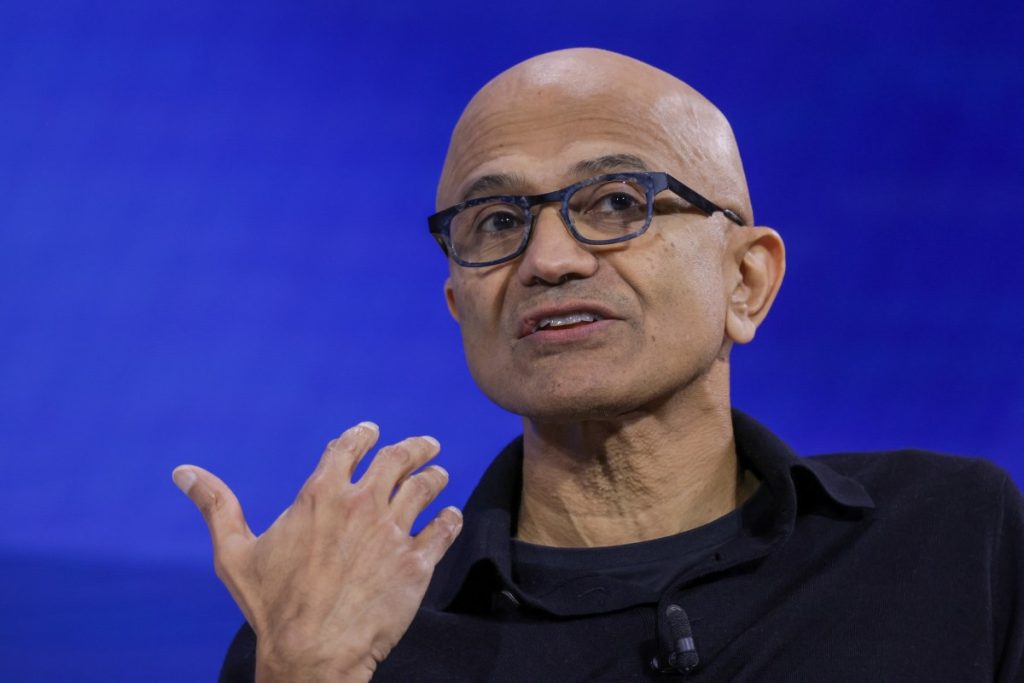
Microsoft CEO Satya Nadella

Image Credits:Spencer Platt / Getty Images

Microsoft CEO Satya Nadella’s Buyout Offer: A Transformation Towards AI

In a recent discussion, Microsoft CEO Satya Nadella shed light on the motivations behind the decision to offer voluntary buyouts to 60,000 employees in October. Instead of resorting to another significant layoff, Nadella emphasized the company’s shift towards an AI-driven future, urging staff to voluntarily transition from their roles as the organization undergoes fundamental changes. He insists that this transformation will not result in job losses but rather a restructuring of how work is performed and managed.

A Shift in Workforce Dynamics

The cornerstone of Nadella’s argument is that Microsoft is not simply replacing its employees with AI, particularly the software engineers, but is reimagining their roles. “We are reorganizing Microsoft into a company where everyone uses AI to do their work,” he stated during the DealBook Summit while talking with Andrew Ross Sorkin. According to Nadella, this transition allows employees to focus their efforts on managing AI systems rather than solely executing tasks themselves.

Nadella emphasized the importance of giving employees agency over their choices during this transition. He articulated that the buyout offer was intended to provide staff with the opportunity to decide their futures rather than feeling compelled to remain in a role that might soon become obsolete or significantly altered.

The Evolution of Software Engineering

To illustrate this shift, Nadella referenced the software engineering sector. Initially, there was skepticism regarding AI’s capabilities in software development. The narrative evolved from disbelief in AI’s potential, to wondering if it could replace software engineers altogether, leading to a renewed recognition of the relevance and future of the profession. “Software engineering is very much alive and, in fact, is going to thrive, except the way the team is organized and the work that a software engineer does has now got a new operating point,” he explained.

This new operating model means that software engineers are expected to adapt to AI tools, effectively transforming into managers of these AI systems. Nadella highlighted the example of the Cowork team—a small group of just 11 developers who leverage AI to automate and enhance their processes. Rather than directly building products, they create systems that facilitate product development, showcasing a shift from traditional roles to more strategic, management-oriented positions.

Embracing the Future

Nadella’s vision is that every employee across Microsoft will eventually take on a similar managerial role, overseeing AI agents rather than performing hands-on tasks. “That level of direction is going to happen in all jobs,” he asserted. This reflects his belief that the future of work at Microsoft—and potentially beyond—will require a rethink of employee responsibilities and workflows.

However, he acknowledged the challenges that come with such a fundamental shift. Microsoft, a company that has existed for over five decades, did not begin as an AI-first organization. He noted, “The question is, how quickly can an incumbent transform the work, the workflow, and the work artifact, along with all the wage support that goes with it?” This transformation may take longer than anticipated, and he recognizes that some employees might choose to pursue different paths rather than adapt to the new structure.

Addressing Employee Concerns

During a recent appearance on The Pragmatic Engineer podcast, Nadella expanded on the reasons for offering buyouts, highlighting the anxiety that many employees feel regarding their roles in the face of the AI revolution. He cited concerns about the potential for AI to displace human jobs and the anxiety stemming from discussions about the singularity—the point at which AI surpasses human intelligence. Nadella stated that these narratives could create a sense of helplessness and deter employees from embracing the necessary changes.

“It leads anyone who even wants to change to be anxious,” he noted, suggesting that Microsoft must take a proactive approach to alleviate these fears. He emphasized the need to make structural changes, allowing employees to find their place within the new organization while opening opportunities for growth.

The Buyout Message

In essence, the buyout offer serves as a clear message to employees: they can adapt to the forthcoming AI-first paradigm, which will significantly alter their roles, or they can pursue other opportunities elsewhere. By providing this option, Nadella aims to empower employees, allowing them to make decisions about their futures in line with the rapidly evolving technological landscape.

As this transition unfolds, it will become increasingly important for Microsoft to support employees throughout the process. Ensuring a smooth transition while addressing concerns of job security and personal agency will be crucial as the company navigates this complex transformation. The outcome of this shift will not only dictate Microsoft’s future but may also serve as a model for other established organizations grappling with similar AI-driven changes.

Conclusion

Satya Nadella’s announcement of buyouts for 60,000 Microsoft employees serves as a pivotal moment in the company’s transition towards an AI-integrated workforce. By redefining roles and focusing on AI management, Microsoft aims to adapt to the evolving technological landscape while providing employees with the agency to make their own choices. As the company embraces this transformation, it will be essential to support employees and address their concerns about job security and future roles. The move reflects a broader trend where traditional workplaces must re-evaluate their structures and workflows in response to the growing influence of artificial intelligence.

Thanks for reading. Please let us know your thoughts and ideas in the comment section down below.

Source link
#Microsoft #CEO #Satya #Nadella #explains #asked #60K #employees #quit

About The Author

Leave a Reply

Your email address will not be published. Required fields are marked *

We use cookies to personalize content and ads and to primarily analyze our geo traffic sources. We also may share information about your use of our site with our social media, advertising, and analytics partners to improve your user experience. We respect your privacy and will never abuse your information. [ Privacy Policy ] View more
Cookies settings
Accept
Decline
Privacy & Cookie Policy
Privacy & Cookies policy
Cookie name Active

The content on this page governs our Privacy Policy. It describes how your personal information is collected, used, and shared when you visit or make a purchase from learnaiwithkesse.com (the "Site").

Kesseswebsites and Advertising owns Learn AI With Kesse and the website learnaiwithkesse.wiki. For the purpose of this Terms and Agreements [ we, us, I, our ] represents the owner of Learning AI With Kesse which is Kesseswebsites and Advertising. [ You, your, student and buyer ] represents you as the user and visitor of this site. Terms of Conditions, Terms of Service, Terms and Agreement and Terms of use shall be considered the same here. This website or site refers to https://learnaiwithkesse.com. You agree that the content of this Terms and Agreement may include Privacy Policy and Refund Policy. Products refer to physical or digital products. This includes eBooks, PDFs, and text or video courses. If there is anything on this page you do not understand you agree to reach out to us via email [ emmanuel@learnaiwithkesse.com ] for explanation before using any part of this site.

1. Personal Information We Collect

When you visit this Site, we automatically collect certain information about your device, including information about your web browser, IP address, time zone, and some of the cookies that are installed on your device. The primary purpose of this activity is to provide you a better user experience the next time you visit our again and also the data collection is for analytics study. Additionally, as you browse the Site, we collect information about the individual web pages or products that you view, what websites or search terms referred you to the Site, and information about how you interact with the Site. We refer to this automatically-collected information as "Device Information."

We collect Device Information using the following technologies:

"Cookies" are data files that are placed on your device or computer and often include an anonymous unique identifier. For more information about cookies, and how to disable cookies, visit http://www.allaboutcookies.org. To comply with European Union's GDPR (General Data Protection Regulation), we do display a disclaimer a consent text at the bottom of this website. This disclaimer alerts you the visitor or user of this website about why we use cookies, and we also give you the option to accept or decline. If you accept for us to use cookies on your site, the agreement between you and us will expire after 180 has passed.

"Log files" track actions occurring on the Site, and collect data including your IP address, browser type, Internet service provider, referring/exit pages, and date/time stamps.

"Web beacons," "tags," and "pixels" are electronic files used to record information about how you browse the Site.

Additionally, when you make a purchase or attempt to make a purchase through the Site, we collect certain information from you, including your name, billing address, shipping address, payment information (including credit card numbers), email address, and phone number. We refer to this information as "Order Information."

When we talk about "Personal Information" in this Privacy Policy, we are talking both about Device Information and Order Information.

Payment Information

Please note that we use 3rd party payment processing companies like https://stripe.com and https://paypal.com to process your payment information. PayPal and Stripe protects your data according to their terms and agreement and may store your data to help make your subsequent transactions on this website easier. We never and [ DO NOT ] store your card information or payment login information on our website or server. By making payment on our site, you agree to abide by the Terms and Agreement of the 3rd Party payment processing companies we use. You can visit their websites to read their Terms of Use and learn more about them.

2. How Do We Use Your Personal Information?

We use the Order Information that we collect generally to fulfill any orders placed through the Site (including processing your payment information, arranging for shipping, and providing you with invoices and/or order confirmations). Additionally, we use this [a] Order Information to:

[b] Communicate with you;

[c] Screen our orders for potential risk or fraud; and

When in line with the preferences you have shared with us, provide you with information or advertising relating to our products or services. We use the Device Information that we collect to help us screen for potential risk and fraud (in particular, your IP address), and more generally to improve and optimize our Site (for example, by generating analytics about how our customers browse and interact with the Site, and to assess the success of our marketing and advertising campaigns).

3. Sharing Your Personal Information

We share your Personal Information with third parties to help us use your Personal Information, as described above. For example, we use System.io to power our online store--you can read more about how Systeme.io uses your Personal Information here: https://systeme.io/privacy-policy/ . We may also use Google Analytics to help us understand how our customers use the Site--you can read more about how Google uses your Personal Information here: https://www.google.com/intl/en/policies/privacy/. You can also opt-out of Google Analytics here: https://tools.google.com/dlpage/gaoptout.

Finally, we may also share your Personal Information to comply with applicable laws and regulations, to respond to a subpoena, search warrant or other lawful request for information we receive, or to otherwise protect our rights.

4. Behavioral Advertising

As described above, we use your Personal Information to provide you with targeted advertisements or marketing communications we believe may be of interest to you. For more information about how targeted advertising works, you can visit the Network Advertising Initiative’s (“NAI”) educational page at http://www.networkadvertising.org/understanding-online-advertising/how-does-it-work.

You can opt-out of targeted advertising by:

COMMON LINKS INCLUDE:

FACEBOOK - https://www.facebook.com/settings/?tab=ads

GOOGLE - https://www.google.com/settings/ads/anonymous

BING - https://advertise.bingads.microsoft.com/en-us/resources/policies/personalized-ads]

Additionally, you can opt-out of some of these services by visiting the Digital Advertising Alliance’s opt-out portal at: http://optout.aboutads.info/.

5. Data Retention

Besides your card payment and payment login information, when you place an order through the Site, we will maintain your Order Information for our records unless and until you ask us to delete this information. Example of such information include your first name, last name, email and phone number.

6. Changes

We may update this privacy policy from time to time in order to reflect, for example, changes to our practices or for other operational, legal or regulatory reasons.

7. Contact Us

For more information about our privacy practices, if you have questions, or if you would like to make a complaint, please contact us by e-mail at emmanuel@learnaiwithkesse.com or by mail using the details provided below:

8. Your acceptance of these terms

By using this Site, you signify your acceptance of this policy. If you do not agree to this policy, please do not use our Site. Your continued use of the Site following the posting of changes to this policy will be deemed your acceptance of those changes.

Last Update | 18th August 2024

Save settings
Cookies settings