

Why Wall Street Sees Micron as the Next Nvidia in Memory Manufacturing
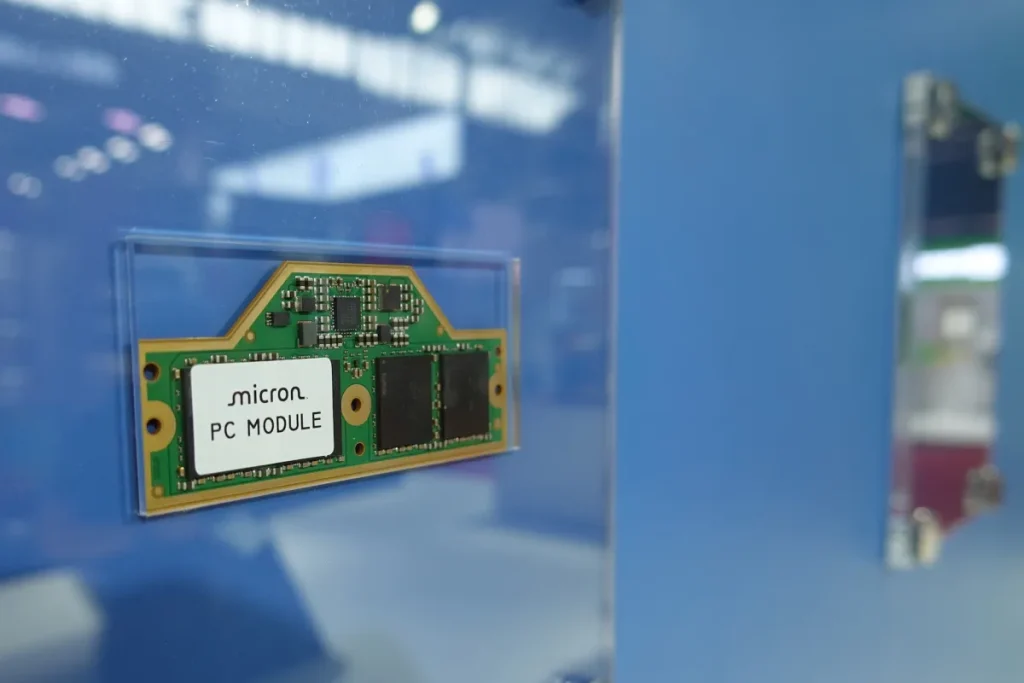
Image Credits:CFOTO/Future Publishing via Getty Images / Getty Images
Micron’s Rising Dominance in the Memory Chip Market
Introduction
Micron Technology, the memory chip manufacturer based in Boise, Idaho, is currently capturing Wall Street’s attention. The company’s perceived value hinges significantly on the sustainability of the AI-driven supply crisis affecting memory chips. This article delves into Micron’s recent achievements, challenges, and its strategic positioning in a rapidly evolving market.
A Brief Overview of Micron’s Growth
In an impressive display of market performance, Micron briefly surpassed the market valuations of giants Meta and Tesla, closing Friday’s trading with a market capitalization close to $1.27 trillion. For perspective, Meta’s market cap stood at $1.39 trillion, and Tesla reached $1.42 trillion. Over the past month, Micron’s stock has skyrocketed by an astonishing 236%, closing at $1,132 per share. This is a remarkable turnaround for a company that spent years struggling to remain above the $100 mark.
The AI Data Center Boom
Micron’s surge can be attributed primarily to the ongoing boom in AI data centers, which has led to a critical shortage of memory chips—including both DRAM and NAND types. Notably, High-Bandwidth Memory (HBM), a specialty product of Micron, is highly sought after, as AI servers require substantially more memory than standard laptops. Major players in the AI space, such as Nvidia, Microsoft, Amazon AWS, Google, Meta, and Oracle, are significantly increasing their memory purchases, triggering a rush among PC manufacturers and other device makers to stock up on memory chips.
The effects of this supply crunch, dubbed “RAMageddon,” are expected to persist into 2027, contributing to rising prices of consumer electronics, including popular products like Apple devices and Xbox consoles.
Financial Performance
In this climate of heightened demand, Micron reported remarkable third-quarter earnings last week, with revenue quadrupling year-over-year to $41.45 billion. Profits surged from $1.88 billion to an astounding $28.2 billion during the same period. Looking ahead, Micron has projected fourth-quarter revenues in the range of $49 billion to $51 billion, which further bolsters Wall Street’s enthusiasm for the company.
Long-Term Strategy and Risk Management
Historically, memory chip manufacturers face challenges in scaling production, as increasing manufacturing capacity is a slow and costly process. Often, demand wanes just as new capacity comes online, leading to oversupply and plummeting prices. Recognizing this risk, Micron has taken proactive steps by establishing long-term supply agreements with key industry players like Nvidia and AI lab Anthropic. The company recently reported signing 16 strategic customer agreements across various sectors, including data centers, consumer electronics, and automotive markets.
Analysts have viewed these long-term agreements as a sign that Micron may be positioning itself for sustained success. According to Sebastien Naji, a tech analyst at William Blair, the demand growth for memory chips is outpacing the rate at which new cleanroom space can be developed. This trend suggests the potential for durable earnings growth as Micron continues to secure key customer contracts.
Analyst Insights
The recent momentum has led to a flurry of positive sentiments from analysts. Some believe that Micron could emerge as a long-term, profitable investment similar to other AI-related companies, notably Nvidia. Analysts have pointed out that the company’s proactive approach in establishing supply agreements showcases its potential to withstand any sudden market corrections.
“Given the strong likelihood of continued average selling price (ASP) growth in the coming quarters and improving revenue visibility thanks to an expanding set of long-term agreements with key customers, we see potential for more durable earnings growth,” Naji remarked, reiterating an “Outperform” rating for Micron.
The Future for Micron
While Micron’s current trajectory is impressive, the future remains uncertain. The company must navigate the complexities of an industry prone to cycles of boom and bust. Whether it can maintain this momentum long-term without entering a downturn remains an open question.
In summary, Micron Technology is currently at a pivotal point in its business journey. The memory chip giant’s recent financial surge, driven by the growing demand from AI data center operations, positions it well for future growth. However, the company must remain vigilant against potential market fluctuations that could impact its gains.
Conclusion
Micron’s remarkable rise is both a reflection of the burgeoning AI sector and its strategic foresight in establishing long-term customer agreements. While the short-term outlook appears bright, it will be interesting to see whether Micron can sustain its growth trajectory over the long haul amid potential market volatility. For the moment, it stands as a beacon of possibility in an ever-evolving tech landscape.
Thanks for reading. Please let us know your thoughts and ideas in the comment section down below.
Source link
#Wall #Street #thinks #memory #maker #Micron #Nvidia
About The Author