

AI Revives Voices of Deceased Pilots for Historical Reenactments and Insights
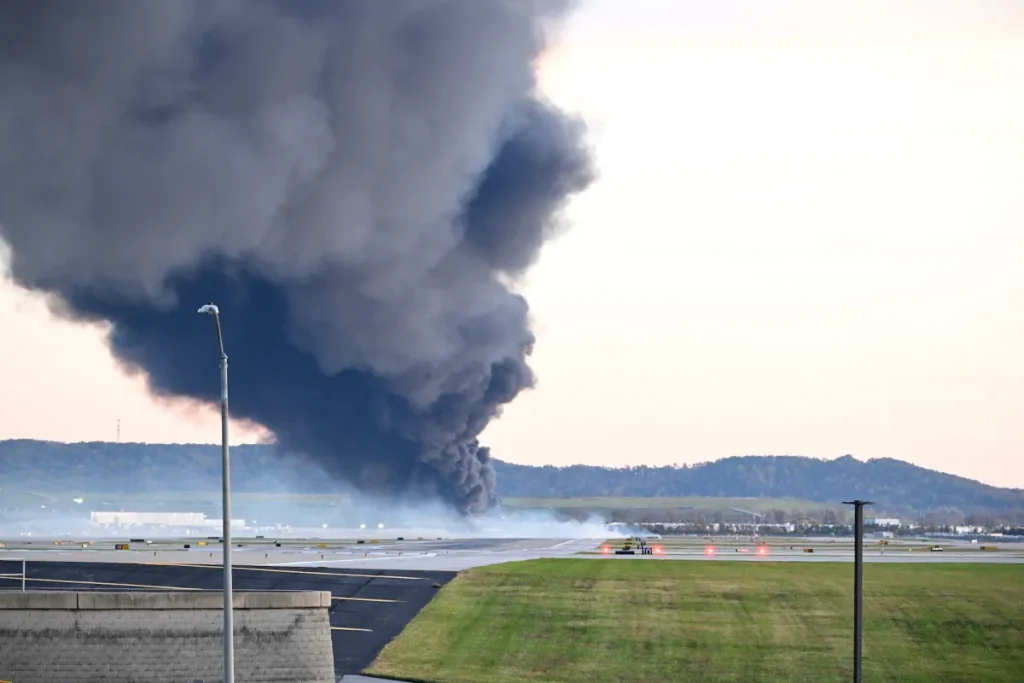
Image Credits:Stephen Cohen / Getty Images
AI and the NTSB: Concerns Over Recreated Cockpit Voices
In a notable turn of events highlighting the complexities of artificial intelligence, the National Transportation Safety Board (NTSB) temporarily suspended public access to its docket system. This decision followed the revelation that voices of pilots who tragically perished in a UPS plane crash last year had been artificially recreated and were circulating online. This incident underscores the rising role of AI in various aspects of society and raises significant questions about privacy, ethics, and data security.
The NTSB’s Docket System and Legal Restrictions
The NTSB maintains a comprehensive docket system that is typically accessible to the public. This system contains extensive data related to transportation safety investigations. However, federal regulations restrict the inclusion of cockpit audio recordings within this public archive. The cockpit voice recorder’s recordings from the UPS flight are prohibited as part of these legal guidelines.
Nonetheless, the accident docket for UPS Flight 2976 included a spectrogram file derived from the cockpit voice recorder. A spectrogram is an image representation of sound signals, transformed through mathematical processes to display various frequencies. Although it does not contain actual audio, this visual data provides enough detail for skilled individuals to potentially reconstruct some of the original sounds.
The Role of AI in Audio Reconstruction
Not long after the spectrogram became public, as noted by Scott Manley, a well-regarded YouTuber who merges physics, astronomy, and gaming content, discussions on social media emerged. He highlighted the possibility of reconstructing audio from the spectrogram’s data. Creative individuals leveraged AI algorithms, most notably Codex, to approximate the audio from the UPS flight’s cockpit voice recorder.
This situation illustrated the immense capabilities of AI technology. With access to the spectrogram and the publicly available transcript, people successfully translated the visual data back into a form resembling the original audio. Social media posts documented these experiments, sparking debates about the ethics and implications of such technologies.
Temporary Suspension and Future Actions
In response to these developments, the NTSB acted swiftly by restoring public access to its docket system on a limited basis. The agency has restricted access to 42 ongoing investigations, including the one linked to Flight 2976, until it can thoroughly review the impact of the recreated audio. This proactive measure aims to secure sensitive information and uphold the dignity of those affected by the tragedy.
The abrupt removal and subsequent restoration of access to the NTSB’s docket system emphasize the challenges organizations face in maintaining transparency while safeguarding sensitive information. The balance between public interest and ethical considerations remains a delicate one, especially in an age where AI technology is evolving at an unprecedented pace.
Ethical Considerations of AI Reproduction
As AI continues to advance, ethical questions arise regarding the use and potential misuse of technology. The ability to recreate voices raises concerns for families and loved ones of those impacted by tragedies. Reproducing the voices of deceased individuals may compound the pain experienced by grieving families, leading to calls for stricter regulations governing AI technology applications.
Furthermore, the implications of reconstructing cockpit audio extend beyond personal grief. They touch on larger societal issues, including aviation safety, data privacy, and the responsibility of technology creators. As this technology becomes more accessible, it’s essential to consider the potential repercussions of its use.
The Need for Regulatory Frameworks
Given the speed at which AI technology is evolving, there is an urgent need for comprehensive regulatory frameworks that address these concerns. Policymakers must engage with technologists, ethicists, and the public to create guidelines governing the responsible use of AI in sensitive contexts such as aviation and other critical sectors.
The NTSB’s response to this incident could serve as a baseline case study for developing these guidelines. By scrutinizing the potential consequences of AI technologies on investigations and the individuals involved, stakeholders can strive towards a future where innovation coexists harmoniously with ethical integrity.
Conclusion: Navigating the Future of AI in Public Safety
The recent incident involving the NTSB and the recreation of cockpit voices from a UPS plane crash underscores the rapid advancements of AI and its diverse applications. While these technologies offer remarkable possibilities, they also present significant ethical challenges. Striking a balance between innovation and respect for individuals affected by loss is critical.
As AI continues to influence multiple sectors, the importance of regulatory measures and ethical considerations cannot be overstated. Policymakers, organizations, and technologists must collaborate to ensure that these powerful tools are used responsibly and sensitively, particularly in the realm of public safety.
The dialogue surrounding AI will continue to evolve, urging us to reconsider our definitions of privacy and respect in an increasingly digital world. It is imperative that we navigate the intersection of AI technology and human dignity with caution, empathy, and foresight.
Thanks for reading. Please let us know your thoughts and ideas in the comment section down below.
Source link
#resurrect #voices #dead #pilots
About The Author




![[All-Terrain Wire-Free] DREAME A3 AWD 1000 Robot Lawn Mower, 360° 3D LiDAR & AI Dual Vision Smart Robotic Mower for 0.25 Acre, 80% Slopes & 45min Fast Charge for Homeowners with Large/Steep Lawns](https://learnaiwithkesse.wiki/wp-content/uploads/2026/10/DREAME-A3-AWD-1000-Robotic-Lawn-Mower-with-360°-LiDAR-300x231.jpg)