
Dario Amodei: Supports Open-Weight Models, but Concerns Over Chinese AI Persist
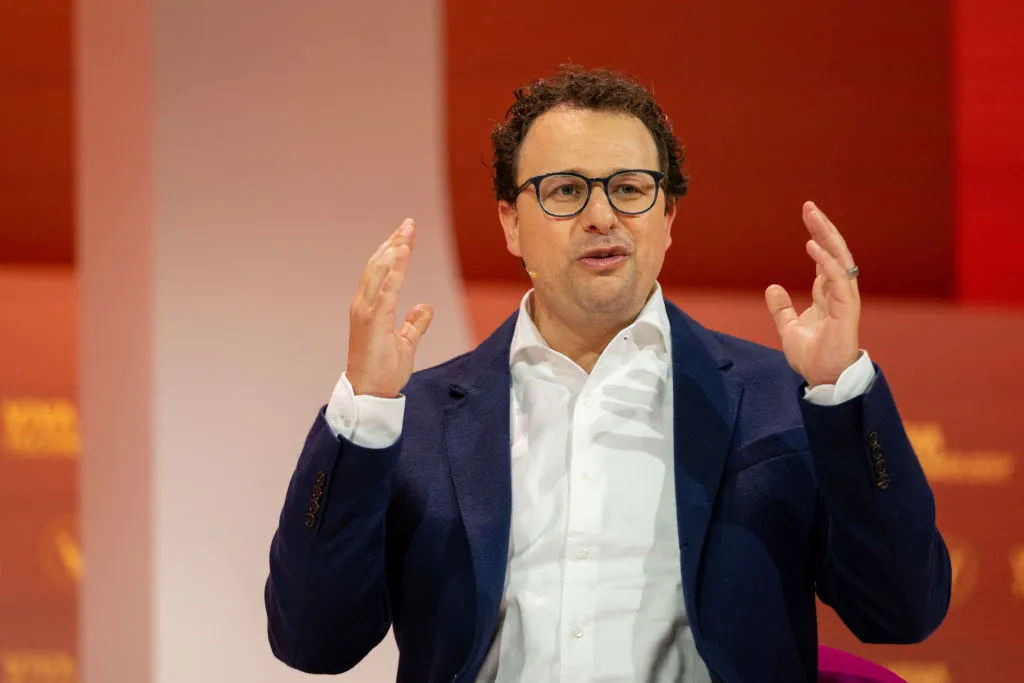
Image Credits:Benjamin Girette / Bloomberg / Getty Images
Dario Amodei’s Stance on Open-Weight AI Models
Anthropic’s founder and CEO, Dario Amodei, addressed industry speculation on Monday regarding his company’s alleged support for a U.S. government ban on open-weight models, particularly those originating from China. He clarified his position emphatically, stating, “Anyone who has read my past writing should know that I don’t regard such bans as a useful measure, but let me state it clearly so that there is no doubt: Anthropic has never advocated for a ban on open-weight models.”
Industry Consensus Against Premature Restrictions
Amodei’s remarks followed a significant moment in the AI landscape when Nvidia founder and CEO Jensen Huang shared an open letter on X, which called for policymakers to resist imposing “premature restrictions” on open-weight AI models. This letter was co-signed by a multitude of prominent AI companies, including Hugging Face, Meta, Microsoft, and Mistral.
Although the letter did not refer explicitly to China, the core of the ongoing debate revolves around concerns that Chinese AI laboratories might be increasing their capabilities through intellectual property theft from American firms. The controversial technique of distillation—where one AI model is trained on another through prompts to extract knowledge—has come under scrutiny in this context.
Open-Weight Models: A Public Good
In his blog post, Amodei argued that open-weight models, especially those lacking dangerous capabilities, represent a valuable public good. He pointed out that these models incur minimal costs beyond the computational resources required to run them, thereby providing significant advantages to businesses, developers, and academic researchers.
He acknowledged his longstanding apprehension regarding AI, but explicitly stated that he does not categorize businesses utilizing open-weight models—regardless of their origin—as a primary concern.
The Threat of Authoritarian Governments
Amodei’s principal fear lies not in open-weight models but in the potential for authoritarian regimes to develop more powerful AI systems. He expressed concern that such governments, including the Chinese Communist Party (CCP), could leverage AI for military superiority or to suppress their own citizens. While he indicated that the CCP is a key player in this arena, he cautioned that it is not the sole authoritarian regime of concern.
Additionally, Amodei highlighted the risk posed by AI in facilitating biological attacks, extending beyond just cybersecurity threats. He stressed that open-weight models become particularly problematic in scenarios where it is challenging to enforce regulatory measures or monitor their applications. He cited a report from the UK AI Security Institute, noting that once open weights are launched, they cannot effectively be recalled.
Open Source vs. Safety Concerns
These views challenge the arguments made by advocates of open-source technology, who postulate that widespread access to powerful, unconstrained models enables defenders to safeguard themselves more effectively.
Strategies to Address the China Challenge
To counter potential threats from China, Amodei outlined several actionable strategies. He reaffirmed U.S. policies aimed at restricting Chinese access to advanced chips and proposed a formal crackdown on distillation practices. Amodei mentioned that the U.S. has indicated it may impose sanctions against China if it determines that there has been any intellectual property theft involving U.S.-developed AI models.
Global Collaboration on Model Safety Testing
One noteworthy aspect of Amodei’s discussion was his alignment with ongoing initiatives aimed at establishing a model safety testing organization, particularly if such a framework could receive global backing, inclusive of participation by China.
He remarked, “I think this idea is actually close to a consensus: I have been heartened both that the Trump administration has moved in this direction in recent months, and by recent industry proposals that would apply such testing to the most capable models regardless of their country of origin or whether they are open or closed.”
Amodei stressed that the success of such testing mechanisms would require a worldwide commitment, asserting that even entities like the CCP would need to be involved. He expressed hope that there could be limited cooperation aimed at preventing the development of AI-based biological weapons, as such efforts could also align with China’s interests.
Final Thoughts
Amodei’s insights highlight the complexity of the current AI landscape, where ethical considerations intertwine with national security concerns. His commitment to the safe and responsible deployment of AI technologies underscores the importance of global dialogue and collaboration in addressing potential threats—both from authoritarian regimes and the technologies they develop.
By advocating for open-weight models as a public good while also calling for rigorous frameworks to ensure safety and accountability, Amodei strikes a balance that may serve as a guiding principle for future discussions surrounding AI regulation.
As the AI field evolves, it will be essential to navigate these intricate issues through cooperation among countries, industries, and academic institutions to foster innovation while minimizing risks.
Thanks for reading. Please let us know your thoughts and ideas in the comment section down below.
Source link
#Anthropics #Dario #Amodei #responds #doesnt #oppose #openweight #models #fears #Chinese
About The Author