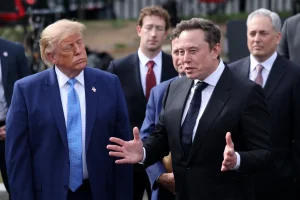

The Pope’s AI Encyclical: A Broader Message Beyond Artificial Intelligence
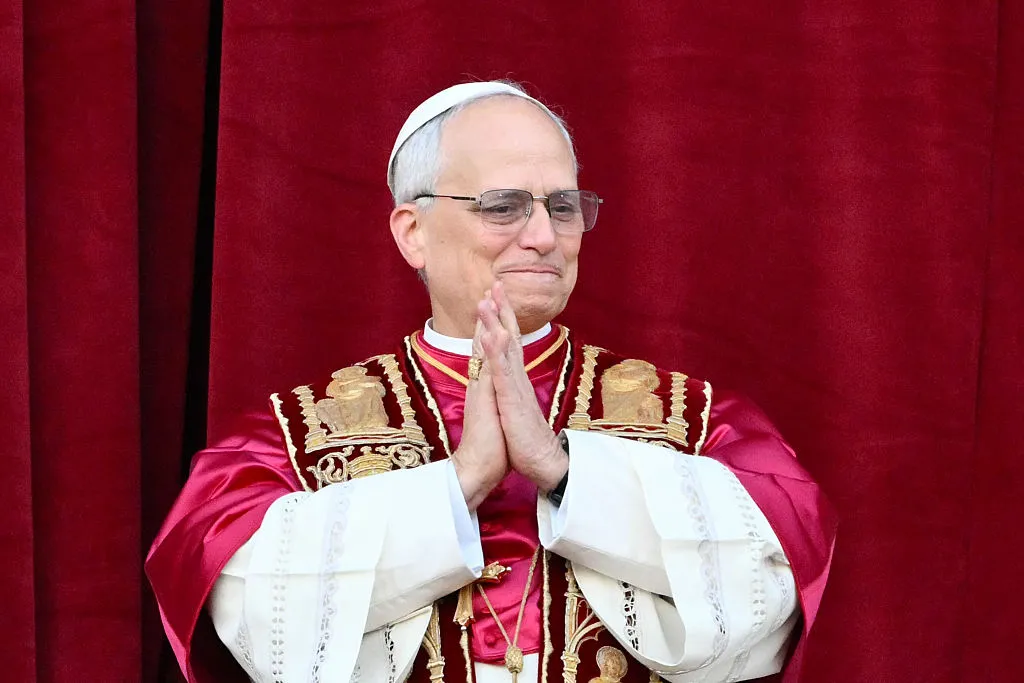
Image Credits:ALBERTO PIZZOLI/AFP / Getty Images
Pope Leo XIV’s Encyclical on AI: A Call for Ethical Oversight
Pope Leo XIV recently released his inaugural encyclical, titled Magnifica Humanitas, which focuses on the pressing issue of protecting the human person amid the rise of artificial intelligence (AI). While the encyclical uses AI as a focal point, it addresses deeper and ongoing concerns such as inequality, war, erosion of democratic values, and the concentration of power among a small elite.
The Central Argument: Technology and Common Good
In this extensive 200-page document, presented alongside Chris Olah, co-founder of the AI company Anthropic, the pope articulates a crucial message: Technology that is conceived and governed by a limited number of individuals—the elite—cannot effectively serve the collective good. Leo emphasizes that when power is consolidated among a few, it becomes increasingly opaque and escapes public scrutiny. This concentration creates risks of unbalanced development, which may foster new dependencies, exclusions, manipulations, and social inequalities.
The encyclical highlights that AI, like previous technological advancements, tends to bolster the influence of those who already have financial resources, specialized knowledge, and access to vital data. This amplification of power raises alarming concerns that those in elite positions may exploit their influence to mold information, shape consumption habits, sway democratic processes, and manipulate economic conditions for their own benefit.
Contextual Background
Leo’s encyclical coincided with political developments, including President Donald Trump’s postponement of an executive order aimed at establishing governmental oversight for AI models prior to their public release. This delay was reportedly influenced by venture capitalist and former White House AI czar David Sacks. The timing suggests a growing awareness of the implications of AI governance in the broader political landscape.
A Call for Effective Oversight and Community Involvement
In Magnifica Humanitas, Pope Leo advocates for AI to be guided by “clear criteria and effective oversight” that involves communities likely to be impacted by technological advancements. He also calls for an end to the ongoing AI arms race, wherein companies and nations compete to create increasingly powerful algorithms and vast datasets to secure commercial or geopolitical dominance.
Pope Leo articulates a crucial principle: “To disarm means discrediting the assumption that technical power automatically confers the right to govern.” This notion challenges the prevailing belief that expertise and technology inherently justify power, urging a reevaluation of accountability and governance in the tech sector.
Historical Parallels: Lessons from the Past
Interestingly, these discussions are not new. Pope Leo XIII’s 1891 encyclical Rerum Novarum addressed similar concerns regarding the concentration of power during the Industrial Revolution. The parallels are striking when considering contemporary scenarios, such as Elon Musk’s acquisition of Twitter and its implications for political campaigning, or the substantial financial contributions by tech moguls to super PACs aimed at staving off AI regulation.
These current events resonate with the themes that Pope Leo XIV explores, suggesting that the dynamics of power and technology are longstanding issues that require renewed ethical contemplation.
Rising Stakes with AI
Pope Leo asserts a conclusion that many have already reached: the astounding capabilities of current AI technologies significantly heighten the stakes involved. For instance, the prevalence of AI-generated misinformation and deepfakes has severely undermined our ability to discern truth from falsehood. This erosion of truth has profound implications for democratic processes and public discourse.
Paolo Carozza, a professor at Notre Dame Law School and a member of the Pontifical Academy of Social Sciences, emphasizes this point. He argues that the tech industry’s practice of “harvesting and manipulating” human data presents fundamental challenges to cognitive freedom—highlighting how technology can detrimentally influence public understanding and political engagement.
Conclusion: A Vision for Responsible AI Governance
Pope Leo XIV’s Magnifica Humanitas serves as a crucial intervention in the dialogue around AI. By urging for participatory governance and ethical oversight, the document calls for a collective responsibility that includes voices from affected communities.
As AI continues to transform various facets of society, the need for transparency, accountability, and ethical considerations becomes all the more pressing. Whether through public discourse or legislative action, the issues raised by Pope Leo must inform our approach to emerging technologies. By recommitting to fundamental human values amid the rapid advancement of AI, we can aspire to a future where technology enhances, rather than undermines, our collective humanity.
Thanks for reading. Please let us know your thoughts and ideas in the comment section down below.
Source link
#popes #encyclical #isnt
About The Author